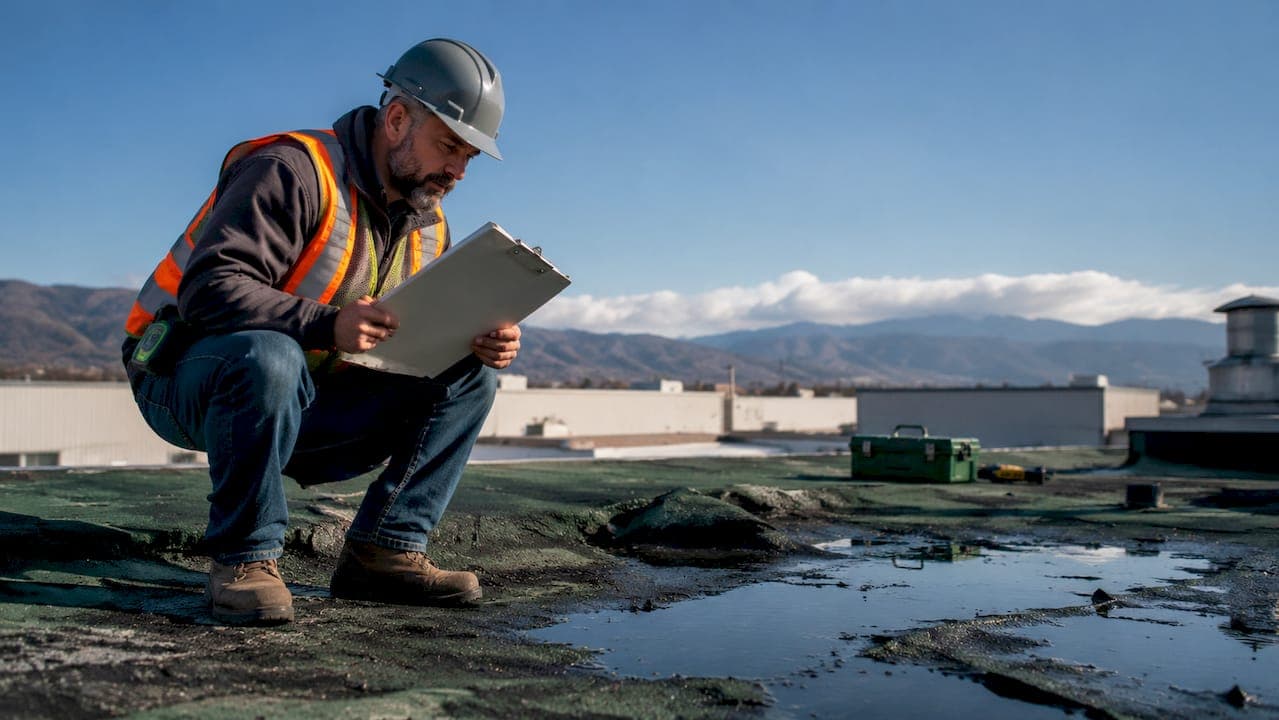
Commercial roof leak consequences are defined as the cascading structural, financial, and health-related damages that occur when water intrusion in a commercial building goes unaddressed. A single ignored leak can progress from a minor repair into a six-figure restoration project within a few years. Property owners and commercial real estate managers face structural degradation, mold liability, insurance claim denials, and business interruption costs that compound rapidly. Understanding these consequences in 2026 is the first step toward protecting your investment and your tenants.
1. How roof leaks cause structural damage in commercial buildings
Water intrusion is the leading cause of accelerated structural failure in low-slope commercial roofing systems. When moisture saturates insulation boards and reaches the roof deck, it weakens the substrate and creates conditions for membrane seam failure. The damage is rarely linear. Low-slope commercial roofs can suffer non-linear damage progression from apparent minor ponding due to insulation saturation and membrane seam stress that accelerates failure well beyond visible signs.
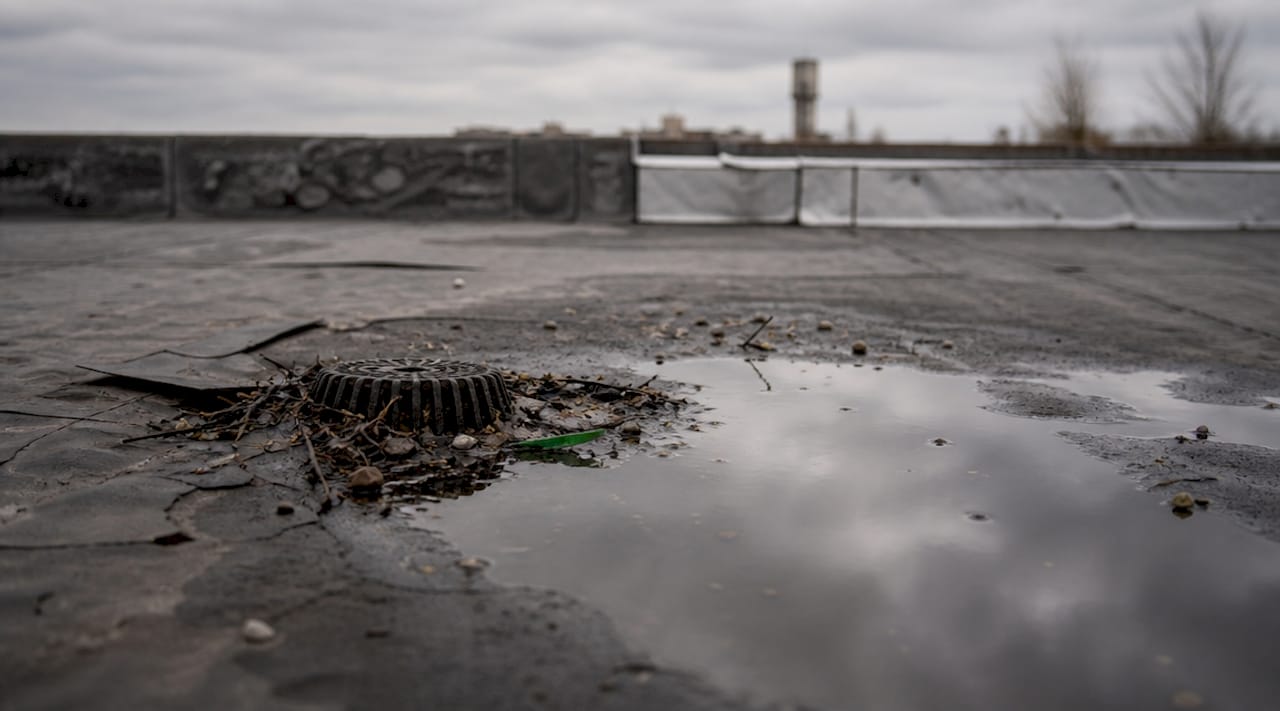
Ponding water is one of the most destructive structural forces on a flat commercial roof. Standing water over 48 hours adds significant structural load, accelerating membrane deterioration. To put that in concrete terms: 2 inches of standing water spread across 2,000 square feet adds approximately 20,800 pounds of unplanned load to your roof structure. That is the equivalent of parking several full-size pickup trucks on your roof deck.
The table below shows how structural damage categories escalate with water exposure time:
| Damage category | Early stage (0–6 months) | Late stage (1–3 years) |
|---|---|---|
| Insulation saturation | Partial, reversible | Full saturation, replacement required |
| Membrane integrity | Surface blistering | Seam failure, full membrane loss |
| Roof deck condition | Surface staining | Rot, deflection, structural repair needed |
| Repair cost range | $2,000–$8,000 | $80,000–$200,000 |
Blocked drains are a leading cause of ponding water on commercial roofs. Quarterly drain cleaning prevents the accumulation that causes membrane and structural damage. Scheduling drain inspections as part of your regular building maintenance program is one of the lowest-cost, highest-return actions a property manager can take.
Pro Tip: Schedule a professional roof inspection after every major rain event. Catching ponding water within 48 hours is the critical window that separates a minor repair from a major structural project.
2. Mold growth risks from commercial roof leaks
Mold is not a slow-developing problem. Roof leaks create hidden moisture conditions that promote mold growth within 24 to 48 hours in commercial buildings. That timeline means a Friday afternoon leak can produce active mold colonies by Monday morning, well before most property managers have scheduled a repair call.
The health and legal consequences of mold in a commercial building are serious. Mold exposure from roof leaks causes respiratory issues, allergic reactions, and legal liabilities for building owners. Tenants and employees who develop health problems linked to mold exposure have grounds for legal action, and OSHA standards require employers to maintain safe working environments. A single mold-related lawsuit can far exceed the cost of the original roof repair.
The remediation process is also expensive and disruptive:
- Mold testing and air quality assessment by a certified industrial hygienist
- Physical removal of contaminated insulation, drywall, and ceiling tiles
- Antimicrobial treatment of affected structural surfaces
- Post-remediation clearance testing before reoccupancy
- Potential temporary relocation of tenants or business operations
"Stopping the leak is only the first step. If moisture has been present for more than 48 hours, a mold assessment is not optional. It is a liability management requirement."
Early roof leak repair is the most cost-effective mold prevention strategy available to commercial property owners. Addressing the water source before mold establishes itself eliminates the need for remediation entirely.
3. How commercial roof leaks affect insurance claims and costs
Insurance coverage for commercial roof leaks is more conditional than most property owners realize. Policies commonly exclude damage from gradual deterioration, meaning claims tied to deferred maintenance are frequently denied or paid at a fraction of the actual loss. If your insurer determines that the damage developed over months and was not reported promptly, your claim is at serious risk.
Here is what property managers should do to protect their coverage:
- Report the leak to your insurer within 24 hours of discovery.
- Photograph and video every affected area before any cleanup or temporary repair.
- Document all emergency mitigation actions, including tarping, sealant application, and water extraction.
- Retain all contractor invoices and inspection reports as part of your claim file.
- Avoid accepting a settlement offer before a licensed roofing contractor has assessed the full scope of damage.
Pro Tip: Early emergency repairs that are properly documented as mitigation help preserve both insurance coverage and manufacturer warranty eligibility. Keep a written log with timestamps for every action taken.
The documentation standard matters because insurers distinguish between sudden damage and neglected maintenance. A well-documented mitigation response signals that you acted responsibly and in good faith, which directly influences claim approval and payout scope.
4. The financial impact of delayed leak repairs
Deferred repairs are the most expensive decision a commercial property owner can make. Ignoring small roof leaks increases secondary damages including structural problems, mold remediation, and energy waste, escalating costs 20 to 50 times the original repair value. A repair that costs $1,500 in year one can realistically require $75,000 or more to address by year five.
The cost escalation follows a predictable pattern:
| Repair timeline | Typical cost range | Primary cost drivers |
|---|---|---|
| Year 1 to 2 | $2,000–$8,000 | Membrane patching, drain clearing |
| Year 3 to 4 | $15,000–$40,000 | Insulation replacement, deck repairs |
| Year 5 to 7 | $80,000–$200,000 | Full membrane replacement, structural work |
Beyond direct repair costs, delayed action creates secondary financial damage that property managers often underestimate:
- Saturated insulation loses its R-value, increasing HVAC energy consumption by 10 to 40 percent in affected zones
- Water-damaged ceiling tiles, lighting fixtures, and flooring require separate replacement budgets
- Tenant complaints and lease disputes arise when water intrusion affects occupied spaces
- Business interruption losses occur when tenants must vacate during major restoration work
The comparison is straightforward. A proactive commercial roofing maintenance program that catches leaks early costs a fraction of the reactive restoration work that follows years of neglect.
5. What to do in the first 24 hours after a commercial roof leak
The first 24 hours after discovering a commercial roof leak determine the scope of your damage, your insurance eligibility, and your total repair cost. Immediate mitigation and documentation actions within this window directly influence coverage and restoration eligibility. Waiting even one additional day can shift a covered claim into a denied one.
Follow these steps in order:
- Contain interior water intrusion. Place collection containers, move equipment and inventory, and protect electrical panels from water contact.
- Apply emergency tarping or temporary flashing. Temporary repairs like tarping reduce damage accumulation but are not permanent fixes. They must be thoroughly documented to preserve restoration eligibility and warranty coverage.
- Conduct an infrared moisture survey. Infrared thermography identifies hidden moisture pockets in insulation and decking that are invisible to the naked eye. This step is critical for scoping the full damage before any repair work begins.
- Perform core sampling if needed. Core samples from the roof assembly confirm the depth of moisture penetration and guide the repair specification.
- Document everything with photos and video. Capture the leak source, all interior damage, and every mitigation action taken. Timestamp all media files.
- Notify your insurer and roofing contractor. Contact both parties the same day. Do not wait for a full damage assessment before reporting.
Pro Tip: Never accept a preliminary settlement from your insurer before a licensed roofing contractor has completed a full scope-of-damage assessment. Initial estimates routinely undervalue hidden moisture damage.
Key takeaways
Commercial roof leak consequences multiply in cost and complexity with every month of delay, making same-day response and thorough documentation the two most financially protective actions a property manager can take.
| Point | Details |
|---|---|
| Structural damage escalates fast | Ponding water over 48 hours adds thousands of pounds of load and accelerates membrane failure. |
| Mold develops within 48 hours | Active mold colonies can form before a repair crew arrives, creating health and legal liability. |
| Insurance claims require documentation | Policies exclude gradual damage; same-day documentation and mitigation protect claim eligibility. |
| Delayed repairs cost 20 to 50 times more | A $1,500 repair in year one can become a $75,000 restoration project by year five. |
| First 24 hours are decisive | Tarping, infrared surveys, and insurer notification within one day determine your financial outcome. |
What I've learned from years of watching deferred repairs become disasters
I have seen the same pattern repeat itself more times than I can count. A property manager notices a small stain on a drop ceiling tile. They make a note to address it. Three months later, the stain is bigger but the building is still functioning, so the repair gets pushed again. By the time someone calls us, the insulation is fully saturated, the deck is showing deflection, and there is active mold behind the ceiling grid. What would have been a $2,000 repair is now a $60,000 project, and the insurer is questioning whether the damage qualifies as sudden and accidental.
The mistake is not negligence. It is a misreading of risk. Small leaks look stable because the visible damage changes slowly. But the hidden damage, the saturated insulation, the stressed membrane seams, the moisture migrating laterally through the assembly, progresses much faster than the ceiling stain suggests. By the time the interior shows significant damage, the roof assembly has often been compromised for months.
The property managers who avoid these outcomes share two habits. They schedule professional inspections at least twice a year, and they treat any sign of moisture intrusion as an emergency until proven otherwise. They also keep a documented maintenance log that shows their insurer a consistent pattern of responsible stewardship. That log has saved more than one client from a denied claim.
My advice is simple. Do not wait for visible damage to confirm what a moisture survey would have caught six months earlier. The cost of a proactive inspection is always less than the cost of the damage it prevents.
— Steve
Protect your commercial property with Chattanoogaroofrepairs
When a roof leak threatens your commercial property, response time and expertise are what separate a contained repair from a full-scale restoration.
Chattanoogaroofrepairs provides licensed, insured roof leak repair and storm damage repair services across Chattanooga and surrounding areas. The team uses materials from GAF and Owens Corning and offers same-day tarping for active leaks. Every project includes a thorough assessment so you know the full scope before work begins. For property owners who need reliable, no-pressure guidance on their next step, Chattanoogaroofrepairs is ready to help. Explore the full range of commercial roofing services or call today to schedule an inspection.
FAQ
What are the most serious commercial roof leak consequences?
The most serious consequences are structural damage from ponding water, mold growth within 24 to 48 hours, insurance claim denial due to deferred maintenance, and repair costs that escalate 20 to 50 times the original repair value when leaks go unaddressed.
How quickly does mold grow after a commercial roof leak?
Mold can begin growing within 24 to 48 hours of moisture intrusion in a commercial building. Any leak that has been present for more than two days requires a mold assessment before repairs are completed.
Will my commercial property insurance cover roof leak damage?
Coverage depends on the cause and timing of the damage. Insurance policies commonly exclude gradual deterioration, so leaks tied to deferred maintenance are frequently denied. Prompt reporting, same-day documentation, and emergency mitigation actions are the most reliable ways to protect your claim.
How do I detect a roof leak before it causes major damage?
Professional infrared moisture surveys and core sampling identify hidden moisture in roof assemblies before interior damage appears. Scheduling roof inspections at least twice a year and after major storms is the most reliable early detection method.
What is the 48-hour ponding water rule?
The 48-hour threshold is a recognized industry benchmark. Water that remains on a flat commercial roof more than 48 hours after rainfall signals a drainage failure that requires immediate attention to prevent membrane deterioration and structural loading damage.