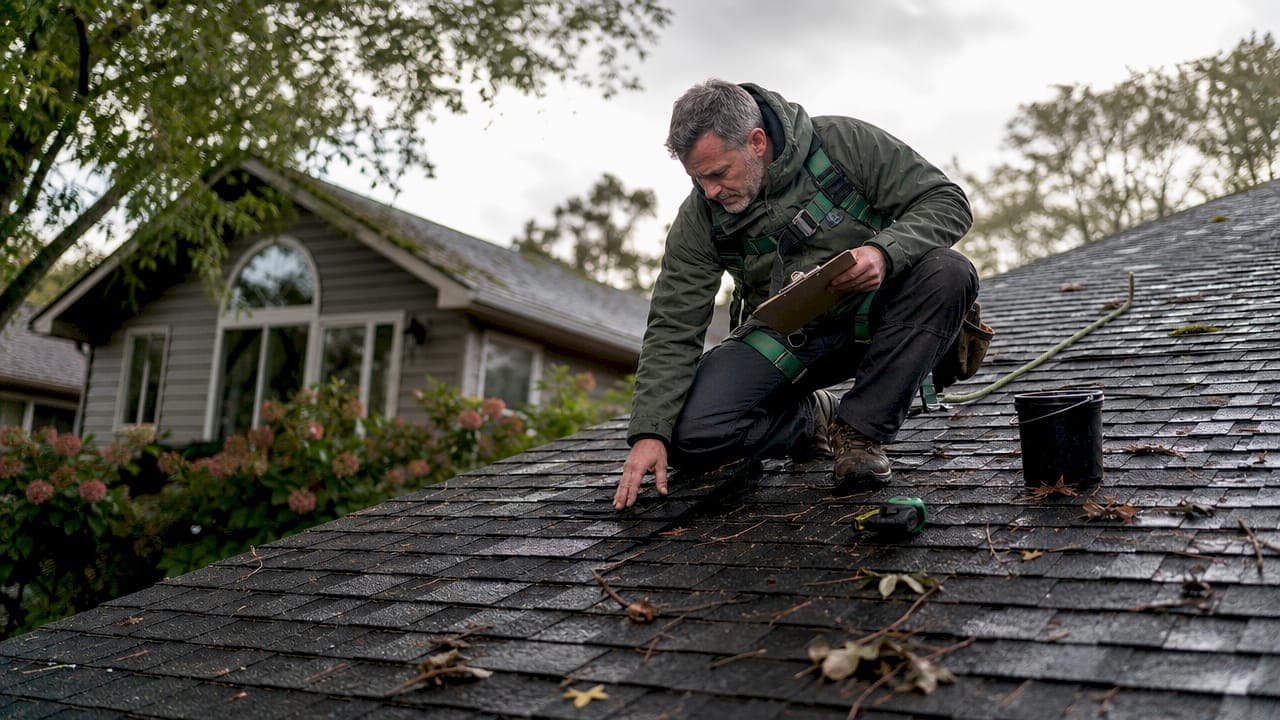
A storm damage roof assessment is the structured evaluation performed by qualified professionals to identify, document, and quantify damage caused by storm events such as hail, wind, or debris impact. This process is the foundation of every successful insurance claim and every sound repair decision. Without a systematic inspection, hidden damage like bruised shingles or water intrusion goes undetected until it becomes a costly structural problem. Tools like moisture meters, infrared scanners, and drones have made the storm damage roof assessment process more accurate than ever. Incomplete documentation correlates with a 34% denial rate for insurance claims, which means the quality of your inspection directly determines whether you get paid.
What are the critical steps in a professional storm damage roof assessment?
A professional roof damage evaluation process follows a specific sequence designed to capture every form of damage, visible and hidden. Skipping steps is how critical evidence gets missed and claims get denied.
-
Ground-level walkaround. The inspector starts from the ground, using binoculars to scan for obvious missing shingles, lifted ridge caps, and displaced flashing. This initial pass also identifies hazards before anyone sets foot on the roof.
-
Soft metal inspection. Gutters, downspouts, HVAC covers, and metal flashings are examined for dents and bruising. Soft metal components provide critical collateral damage evidence. If these metals show hail bruising, the roof damage claim becomes far more credible to an adjuster.
-
Roof surface examination with test squares. The inspector marks off 10x10 foot sections on each slope and counts hail impacts within each square. These test squares map hail density per slope and identify which areas qualify for repair or full replacement.
-
Tactile and visual shingle assessment. Inspectors press on shingles to feel for bruising beneath the granule surface. Hail creates microscopic fractures in the fiberglass mat that are invisible from a distance but detectable by touch and close visual examination.
-
Moisture meter and thermal imaging scan. A moisture meter detects elevated water content in the roof deck. Infrared cameras reveal temperature differentials that indicate trapped moisture or active water intrusion beneath the surface.
-
Attic inspection. The inspector enters the attic to check for water stains, mold growth, daylight penetration through the deck, and compromised insulation. This step catches leaks that have not yet appeared on interior ceilings.
-
Documentation and report compilation. The inspector photographs every damage point, records measurements, pulls local weather data, and compiles a final report. A thorough report includes annotated photos with GPS coordinates, hail impact density maps, and repair cost estimates aligned with building codes like IBC 2021.
Pro Tip: Ask your inspector to photograph collateral damage on your property, including dented vehicles, fences, and AC units. This evidence ties the storm event directly to your roof and strengthens your claim.
How does timing impact storm damage assessments and insurance claims?
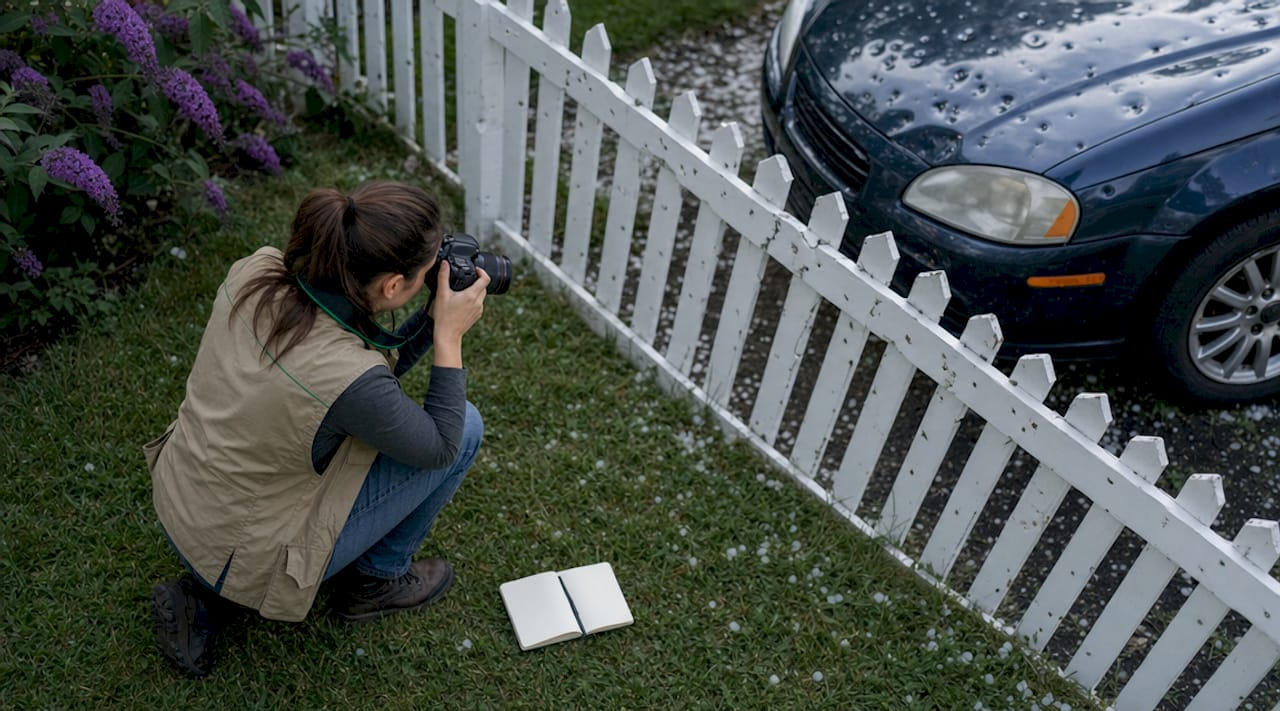
The window between a storm and your inspection is one of the most consequential factors in your claim outcome. Homeowners should schedule professional assessments within 24 to 72 hours post-storm for optimal insurance documentation. That window is not arbitrary. It is when storm evidence is freshest and most defensible.
Here is what happens when you wait too long:
- Evidence degrades. Rain washes granules off damaged shingles, making bruising harder to distinguish from normal wear. Dents on soft metals oxidize and blend in.
- Secondary damage accumulates. A small puncture or lifted shingle that goes unaddressed for weeks allows water to penetrate the deck, creating rot and mold that insurers classify as maintenance neglect rather than storm damage.
- Claim denial risk rises sharply. Delaying inspection beyond weeks or months increases the risk that insurers attribute damage to non-storm causes, giving them grounds to deny or reduce your payout.
- Collateral damage context disappears. Documenting dents on your HVAC unit, fence, or vehicles helps prove the storm's severity. Loss of this context weeks after the event weakens your insurance claim significantly.
One important safety note: do not inspect your roof while the storm is still active or immediately after, when surfaces are wet and slippery. Wait for the storm to fully clear, then act within that 24 to 72 hour window.
What types of roof damage should homeowners expect after different storms?
Different storm events produce distinct damage patterns. Recognizing these patterns helps you communicate clearly with your inspector and understand what your adjuster is evaluating.
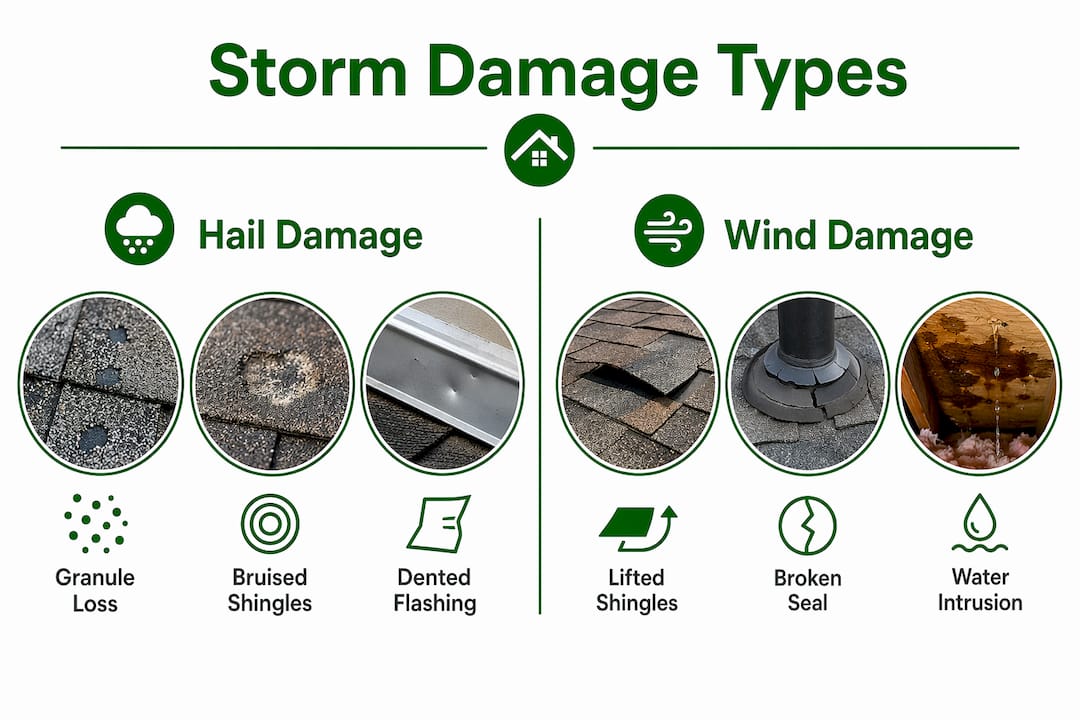
| Storm Type | Primary Damage Signs | Key Risk |
|---|---|---|
| Hail | Granule loss, bruised shingles, dented flashings | Hidden mat cracks that cause leaks 6 to 18 months later |
| High wind | Lifted, curled, or missing shingles; damaged ridge caps | Water infiltration at exposed nail lines |
| Debris impact | Punctures, cracked tiles, displaced flashing | Localized but deep structural damage |
Hail damage deserves special attention because it is the most deceptive. Hail impacts compress granules into the asphalt mat, cracking the fiberglass layer below. These cracks may cause leak delays of 6 to 18 months, resulting in denied claims if not reported promptly. By the time a leak appears on your ceiling, the original storm damage may be months old and harder to connect to the event.
The standard adjuster threshold for functional hail damage is 8 or more hail impacts per 100 square feet on a single slope. Inspectors map impacts by slope to determine whether a repair or full replacement is warranted. Slopes that fall below this threshold may still receive spot repairs, but slopes that meet or exceed it typically qualify for full replacement under most policies.
Wind damage is more visible but equally serious. Lifted shingles break the seal between courses, allowing wind-driven rain to penetrate even when the shingles appear intact from the ground. Ridge cap damage is a common wind indicator that homeowners miss entirely during a casual visual check.
Pro Tip: After a hailstorm, check your window screens and painted wood trim for pitting. These surfaces register hail impacts clearly and serve as supporting evidence for your roof claim.
How do professional assessments compare to DIY roof inspections?
Many homeowners rely on a quick visual check from the ground or a cautious walk around the perimeter. Visual inspections from the ground are insufficient because hail bruises and water intrusion often remain hidden without specialized tools. This is not a criticism of homeowners. It reflects the physical reality of what storm damage looks like up close versus from 20 feet away.
Here is what separates a professional assessment from a homeowner inspection:
- Specialized tools. Professionals carry moisture meters, infrared cameras, and in many cases drones. These tools detect hidden water intrusion and structural compromise that no naked eye can identify.
- Trained damage recognition. Bruising on asphalt shingles requires tactile evaluation and experience. A homeowner pressing on a shingle does not know what a bruise feels like compared to normal aging.
- Safety. Attempting to walk on a wet, brittle, or steep roof after a storm creates real injury risk. Professionals use drones and infrared techniques to safely inspect roofs without putting anyone at risk.
- Insurance-grade documentation. A professional report with GPS-tagged photos, weather data, and impact density maps carries weight with adjusters. Casual smartphone photos do not.
- Attic access. Most homeowners skip the attic entirely. Professionals treat it as a required inspection point, not an optional one.
Professional roof damage assessments range between $150 and $400 depending on roof complexity and inspection depth. Given that a single denied claim can cost you thousands in out-of-pocket repairs, that fee is a sound investment. Many reputable contractors, including Chattanoogaroofrepairs, offer free post-storm inspections as part of their service commitment.
For homeowners who want to do a preliminary check, stay on the ground. Walk the perimeter, look for granules in gutters, check soft metals for dents, and photograph anything that looks abnormal. Then call a professional before filing your claim.
What should homeowners do after a storm damage roof assessment?
Receiving your inspection report is not the end of the process. It is the starting point for everything that follows.
-
Apply temporary protection immediately. If the inspector identifies active vulnerabilities, arrange for tarping or temporary sealing before the next rain. Preventing secondary water damage protects both your home and your claim.
-
File your insurance claim promptly. Use the professional inspection report as your primary documentation. Submit the annotated photos, impact maps, and cost estimates directly to your insurer. Professional assessments performed early empower homeowners to negotiate effectively with adjusters and avoid underpayments or denials.
-
Get multiple contractor estimates. Obtain at least two to three written estimates from licensed, insured contractors. Be cautious of storm chasers, out-of-state contractors who appear in your neighborhood immediately after a major storm and pressure you to sign quickly.
-
Understand the adjuster's role. The insurance adjuster works for the insurer, not for you. Your professional inspection report is your independent evidence. If the adjuster's assessment differs significantly from your inspector's findings, you have the right to request a re-inspection or hire a public adjuster.
-
Retain all evidence. Keep every photo, report, estimate, and communication related to the damage and repair process. Document the repair work in progress with photos as well.
-
Monitor for delayed damage signs. Even after repairs, watch for water stains on ceilings, musty odors in the attic, or soft spots on the roof deck. Hail-related cracks can take months to manifest as visible leaks, and catching them early keeps your home protected.
Key takeaways
A professional storm damage roof assessment, completed within 24 to 72 hours of the storm, is the single most effective step a homeowner can take to protect both their property and their insurance claim.
| Point | Details |
|---|---|
| Act within 72 hours | Schedule a professional inspection within 24 to 72 hours to preserve storm evidence and meet insurer requirements. |
| Document collateral damage | Photograph dented HVAC units, fences, and vehicles to corroborate the storm's severity for your adjuster. |
| Hail damage hides itself | Bruised shingles may not leak for 6 to 18 months, making early inspection and timely filing critical. |
| Professional tools matter | Moisture meters, infrared cameras, and drones detect hidden damage that ground-level visual checks cannot find. |
| Use your report strategically | A GPS-tagged, code-aligned inspection report significantly improves claim approval and protects against underpayment. |
What I've learned after years of post-storm roof inspections
The homeowners who fare worst after a storm are not the ones with the most damage. They are the ones who waited too long or relied on a casual look from the driveway. I have seen claims denied on roofs with clear hail damage simply because the inspection happened six weeks after the event and the insurer argued the damage predated the storm. That outcome is preventable every single time.
One thing most homeowners do not realize is that the documentation process starts the moment the storm clears, not when you call your insurer. Walking your property and photographing your HVAC unit, your fence, your car hood, and your gutters within the first hour costs nothing and builds a timeline that is very hard for an adjuster to dismiss.
I also want to address the safety question directly. Do not get on your roof after a storm. I mean that without qualification. Wet shingles, debris, and compromised decking create conditions where a fall is genuinely likely. The technology available today, drones, infrared cameras, moisture meters, means there is no reason to take that risk. A professional roof inspection covers everything from the attic to the ridge cap without anyone putting themselves in danger.
The homeowners who come out of storm season in the best position are the ones who treat the assessment as seriously as the repair itself. Your report is your leverage. Use it.
— Steve
How Chattanoogaroofrepairs helps you after storm damage
After a storm hits Chattanooga or the surrounding area, Chattanoogaroofrepairs is ready to respond fast. The team offers same-day tarping to stop water intrusion immediately, followed by a thorough 21-point inspection that covers every surface from the attic to the ridge cap.
Chattanoogaroofrepairs uses certified materials from GAF and Owens Corning, and every inspection produces detailed documentation built for insurance claims. Whether you need storm and hail damage repair or a full shingle replacement, the team provides transparent pricing and no-pressure guidance from the first call to the final repair. Contact Chattanoogaroofrepairs today to schedule your post-storm inspection and get the documentation your claim needs.
FAQ
What is a storm damage roof assessment?
A storm damage roof assessment is a systematic professional inspection that identifies, documents, and quantifies roof damage caused by hail, wind, or debris. It produces a detailed report used for insurance claims and repair planning.
How soon after a storm should I get my roof inspected?
Schedule a professional inspection within 24 to 72 hours after the storm. Delaying beyond that window increases the risk that insurers attribute damage to pre-existing conditions and deny your claim.
Can I inspect my own roof after a storm?
A ground-level walkthrough to photograph gutters, soft metals, and visible shingles is reasonable. Walking on the roof is not safe after a storm, and visual checks alone miss bruising and hidden water intrusion that require professional tools to detect.
What does a professional roof inspection report include?
A thorough report includes GPS-tagged annotated photos, hail impact density maps by slope, moisture readings, attic findings, and repair cost estimates aligned with current building codes like IBC 2021.
What is the adjuster threshold for hail damage replacement?
The standard adjuster threshold is 8 or more hail impacts per 100 square feet on a single roof slope. Inspectors use test squares to count impacts and determine whether each slope qualifies for repair or full replacement.