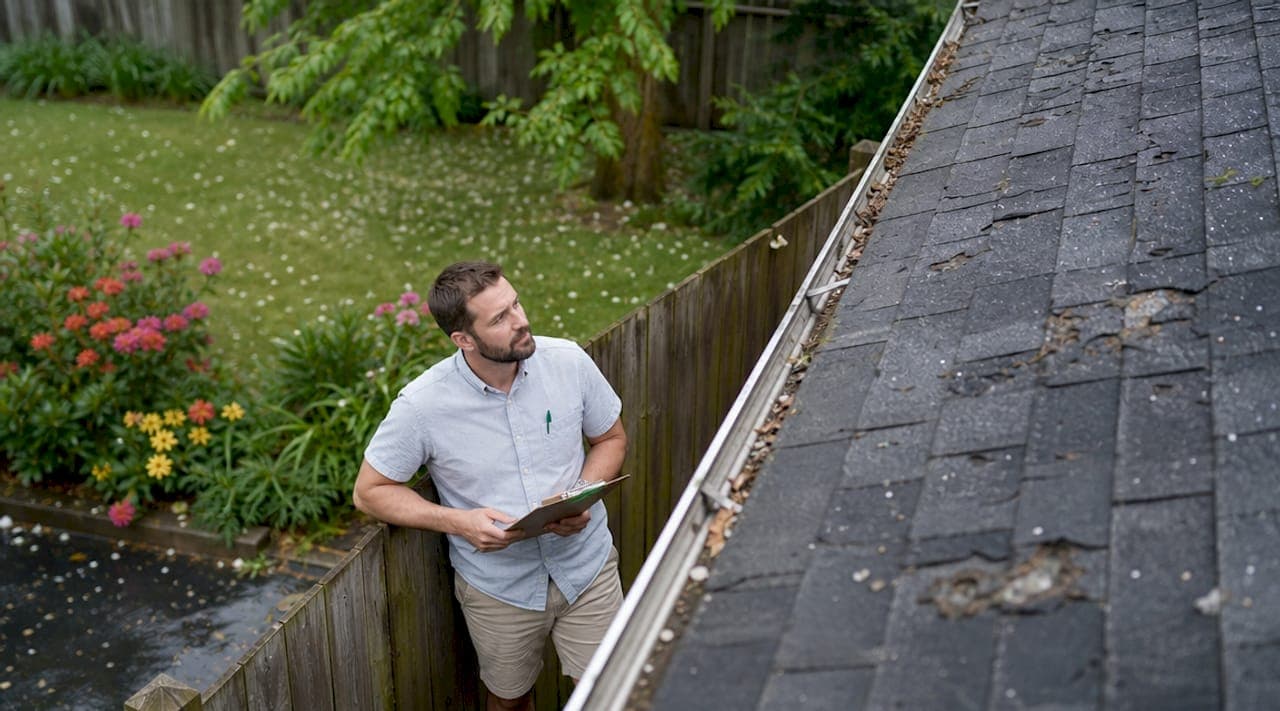
Types of storm roof repairs refer to the specific methods and materials used to fix wind, hail, water intrusion, and structural damage caused by severe weather. Your roof is the most important protective system on your home, and knowing which repair type fits your damage can save you thousands of dollars and prevent a denied insurance claim. This guide covers every major repair category, from same-day emergency tarping to full roof replacement, along with 2026 cost data, material comparisons, and the decision thresholds that determine what your insurer will approve.
1. What are the most common types of storm damage affecting roofs?
Storm damage falls into five distinct categories, and each one demands a different repair response. Misidentifying the damage type is one of the most common reasons homeowners choose the wrong repair and end up paying twice.
Wind damage is the most frequent storm-related roof problem in the Chattanooga area. It shows up as blown-off shingles, lifted tabs, exposed underlayment, and in severe cases, structural racking of the roof deck. Even partial shingle loss creates an open path for water within hours.
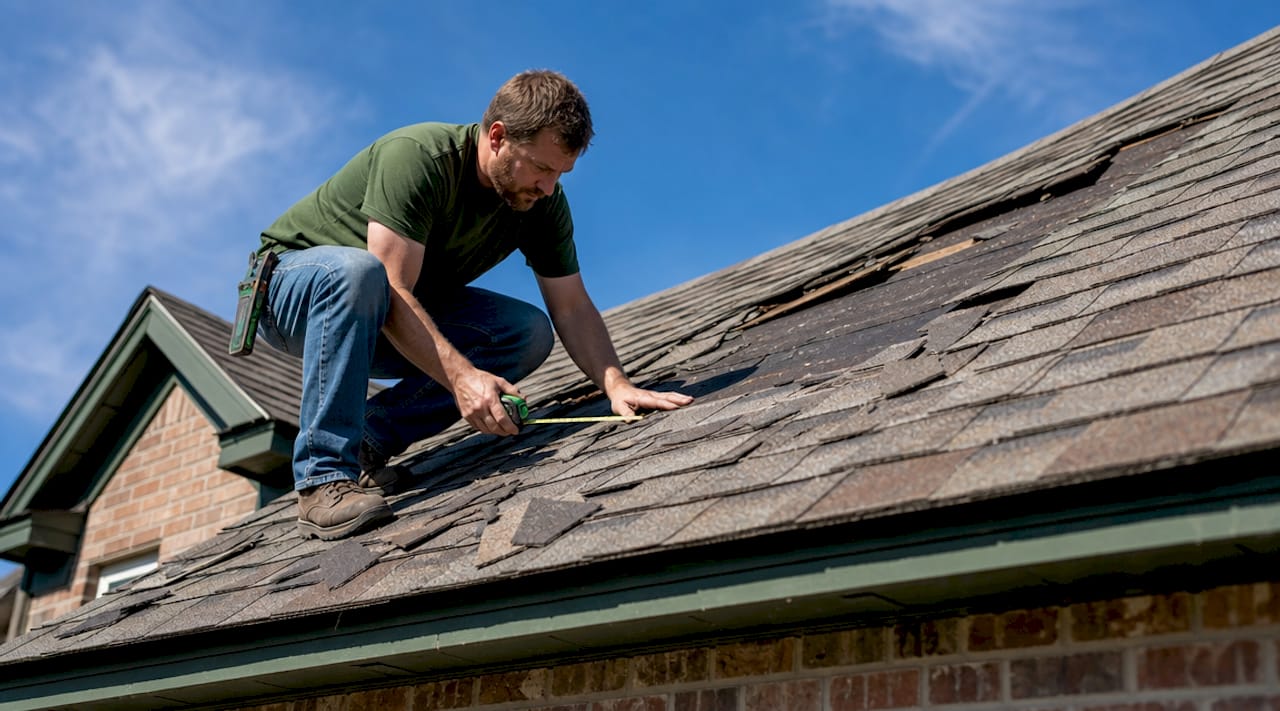
Hail damage is the most deceptive category. Hail strikes damage shingles microscopically, causing granule loss and fractures that accelerate UV degradation and lead to leaks that may not appear until months after the storm. You will not see this from your driveway. A professional inspection is the only reliable way to document it for an insurance claim.
Water intrusion damage typically originates at flashing points: around chimneys, skylights, and roof-to-wall transitions. Failed flashing lets water track along framing members before it ever shows up as a ceiling stain, meaning the visible damage is always smaller than the actual damage.
Ice dam damage occurs when heat escaping through the roof melts snow, which then refreezes at the cold eaves. The pooled meltwater backs up under shingles and into the attic. Soffit rot and interior staining are the most common results.
Tree and debris impact ranges from minor punctures to full structural collapse. A single large limb can fracture roof decking, break rafters, and create an opening large enough to allow rain, animals, and debris inside within one storm cycle.
2. Emergency roof repair options after a storm
Emergency repairs are temporary storm damage roof solutions designed to stop active water intrusion until permanent work can be scheduled. Speed matters here more than perfection.
-
Emergency tarping. A heavy-duty polyethylene tarp secured over damaged sections is the most common first response. Professional tarping costs $200 to $1,500, and that spend is almost always justified. Delaying tarping by even 24 to 48 hours can result in thousands of dollars in water damage restoration costs inside the home. Chattanoogaroofrepairs offers same-day tarping for exactly this reason.
-
Emergency patching. For smaller breaches, roofing cement or peel-and-stick membrane patches seal the opening fast. Patching materials vary in durability: roofing cement ($10 to $30) lasts months to a year, while peel-and-stick patches can hold up to 12 months under normal conditions. These are stopgaps, not permanent fixes.
-
Interior containment. When roof access is unsafe due to steep pitch, wet conditions, or structural instability, the priority shifts indoors. Buckets, plastic sheeting over furniture, and towel barriers protect your belongings and flooring while you wait for safe exterior access.
-
Debris removal and temporary shoring. After a tree strike, removing the limb from the roof is step one. However, cutting and pulling debris without first assessing structural integrity can worsen the damage. Structural repairs after major tree strikes can exceed $15,000 when roof framing is involved, so professional assessment before debris removal is worth the wait.
-
Documentation before any repair. Before touching anything, photograph every damaged area from multiple angles. HAAG-certified forensic inspections provide the kind of root-cause documentation that separates approved insurance claims from denied ones. Chattanoogaroofrepairs conducts 21-point inspections specifically designed to produce adjuster-ready evidence.
Pro Tip: Contact your insurance company before scheduling permanent repairs. Most policies require you to take reasonable steps to prevent further damage (tarping qualifies), but they also require that you not authorize permanent work until an adjuster has assessed the site.
For a broader look at temporary repair techniques that protect your home fast, that resource covers additional options worth reviewing before your contractor arrives.
3. Permanent repair methods matched to damage type
Permanent repairs fall into three tiers: spot repair, partial replacement, and full replacement. The right tier depends on how much of your roof is affected and what materials are involved.
Spot repairs
Spot repairs address localized damage covering less than 10 to 25 percent of the roof surface. This includes replacing a handful of blown-off asphalt shingles, resealing or replacing flashing around a chimney, and patching isolated punctures in the roof deck. GAF and Owens Corning both manufacture shingle lines designed for color-matched replacement, which matters for both aesthetics and resale value. Shingle replacement services at this scale are typically the most cost-effective storm damage roof solution when damage is genuinely contained.
Partial replacements
When a single roof slope or section sustains concentrated damage, a partial replacement replaces all materials on that section down to the deck. This approach works well after directional hail storms that hit one side of a roof harder than others, or after wind damage that strips an entire valley. The challenge is matching new shingles to aged existing ones. This is where manufacturer relationships with brands like GAF matter: certified contractors have access to current production runs that match existing profiles more closely.
Full roof replacements
Insurers generally approve full replacements when damage exceeds roughly 35 to 40 percent of the total roof area. This threshold exists because patchwork repairs on heavily damaged roofs create performance inconsistencies and future liability. Full replacements also trigger permit requirements in most Tennessee jurisdictions, which means inspections and code compliance for underlayment, ventilation, and fastening patterns.
| Repair type | Damage coverage | Typical material | Permit required |
|---|---|---|---|
| Spot repair | Under 10 to 25% | Asphalt shingles, flashing | Usually no |
| Partial replacement | One slope or section | Asphalt shingles, metal panels | Sometimes |
| Full replacement | Over 35 to 40% | Asphalt, metal, or membrane | Yes |
Metal roofing deserves specific mention here. Metal roofing options carry a higher upfront cost than asphalt but offer significantly better resistance to hail, wind, and debris impact over a 40 to 70 year lifespan. For property managers overseeing multiple buildings, the reduced maintenance and insurance premium benefits often justify the investment.
4. How to choose the right storm roof repair approach
Choosing between a spot repair, partial replacement, or full replacement comes down to four factors: damage footprint, insurance policy terms, local code requirements, and long-term durability goals.
- Damage footprint. Walk the roof with a professional and get a written percentage estimate. Under 25 percent typically supports spot repair. Over 35 percent typically triggers replacement approval from insurers. The range between 25 and 35 percent is a judgment call that depends on shingle age and condition.
- Insurance policy terms. Most homeowner policies cover sudden storm damage including wind, hail, and tree strikes, but they exclude gradual wear and pre-existing damage. A certified inspector who can distinguish new storm damage from old wear is critical to a successful claim. Learn more about how roof inspection supports claims before you file.
- Local code requirements. Hamilton County and the City of Chattanooga require permits for full replacements and some partial replacements. Working with a licensed contractor who pulls permits protects you from future title and resale complications.
- Long-term durability. If your shingles are already 15 or more years old and you are doing a spot repair after hail damage, you are investing money in a roof that will need full replacement within a few years anyway. A professional roof inspection that assesses overall roof health alongside storm damage gives you the full picture before you commit to a repair scope.
Pro Tip: Proper installation after storm damage can qualify your home for wind mitigation discounts on your homeowner's insurance premium, particularly if you upgrade to impact-resistant shingles rated Class 3 or Class 4.
5. Cost overview for storm roof repairs in 2026
Understanding the cost of roof storm repairs before you call a contractor puts you in a much stronger negotiating position. Here is a realistic breakdown based on current 2026 data.
| Repair type | Typical cost range | Notes |
|---|---|---|
| Emergency tarping | $200 to $1,500 | Same-day availability affects price |
| Spot shingle repair | $150 to $1,500 | Depends on shingle count and pitch |
| Flashing repair | $200 to $600 | Labor-intensive on steep roofs |
| Partial replacement | $2,000 to $8,000 | One slope or section |
| Full replacement | $8,000 to $25,000+ | Size, material, and pitch dependent |
| Tree strike structural repair | $400 to $15,000+ | Framing damage drives high end |
After-hours and weekend emergency services carry a 50 to 100 percent labor premium on top of standard rates, plus call-out fees of $200 to $500. That means a repair quoted at $800 on a Tuesday could cost $1,400 on a Saturday night. Scheduling non-emergency permanent repairs during standard business hours is a straightforward way to reduce total spend.
Delaying repairs compounds costs fast. Water that enters through a damaged roof reaches insulation, drywall, and framing within 24 to 72 hours. Mold can establish within 48 hours of sustained moisture exposure. The cost of interior remediation routinely exceeds the original roof repair cost when homeowners wait too long.
Key takeaways
Matching the repair type to the specific storm damage category is the single most important decision a homeowner makes after a storm, because the wrong repair scope leads to denied claims, repeat damage, and higher total costs.
| Point | Details |
|---|---|
| Match repair to damage type | Wind, hail, water, and structural damage each require different repair methods and materials. |
| Emergency tarping is high-value | Spending $200 to $1,500 on tarping prevents thousands in interior water damage. |
| The 35% threshold matters | Damage covering over 35 to 40% of the roof typically qualifies for full replacement under most insurance policies. |
| Document before you repair | HAAG-certified inspections and photo evidence are the foundation of a successful insurance claim. |
| Delay costs more | Water intrusion compounds quickly, turning a $1,500 repair into a $10,000 remediation project within days. |
What I've learned after years of storm repair work
I have seen homeowners make the same two mistakes repeatedly after a major storm. The first is waiting. They see a small stain on the ceiling and assume it is minor. By the time they call us, the insulation is saturated, the drywall is soft, and what started as a $600 shingle repair has become a $4,000 interior project.
The second mistake is assuming hail damage is not there because they cannot see it from the ground. Hail damage is frequently underestimated because it lacks obvious visual clues. I have walked roofs where the homeowner was certain there was no damage, and found granule loss and impact fractures on every slope. Those fractures do not leak immediately. They degrade the shingle mat over 12 to 24 months until water finds its way through. By then, the storm is long past and the insurance window may be closed.
My honest recommendation: schedule a professional inspection within 72 hours of any significant storm, even if you see no visible damage. The inspection cost is minimal compared to what you risk by waiting. And choose a contractor who carries HAAG certification or works with certified inspectors. That credential exists specifically to protect you during the claims process.
— Steve
How Chattanoogaroofrepairs handles storm damage from start to finish
Chattanoogaroofrepairs provides same-day tarping, 21-point storm inspections, and permanent repairs using GAF and Owens Corning materials across Chattanooga and surrounding areas. Whether you need emergency patching after a hail event or a full storm and hail damage repair with insurance documentation support, the team is licensed, insured, and ready to respond. Chattanoogaroofrepairs also offers transparent pricing with no-pressure estimates, so you know exactly what you are approving before work begins. Call or schedule online to get a free inspection and protect your home before the next storm season arrives.
FAQ
What are the main types of storm roof repairs?
The main types are emergency tarping, spot shingle repair, flashing repair, partial replacement, and full roof replacement. The right choice depends on the damage type and how much of the roof surface is affected.
How much does emergency roof repair cost after a storm?
Emergency tarping runs $200 to $1,500, while spot repairs range from $150 to $1,500 depending on scope. After-hours emergency services add a 50 to 100 percent labor premium on top of standard rates.
Does insurance cover storm roof repairs?
Most homeowner policies cover sudden storm damage from wind, hail, and tree strikes when properly documented. Gradual wear and pre-existing damage are excluded, which is why a certified inspection before filing is critical.
When does storm damage require a full roof replacement?
Insurance adjusters typically approve full replacements when storm damage covers 35 to 40 percent or more of the total roof area. Below that threshold, spot or partial repairs are usually the approved path.
Can I do storm roof repairs myself?
Minor interior containment and temporary patching are manageable for most homeowners, but permanent repairs require licensed contractors in most jurisdictions. DIY permanent repairs can also void manufacturer warranties and complicate insurance claims.