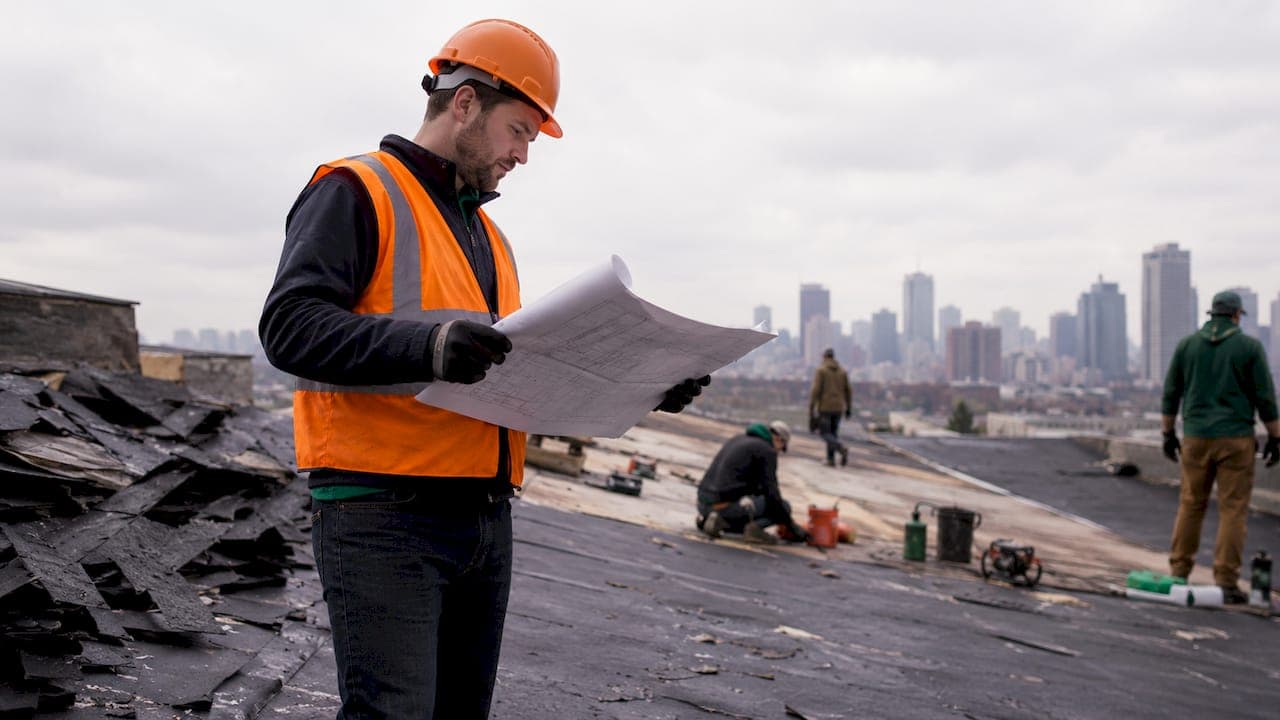
Commercial roof replacement is the complete removal of all existing roofing materials down to the structural deck, followed by inspection, repairs, and installation of a new roofing system designed for long-term performance. This process goes far beyond patching or coating. It addresses the full condition of your building's envelope, from the deck up through insulation, membrane, flashings, and drainage. For business owners and property managers, understanding what does commercial roof replacement involve means knowing each phase, the decisions that drive scope, the permits required, and the materials available. This article walks you through every stage so you can plan with confidence.
What does commercial roof replacement involve, step by step?
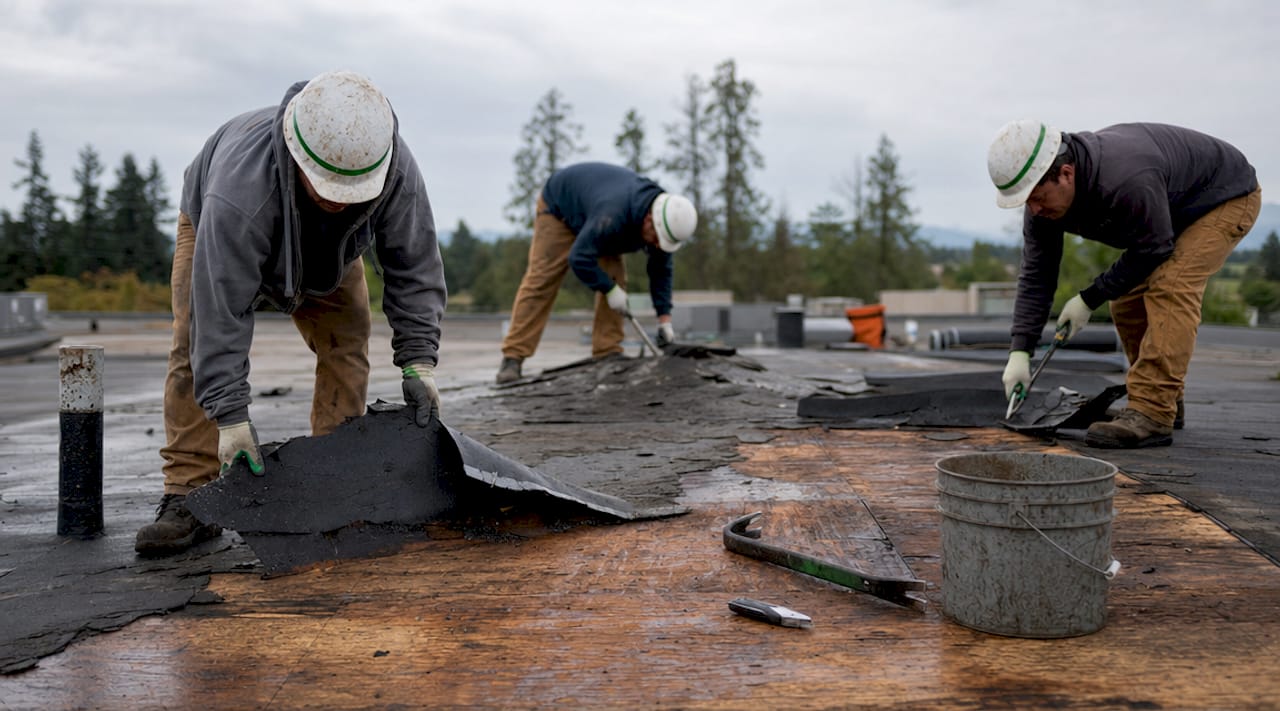
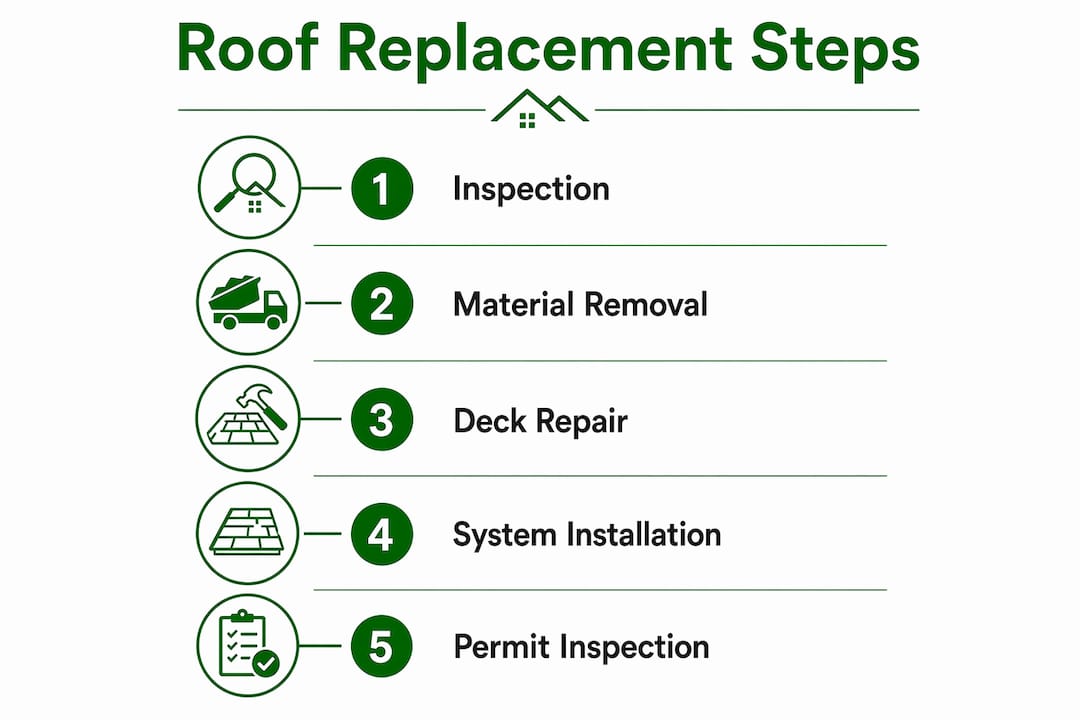
The commercial roof replacement process follows a defined sequence, and skipping any phase creates problems that compound over time. Replacement begins with full tear-off down to the structural deck, followed by deck inspection, system installation, and final sign-off.
Here are the core steps in order:
- Roof inspection and assessment. A licensed contractor performs a thorough roof inspection that includes moisture surveys, infrared scanning, and physical core samples. This determines whether replacement is warranted or whether repairs can extend the roof's life.
- Repair vs. replacement decision. Based on inspection findings, the contractor recommends a course of action. Widespread moisture intrusion, deck damage, or a roof past its service life all point toward full replacement rather than restoration.
- System selection. You choose a roofing system based on your building's structural load capacity, climate exposure, energy goals, and budget. Options include EPDM, TPO, PVC, modified bitumen, and metal roofing.
- Project scheduling and planning. Effective scheduling and coordination between contractors, inspectors, and building managers minimizes disruption to tenants and daily operations. Staging areas, weather windows, and inspection checkpoints are mapped out before work begins.
- Permit application. Most jurisdictions require a permit before tear-off begins. Your contractor submits drawings, material specifications, and scope documents to the local building department.
- Tear-off. Crews remove all existing roofing layers down to the structural deck. Any debris is staged and removed from the property according to local disposal regulations.
- Deck inspection and repair. The exposed deck is examined for rot, corrosion, soft spots, and structural compromise. Damaged sections are repaired or replaced before any new materials are installed.
- Insulation and membrane installation. New insulation boards are fastened or adhered to the deck, followed by the chosen membrane system. Flashings, penetration seals, and drainage components are installed to manufacturer specifications.
- Final inspection and closeout. The building department conducts a final walkthrough. The contractor provides warranty documentation, and the permit is closed.
Pro Tip: Schedule your permit inspection immediately after deck prep is complete. Coordinating permit-required inspections right after tear-off and deck repair avoids costly rework and keeps your project timeline on track.
How do moisture and deck condition influence replacement scope?
Moisture damage is the single most consequential variable in determining how to replace a commercial roof. What appears as minor surface deterioration often conceals saturated insulation layers that have been trapping water for years.
Contractors use three primary detection methods:
- Infrared scanning. Thermal cameras detect temperature differentials caused by wet insulation after sunset, when the roof releases heat unevenly. Advanced infrared scanning provides data that visible inspections cannot capture.
- Nuclear moisture meters. These devices measure hydrogen content in roofing layers to quantify saturation levels across the entire roof field.
- Core samples. Physical plugs cut from the roof reveal the actual condition of each layer, from membrane down to deck.
GAF's 2026 guidance establishes a clear threshold: when moisture is present in 25% or more of the roof area, full tear-off is required rather than coating or restoration. That threshold exists because coating over saturated insulation traps moisture against the deck, accelerating rot and voiding manufacturer warranties. Moisture maps covering the entire roof field are preferred over spot checks, because localized sampling routinely underestimates total saturation.
Deck condition determines whether the replacement scope expands beyond the roofing system itself. Deck damage including rot, corrosion, and soft spots must be repaired before insulation is installed. Installing a new membrane over a compromised deck shortens the new roof's lifespan and creates warranty exposure. A deck that looks structurally sound from below can still show significant deterioration once the old roofing is removed, which is why contractors treat the post-tear-off inspection as a separate, critical scope item.
What permitting and inspection requirements apply to commercial roofs?
Permit requirements for commercial roof replacement vary by jurisdiction, but the general framework is consistent. Most municipalities treat a full tear-off as a trigger for a building permit, particularly when insulation is being changed or the structural deck is being modified.
Common inspection checkpoints include:
- Pre-cover inspection. Required before any new insulation or membrane is installed over the repaired deck. The inspector verifies deck condition and any structural repairs.
- In-progress inspection. Some jurisdictions require a mid-project check on underlayment, insulation fastening patterns, and flashing installation.
- Final inspection. Confirms that the completed roof meets code, including drainage, edge metal, and penetration sealing.
Saint Paul requires multiple inspections before any work is concealed and again at project completion. New York City mandates Department of Buildings approvals, plan review, and progress inspections for commercial projects. NYC goes further: Local Laws 92 and 94 require commercial roof replacements over 10,000 square feet to incorporate solar panels, green roofs, or both, which significantly affects scope and cost. In Columbia, MO, failure at any inspection stage results in re-inspection fees and a work stoppage until the deficiency is resolved.
The practical implication for property managers is straightforward: build inspection holds into your project schedule from day one. A contractor who does not account for inspection windows will either rush work to meet deadlines or leave your building exposed while waiting for a rescheduled inspector.
Pro Tip: Ask your contractor to confirm the local inspection sequence in writing before signing a contract. Knowing exactly when inspectors must be called prevents last-minute schedule disruptions that cost time and money.
You can review how commercial roofing permits and compliance work in the Chattanooga area to understand what local requirements look like in practice.
What roofing systems are used in commercial replacements?
The roofing system you select shapes every downstream decision: installation method, labor requirements, warranty terms, and long-term maintenance needs. Each system has distinct performance characteristics and installation demands.
| System | Material | Seam Method | Typical Lifespan | Best For |
|---|---|---|---|---|
| EPDM | Synthetic rubber | Tape/adhesive bonding | 20 to 30 years | Low-slope roofs, budget-conscious projects |
| TPO | Thermoplastic polyolefin | Heat welding | 15 to 25 years | Energy efficiency, chemical resistance |
| PVC | Polyvinyl chloride | Heat welding | 20 to 30 years | Grease exposure, chemical environments |
| Modified bitumen | Asphalt-based | Torch, cold-applied, or self-adhered | 15 to 20 years | High-traffic roofs, complex geometries |
| Metal roofing | Steel or aluminum panels | Mechanical fastening or standing seam | 40 to 70 years | Long-term investment, steep or low slope |
EPDM seam integrity depends entirely on correct primer-and-tape or adhesive procedures rather than heat welding. EPDM seam preparation requires careful attention to weather conditions, surface cleanliness, and bonding technique. TPO and PVC systems use heat-welded seams, which create a monolithic bond when done correctly. However, failures in TPO and EPDM systems most often trace back to poor seam prep, temperature mishandling during installation, or rushed adhesive application. These are not material failures. They are craftsmanship failures.
Metal roofing stands apart from membrane systems in both installation method and lifespan. A properly installed metal roofing system can last 40 to 70 years with minimal maintenance, making it the highest long-term value option for commercial buildings with the structural capacity to support it.
System selection also affects warranty terms. Manufacturer-backed warranties typically require certified installers and documented quality control at the seam level. Choosing a contractor without the relevant certification can void the warranty before the roof is even finished.
Key takeaways
Commercial roof replacement requires a precise, sequential process where deck condition, moisture levels, permit compliance, and system selection each determine the project's final scope and long-term outcome.
| Point | Details |
|---|---|
| Full tear-off is the starting point | All materials are removed to the structural deck before any new system is installed. |
| Moisture drives scope decisions | GAF's 25% moisture threshold determines whether coating or full replacement is the right call. |
| Permits and inspections are non-negotiable | Missing an inspection checkpoint causes work stoppages, re-inspection fees, and potential code violations. |
| System choice affects warranty validity | Certified installation and documented seam quality are required to maintain manufacturer-backed warranties. |
| Deck repair is a separate scope item | Post-tear-off deck damage must be addressed before insulation or membrane installation begins. |
Why deck inspection is the step most property managers underestimate
After working through dozens of commercial roofing projects, the pattern I see most often is this: a property manager approves a replacement budget based on the visible roof condition, and then the real scope reveals itself the moment the old membrane comes off. Deck damage is almost always worse than anticipated.
The reason is straightforward. Water that penetrates a membrane does not stay at the surface. It migrates laterally through insulation, pools at low points, and sits against the deck for months or years before anyone notices. By the time a roof shows obvious surface failure, the deck beneath it has often been compromised for a long time. Infrared scanning helps, but even a thorough commercial roof replacement planning process cannot fully predict what you will find until the tear-off is complete.
My strong recommendation is to build a deck repair contingency into every replacement budget. A 10 to 15 percent contingency for deck repairs is not pessimistic. It is realistic. Contractors who give you a fixed price with no contingency are either pricing in a large buffer or planning to present a change order after tear-off.
The other thing I see rushed far too often is seam quality assurance on membrane systems. A TPO or PVC roof is only as good as its weakest seam, and seams installed in cold weather or by undertrained crews fail within a few years. Insist on documented seam testing, not just a visual inspection, before you accept the completed work.
Post-replacement maintenance planning is the final piece most owners skip. A new roof does not mean a maintenance-free roof. Scheduling annual inspections and addressing minor issues before they become moisture pathways is what actually gets you to the full warranty term.
— Steve
Get expert commercial roof replacement help in Chattanooga
When your building needs a full commercial roof replacement, the quality of the contractor you choose determines everything from permit compliance to warranty validity.
Chattanoogaroofrepairs provides licensed, insured commercial roofing services across Chattanooga and surrounding areas, using materials from top manufacturers including GAF and Owens Corning. We handle the full replacement process from initial assessment through final inspection, with transparent pricing and no-pressure consultations. Whether your building is best suited for a metal roofing system or a membrane-based solution, we provide honest recommendations backed by certified expertise. Explore our full range of roofing services or contact us today to schedule your assessment.
FAQ
What is the first step in a commercial roof replacement?
The first step is a thorough inspection that includes moisture surveys, infrared scanning, and core samples to assess the condition of the existing roof and structural deck before any work begins.
How long does a commercial roof replacement take?
Most commercial roof replacements take one to three weeks depending on building size, system type, permit inspection scheduling, and the extent of deck repairs discovered after tear-off.
When does moisture damage require full replacement instead of coating?
GAF guidance establishes that when moisture is present in 25% or more of the roof area, full tear-off and replacement is required rather than a coating or restoration approach.
Do commercial roof replacements always require a permit?
Most jurisdictions require a building permit for commercial roof replacements, particularly when a full tear-off is involved or when insulation and structural components are being modified.
How do I choose between TPO, EPDM, and metal roofing for my building?
TPO and PVC are strong choices for energy efficiency and chemical resistance, EPDM suits budget-focused low-slope applications, and metal roofing delivers the longest lifespan at 40 to 70 years for buildings with adequate structural capacity.