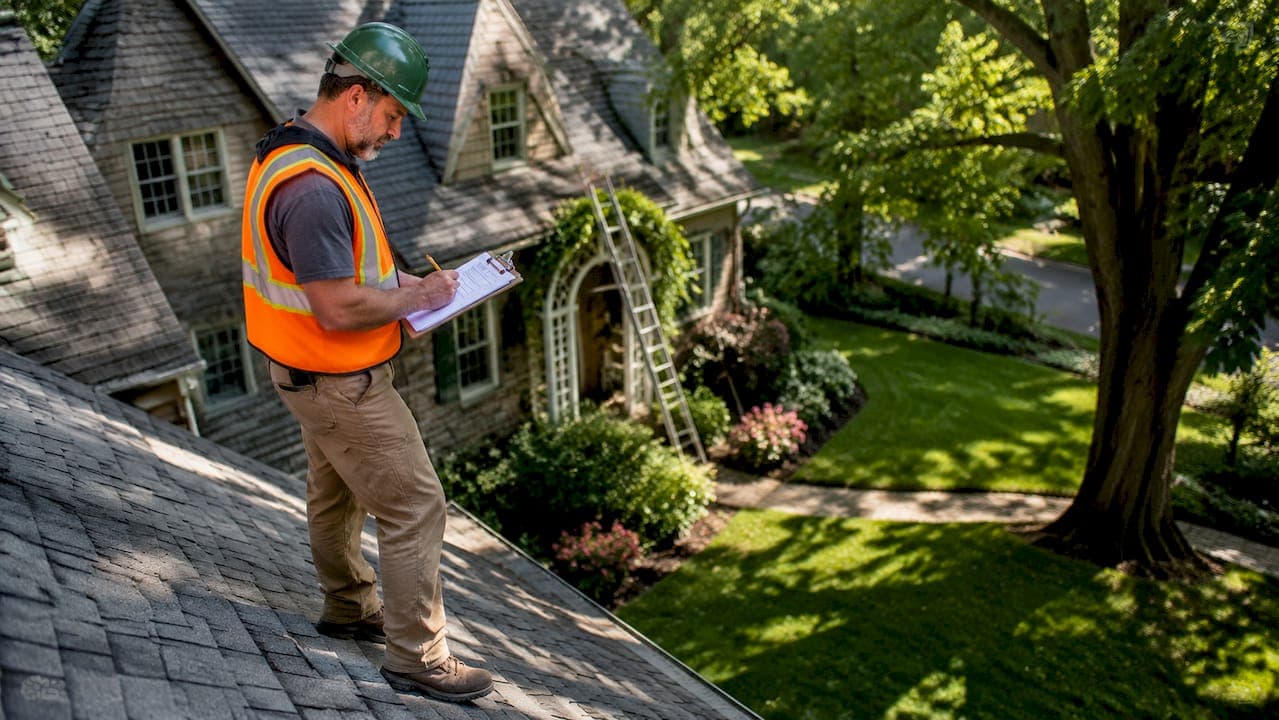
A roof replacement timeline is defined as the full sequence of phases from initial inspection through final cleanup, typically spanning 2 to 8 weeks with active installation lasting 1 to 3 days for most standard homes. Most homeowners are surprised to learn that the crew on their roof represents only a fraction of the total project duration. The weeks before and after that installation day carry just as much weight. Understanding what does roof replacement timeline involve, phase by phase, lets you plan around it instead of being caught off guard by it.
What are the main phases in a roof replacement timeline?
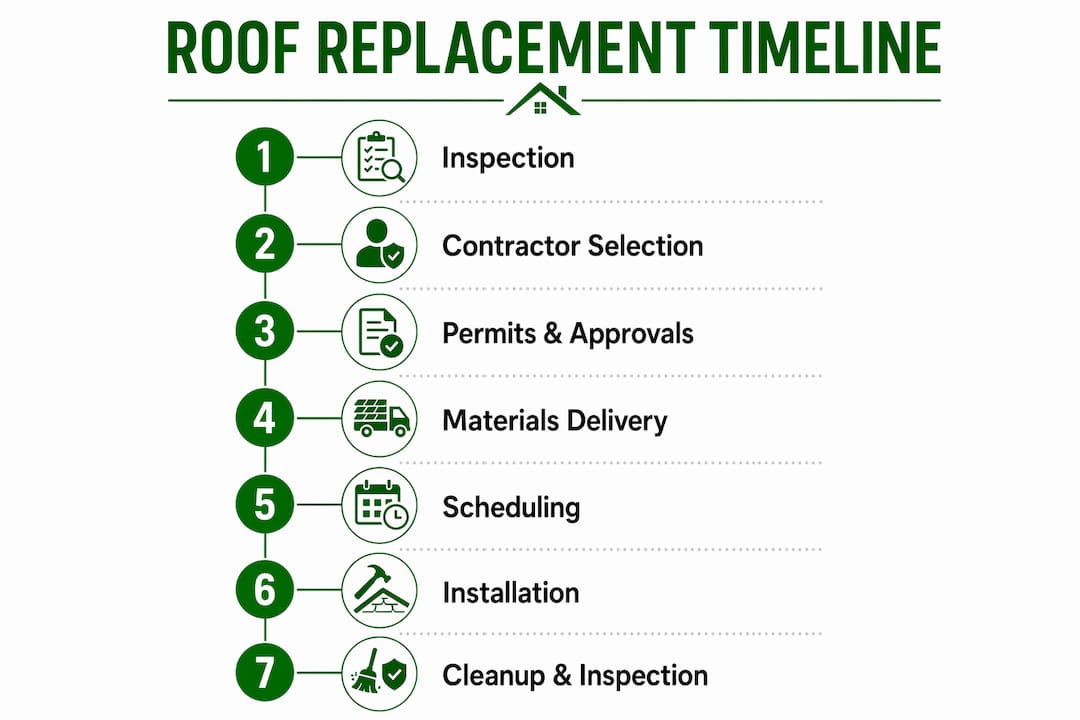
The roof replacement process breaks into seven distinct phases, each with its own duration and dependencies. Knowing what happens at each stage removes the guesswork and helps you hold your contractor accountable.
Phase 1: Inspection and estimate (1 to 3 days) A licensed contractor performs a comprehensive roof inspection to assess shingle condition, flashing, decking, and ventilation. The written estimate follows within one to three days. This phase sets the scope for everything that comes after.

Phase 2: Contractor selection and contract signing (3 to 7 days) Comparing bids, checking licenses, verifying insurance, and reviewing warranty terms takes time. Rushing this step is the most common mistake homeowners make. GAF and Owens Corning manufacturer-backed warranties, for example, are only valid when installed by certified contractors, so vetting matters.
Phase 3: Permit acquisition and HOA approvals (1 to 3 weeks) Permit acquisition typically takes 1 to 5 business days depending on your local municipality, and HOA approvals can add another 1 to 2 weeks. Permit delays are a leading cause of schedule shifts on roofing projects. Submit HOA paperwork the same day you sign the contract to avoid stacking delays.
Phase 4: Material ordering and delivery (3 to 14 days) Asphalt shingles from suppliers like GAF or Owens Corning typically arrive within 3 to 5 days. Specialty materials like slate or clay tile can take up to two weeks, especially if a specific color or profile is backordered. Your contractor should confirm lead times before you finalize the schedule.
Phase 5: Scheduling the installation date (variable) High-demand seasons, particularly late summer and fall, can push your start date out by two to four weeks. Experienced crews plan early start times and efficient crew deployment to maximize productivity and reduce on-site days, so a well-organized contractor minimizes this gap.
Phase 6: Active installation (1 to 3 days) This is the phase most homeowners picture when they think about roof replacement. Tear-off, decking inspection, underlayment, and shingle installation all happen here.
Phase 7: Final cleanup and inspection (1 to 3 days) Cleanup, a city building inspection if required, and a final walkthrough with the homeowner close out the project.
| Phase | Typical Duration |
|---|---|
| Inspection and estimate | 1 to 3 days |
| Contractor selection | 3 to 7 days |
| Permits and HOA approvals | 1 to 3 weeks |
| Material ordering and delivery | 3 to 14 days |
| Scheduling and start date | Days to weeks |
| Active installation | 1 to 3 days |
| Cleanup and final inspection | 1 to 3 days |
Pro Tip: Ask your contractor for a written project schedule at contract signing. A reliable contractor can map out each phase with estimated dates, which gives you a clear reference point if delays occur.
How do materials, size, and complexity affect the installation phase?
The roof installation timeline varies significantly based on what goes on your roof, how big your roof is, and how complicated the geometry is. These three factors determine whether your crew wraps up in a single day or stretches across a full week.
Material type and installation speed
Asphalt shingles are the fastest material to install, typically completed in one to three days for an average home. Metal roofing takes 3 to 5 days due to panel cutting, seaming, and fastening requirements. Slate and tile installations run 5 to 10 or more days because each piece requires precise placement and mortar or mechanical fastening. Wood shake falls between asphalt and metal, averaging two to four days.
Roof size and square footage
Roofing is measured in "squares," where one square equals 100 square feet. A 1,500-square-foot home typically has a roof of 15 to 20 squares and can be completed in one day with a full crew. A 3,000-square-foot home with 30 or more squares realistically takes two to three days. Larger homes simply require more material passes, more cuts, and more labor hours.
Roof complexity and pitch
Steep roofs with a pitch above 8/12 add at least one full day to the installation because workers must use safety harnesses, move more carefully, and cut more precisely around angles. Dormers, multiple valleys, skylights, and chimneys each add hours. A simple gable roof on a ranch-style home is the fastest scenario. A two-story colonial with four dormers and a steep pitch is the slowest.
- Dormers: each one adds 2 to 4 hours of labor
- Valleys: require custom flashing cuts and careful waterproofing
- Skylights: require removal, resealing, and reinstallation
- Chimneys: require step flashing and counter flashing replacement
Pro Tip: If your roof has multiple penetrations like skylights or a chimney, ask your contractor specifically how they price and schedule those details. Vague answers here often lead to surprise charges later.
Weather is the wildcard that no schedule fully accounts for. Roofing professionals halt work during rain, high winds, or temperatures above 85 to 90°F, which can add 1 to 3 days of delay. Spring offers the most consistent temperatures for roofing work in most regions, including Chattanooga.
What should homeowners do to prepare before installation day?
Your preparation directly affects how smoothly the roofing project duration runs. A few hours of prep work on your end can prevent delays, protect your property, and reduce stress on installation day.
- Move all vehicles out of the driveway and away from the home the evening before work begins. Falling debris and delivery trucks need clear access.
- Cover attic contents with plastic sheeting or old blankets. Vibrations from tear-off shake loose dust and small debris through ceiling fixtures.
- Remove or secure outdoor furniture, potted plants, and decorative items within 10 feet of the home's perimeter.
- Warn your neighbors. A courtesy heads-up about noise and crew vehicles is a small gesture that preserves goodwill.
- Plan to be home or reachable during the final walkthrough. This is when you confirm cleanup quality and sign off on the completed work.
Tear-off begins early, with crews typically arriving between 6:30 AM and 7:30 AM. The loudest phase, which involves prying up old shingles and nailing down new ones, can rattle wall fixtures and disturb pets for several hours. Plan to keep pets in a quiet interior room and consider working away from home if you have noise-sensitive work.
If your contractor discovers rotted decking during tear-off, transparent documentation of structural issues is standard practice among reputable contractors. Repairs must happen before new roofing goes down, which can add a day and additional material costs. This is not a red flag. It is a sign your contractor is doing the job correctly.
Pro Tip: Take photos of your attic, landscaping, and driveway before the crew arrives. This gives you a clear baseline if any damage questions arise after the project is complete.
How do permits, inspections, and unexpected discoveries delay a project?
Delays in roofing are often beyond homeowner control, caused by permitting queues, material backorders, and weather interruptions. Understanding which delays are normal and which signal a contractor problem helps you stay calm and informed.
Permit wait times vary by city. In Chattanooga and surrounding areas, residential roofing permits typically process within 1 to 5 business days. If your neighborhood falls under an HOA, add another 1 to 2 weeks for architectural review. Some HOAs require specific shingle colors or profiles, which can also affect material ordering timelines.
Post-installation, a city building inspector may need to sign off before the project is officially closed. Scheduling that inspection depends on the inspector's availability, not your contractor's. A one to three day wait after installation is normal.
"Discovering rotted decking or failed attic ventilation during tear-off is not unusual. What separates a trustworthy contractor from an unreliable one is how they communicate those findings. You should receive photos, a written scope of additional repairs, and a revised cost estimate before any extra work begins."
Attic ventilation problems are another common discovery. Failing to address ventilation issues can void manufacturer warranties from brands like GAF and Owens Corning and delay final inspections. Correcting ventilation during the replacement is always more cost-effective than returning to fix it later.
Weather delays are real and unavoidable. A contractor who pushes through rain or extreme heat to meet a deadline is cutting corners, not doing you a favor. A one to three day weather pause is a reasonable expectation on any roofing project.
Key takeaways
A roof replacement timeline spans 2 to 8 weeks total, with only 1 to 3 days of active on-site installation, and the remaining time is consumed by permitting, material delivery, scheduling, and inspections.
| Point | Details |
|---|---|
| Total timeline length | Expect 2 to 8 weeks from inspection to final sign-off, not just a few days. |
| Installation duration by material | Asphalt shingles take 1 to 3 days; metal takes 3 to 5 days; slate or tile takes 5 to 10+ days. |
| Permit and HOA delays | Permits add 1 to 5 business days; HOA approvals can add 1 to 2 weeks on top of that. |
| Homeowner prep matters | Moving vehicles, covering attic items, and being available for the final walkthrough reduces friction. |
| Unexpected repairs are normal | Rotted decking or ventilation issues found during tear-off require transparent documentation and add time. |
What I've learned about managing roof replacement expectations
After years of working with homeowners through roof replacements in Chattanooga, the single biggest source of frustration is not the noise or the cost. It is the gap between what homeowners expect and what the process actually looks like.
Most people assume the project is done when the crew leaves on installation day. The reality is that the permit inspection, final cleanup pass, and contractor walkthrough still need to happen. I have seen homeowners assume a project is complete only to find out the city inspection is still pending. That gap creates unnecessary anxiety.
The other thing I would push back on is the idea that a fast timeline is always better. A contractor who rushes through permitting or skips the magnetic nail sweep to finish a day early is not doing you a favor. Post-installation cleanup with magnetic sweepers is a standard best practice, not an optional extra. Multiple passes through the yard are required to catch nails in grass, mulch, and gravel. If your contractor does not mention this, ask about it directly.
My honest recommendation is to schedule your replacement in spring if you have any flexibility. Moderate temperatures reduce weather delays, contractor demand is lower than in fall, and material lead times tend to be shorter. Homeowners who schedule in spring consistently report smoother projects than those who wait until after summer storm season.
Choose a contractor who gives you a written phase schedule, communicates discovered issues with photos and revised estimates, and does not pressure you to skip the inspection process. That combination of transparency and process discipline is what separates a quality installation from one you will be calling about in two years.
— Steve
Plan your roof replacement with Chattanoogaroofrepairs
If you are ready to move from research to action, Chattanoogaroofrepairs handles every phase of the replacement process from the first inspection through final cleanup. The team works with GAF and Owens Corning materials, manages local permit submissions, and uses magnetic nail sweepers on every job as standard practice, not an upsell.
Whether you need asphalt shingle replacement or are considering a longer-lasting metal roofing system, Chattanoogaroofrepairs provides transparent pricing and a no-pressure free consultation. The team also builds weather contingency days into every project schedule so delays do not catch you off guard. Contact Chattanoogaroofrepairs today to get a written estimate and a clear phase-by-phase timeline for your home.
FAQ
How long does a full roof replacement take from start to finish?
The complete roof replacement process typically takes 2 to 8 weeks from initial inspection to final sign-off, with the on-site installation phase lasting just 1 to 3 days for most standard homes.
What causes the most delays in a roof replacement project?
Permit delays, material backorders, and weather interruptions are the leading causes of schedule shifts. HOA approvals alone can add 1 to 2 weeks before installation can begin.
What should I expect on the actual day of installation?
Crews typically arrive between 6:30 AM and 7:30 AM and begin tear-off immediately. Expect significant noise and vibrations for several hours, and plan to keep pets indoors and vehicles moved from the driveway.
Does roof complexity really affect how long installation takes?
Steep roofs with a pitch above 8/12 add at least one full day to installation, and features like dormers, skylights, and chimneys each add additional hours due to safety requirements and custom flashing work.
What happens if the crew finds rotted decking during tear-off?
Rotted decking must be documented and repaired before new roofing is installed. A reputable contractor provides photos and a revised written estimate before proceeding with any additional repairs.