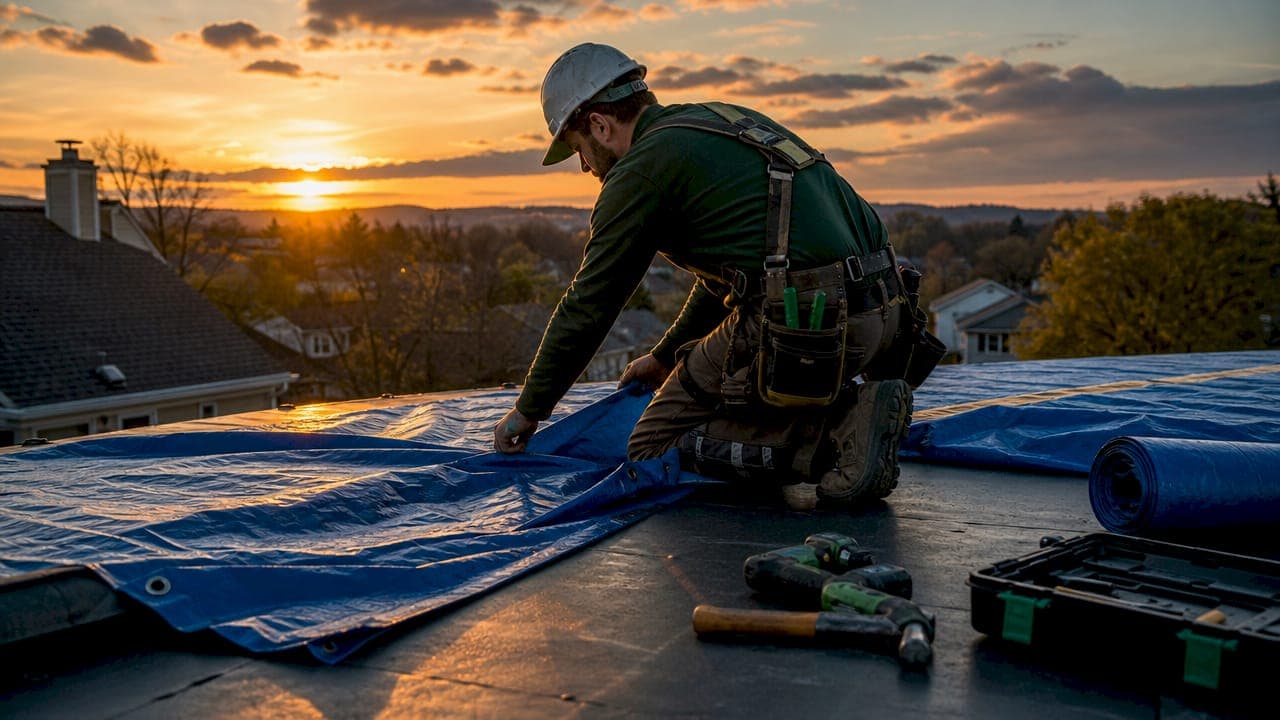
A roofing emergency response is the immediate stabilization process taken after sudden roof failure or storm damage to stop active water intrusion and protect the structure before permanent repairs are planned. Most homeowners and business owners face this situation with no preparation, which turns a manageable problem into a costly one. Knowing exactly what a roofing emergency response protocol involves, what qualifies as a true emergency, and what steps to take first can mean the difference between a quick fix and a full roof replacement. This guide gives you a clear, practical framework to act fast and act right.
What is a roofing emergency response and how does it work?
A roofing emergency response is defined as the time-critical sequence of actions taken to stabilize a roof after sudden failure, storm damage, or active water infiltration. The primary goal is damage control, not diagnosis. Stopping water from entering the structure takes priority over identifying the root cause, because every minute of active intrusion increases the risk of mold, structural decay, and interior damage.
The process typically begins with a safety assessment, followed by temporary mitigation measures like heavy-duty polyethylene tarping or emergency sealant application. These temporary measures are not repairs. They are barriers that buy time until a licensed contractor can complete a full assessment and schedule permanent work. Materials like GAF-certified underlayment patches and Owens Corning flashing tape are commonly used for temporary sealing in residential situations.
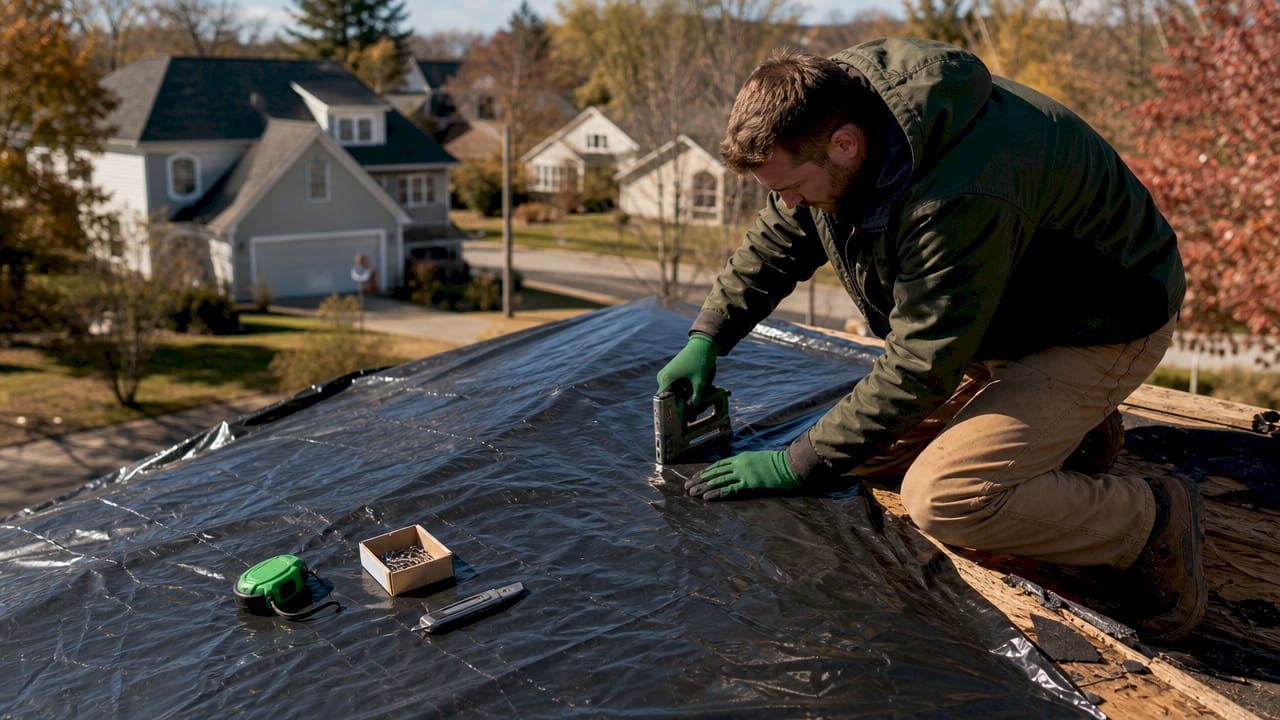
Emergency roofing services differ from standard repair calls in one critical way: response time is measured in hours, not days. A true roofing emergency requires a contractor on-site within hours, not a scheduled appointment next week. That urgency is what separates emergency roof damage response from routine maintenance.
How to classify roof damage urgency
Classifying roof issues by urgency prevents two costly mistakes: treating a minor issue as an emergency and paying premium rates unnecessarily, or delaying a genuine emergency until the damage multiplies. The table below outlines the three standard urgency levels used by professional roofing contractors.
| Urgency Level | Signs and Conditions | Response Time |
|---|---|---|
| Emergency | Active leak near electrical panel, exposed plywood, structural sag, visible deck damage | Within 8 hours |
| Urgent | Damaged flashing, missing shingles after a storm, slow drip in non-critical area | By next business day |
| Priority | Worn sealant, minor granule loss, cosmetic cracking | Scheduled within 1 to 2 weeks |
Emergency repairs intervene within 8 hours for conditions that actively damage the structure or create safety hazards. This means exposed roof decking, leaks near electrical panels, or visible structural sagging all qualify. These are not situations where you wait for a Monday morning callback.
Urgent repairs are handled by the next business day. A storm that removes several shingles but leaves the underlayment intact is urgent, not an emergency, unless rain is forecast within hours. Weather forecasts directly affect urgency classification. A 70% chance of rain overnight turns an urgent issue into an emergency. Priority repairs cover deferred maintenance and cosmetic issues that pose no immediate risk to occupants or the structure.
Immediate steps to take when a roof emergency happens
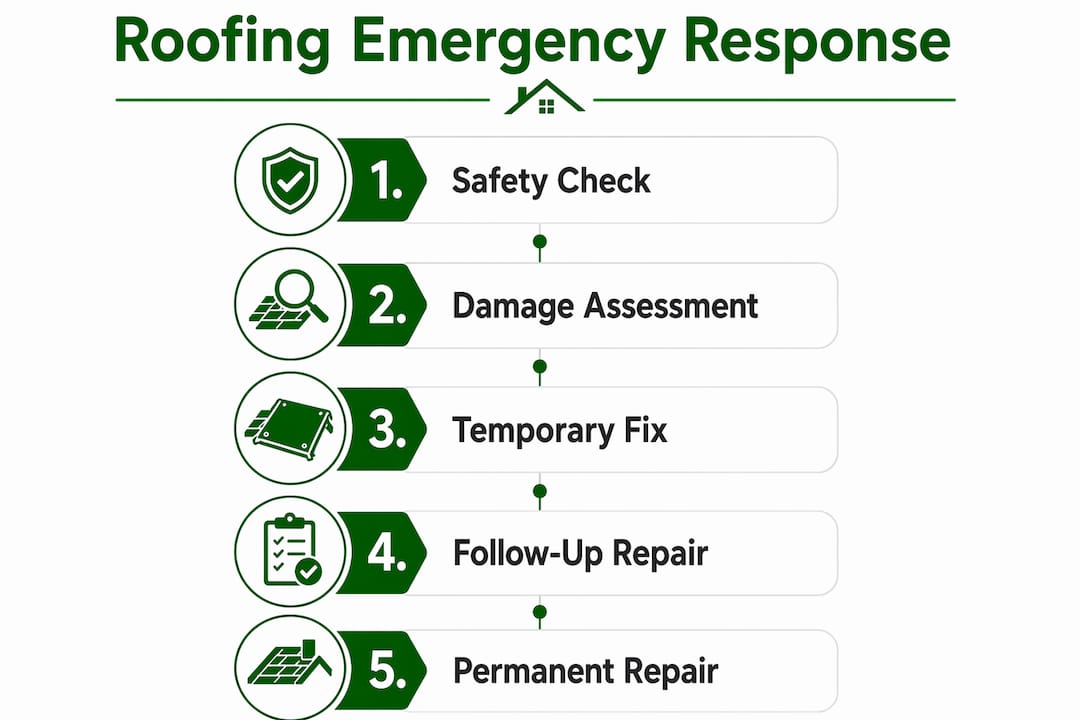
The first 24 hours of a roofing emergency determine how much total damage you sustain. Following a structured response reduces both repair costs and insurance complications. Here is the correct sequence:
-
Evacuate if necessary. Structural sag or visible deck damage means the ceiling could fail. Get people and pets out of affected rooms immediately. Restrict access to unsafe areas and block off standing water near any electrical panels before anything else.
-
Document everything before touching it. Take photos and video from multiple angles, both exterior and interior. Capture drip patterns, water stains, and any debris. Proper documentation enables a higher insurance settlement and gives your contractor a clearer repair scope. Spend 5 to 20 minutes on this step before any mitigation begins.
-
Place buckets and move valuables. Protect interior contents from water damage while you wait for professional help. Move furniture, electronics, and documents away from the affected area.
-
Apply temporary interior mitigation. If water is actively dripping, use plastic sheeting secured with tape to redirect water into containers. Do not attempt to access the roof yourself unless you are trained and have proper safety equipment.
-
Call your insurance carrier within 2 hours. The 24-hour emergency protocol recommends notifying your insurer as soon as possible after documenting damage. Early notification protects your claim and starts the adjustment process faster.
-
Contact a licensed roofing contractor for emergency services. Request 24/7 roofing emergency support and confirm they offer same-day tarping. Ask whether they carry liability insurance and manufacturer certifications before they arrive.
Pro Tip: Never access your roof during or immediately after a storm. Wet surfaces, wind, and hidden structural damage create fall risks that no repair is worth. Let a licensed professional handle roof access.
How temporary roofing fixes actually work
Emergency roof tarping is a temporary barrier, not a repair. Its only job is to prevent rain, wind, and debris from entering the structure until permanent work can be scheduled. Understanding this distinction helps you set realistic expectations and avoid being misled by contractors who present tarping as a complete solution.
Here is what proper temporary roofing mitigation involves:
- Tarp selection matters. Heavy-duty polyethylene tarps are the standard. Lightweight tarps tear in wind and fail within days. A proper emergency tarp should extend at least 4 feet beyond the damaged area on all sides to account for wind-driven rain.
- Anchoring is the most critical step. A tarp that is not properly weighted and secured will funnel water directly into the damaged area, making things worse. Sandbags, wood battens screwed into the decking, or weighted edge boards are all acceptable anchoring methods.
- Water shedding direction must be correct. The tarp must be positioned so water runs off the roof edge, not toward the ridge or into valleys. Incorrect tarp placement is one of the most common causes of secondary water damage after a storm.
- Temporary sealants complement tarps. Products like Henry 208R wet-patch sealant or self-adhering flashing tape from Owens Corning can seal small punctures, cracked flashing, or exposed nail heads as part of an immediate roofing solution while the tarp is being installed.
Pro Tip: If a contractor installs a tarp and calls the job complete without scheduling a follow-up inspection, that is a red flag. Temporary fixes require a documented plan for permanent repair, especially when an insurance claim is open.
Temporary fixes protect your home for days to weeks, not months. Leaving a tarp in place through multiple storm cycles degrades the material and risks additional water infiltration. Schedule permanent repairs as soon as the immediate emergency is stabilized.
Emergency response vs. routine roof repairs: what is the difference?
Roofing emergencies involve active water infiltration or structural failure that creates immediate risk to occupants and contents. Routine repairs address deferred maintenance, cosmetic damage, or wear that poses no immediate threat. The distinction matters because emergency response changes the timeline, the documentation requirements, and the insurance process.
| Factor | Emergency response | Routine repair |
|---|---|---|
| Timing | Within hours | Scheduled days or weeks out |
| Goal | Stop active damage immediately | Restore full function and appearance |
| Documentation | Critical for insurance claims | Standard contractor scope of work |
| Permits | Often waived for temporary stabilization | Required for permanent structural work |
| Insurance involvement | Immediate notification required | Optional depending on cause |
Same-day roof repair refers specifically to temporary stabilization. Permanent repairs require scheduling, material procurement, and often building permits. A contractor who promises a full permanent repair the same day a major storm hits is either overstating what is possible or cutting corners on permitting.
Cosmetic damage, such as minor granule loss, surface cracking, or a few lifted shingles with no active leak, does not qualify as an emergency. Treating it as one wastes money and ties up emergency contractor resources. The correct response is to document it, monitor it, and schedule a professional inspection within a week or two.
Key takeaways
A roofing emergency response is the structured, time-critical process of stopping active roof damage through temporary measures, documentation, and professional intervention before permanent repairs begin.
| Point | Details |
|---|---|
| Emergency classification | Active leaks, exposed decking, or structural sag require contractor response within 8 hours. |
| Documentation first | Photograph damage from multiple angles before any mitigation to protect your insurance claim. |
| Tarping is temporary | Heavy-duty tarps anchored correctly prevent further intrusion but must be followed by permanent repair. |
| Call insurance early | Notify your carrier within 2 hours of the incident to protect claim validity and speed up the process. |
| Emergency vs. routine | Cosmetic damage is not an emergency. Only active water intrusion or structural risk warrants emergency response. |
What I have learned from years of emergency roof calls
When a storm rolls through Chattanooga and the phones start ringing, the homeowners who fare best are almost always the ones who stayed off the roof and called us first. The ones who fare worst are the ones who climbed up to "take a quick look" and either fell or made the damage worse by moving debris around.
The biggest mistake I see is delayed documentation. People panic, grab buckets, and start moving things. By the time we arrive, the original damage pattern is gone and the insurance adjuster has less to work with. Spend those first 10 minutes with your phone camera, not a mop.
I also want to be direct about insurance timing. Calling your carrier within 2 hours is not just a formality. Insurers track notification timing, and late reporting can complicate your claim even when the damage is clearly storm-related. Coordinate your contractor call and your insurance call at the same time.
One more thing: not every roof problem is an emergency, and a good contractor will tell you that honestly. If a few shingles blew off but your attic is dry and no rain is forecast for 48 hours, you have time to schedule properly. Chasing emergency rates for a non-emergency situation is money you do not need to spend.
— Steve
How Chattanoogaroofrepairs responds to roof emergencies in Chattanooga
When your roof is actively leaking or storm damage has left your home exposed, Chattanoogaroofrepairs is ready to respond the same day. We offer 24/7 roofing emergency support for both residential and commercial properties across Chattanooga and the surrounding areas, with same-day tarping to stop water intrusion fast.
Our team handles everything from storm and hail damage repair to active roof leak repair, using materials from GAF and Owens Corning backed by manufacturer warranties. Every emergency call includes a thorough damage assessment and transparent pricing with no pressure. We also work directly with insurance carriers to make the claims process straightforward for you. If your roof needs immediate attention, contact Chattanoogaroofrepairs now for a no-obligation assessment and fast, professional response.
FAQ
What qualifies as a roofing emergency?
A roofing emergency involves active water infiltration, exposed roof decking, structural sagging, or leaks near electrical panels that create immediate risk to occupants or the structure. These conditions require a licensed contractor on-site within 8 hours.
Can I tarp my own roof after storm damage?
You can apply a tarp from the ground or a ladder to the eave level, but accessing the roof surface yourself is dangerous, especially after a storm. Improper tarp installation can funnel water into the damaged area and worsen the problem. A licensed contractor with proper safety equipment should handle roof-level tarping.
How soon should I call my insurance company after roof damage?
Contact your insurance carrier within 2 hours of discovering the damage. Early notification protects your claim and starts the adjustment process faster. Document the damage with photos and video before making any mitigation changes.
What is the difference between emergency and urgent roof repairs?
Emergency repairs address conditions causing active damage and require response within 8 hours. Urgent repairs, such as missing shingles with no active leak, are handled by the next business day. The distinction affects cost, contractor availability, and insurance documentation requirements.
How long can a temporary tarp protect my roof?
A properly installed heavy-duty polyethylene tarp provides protection for days to a few weeks depending on weather conditions. Tarps are not long-term solutions and should be followed by permanent repair as soon as possible to prevent secondary water damage and material degradation.