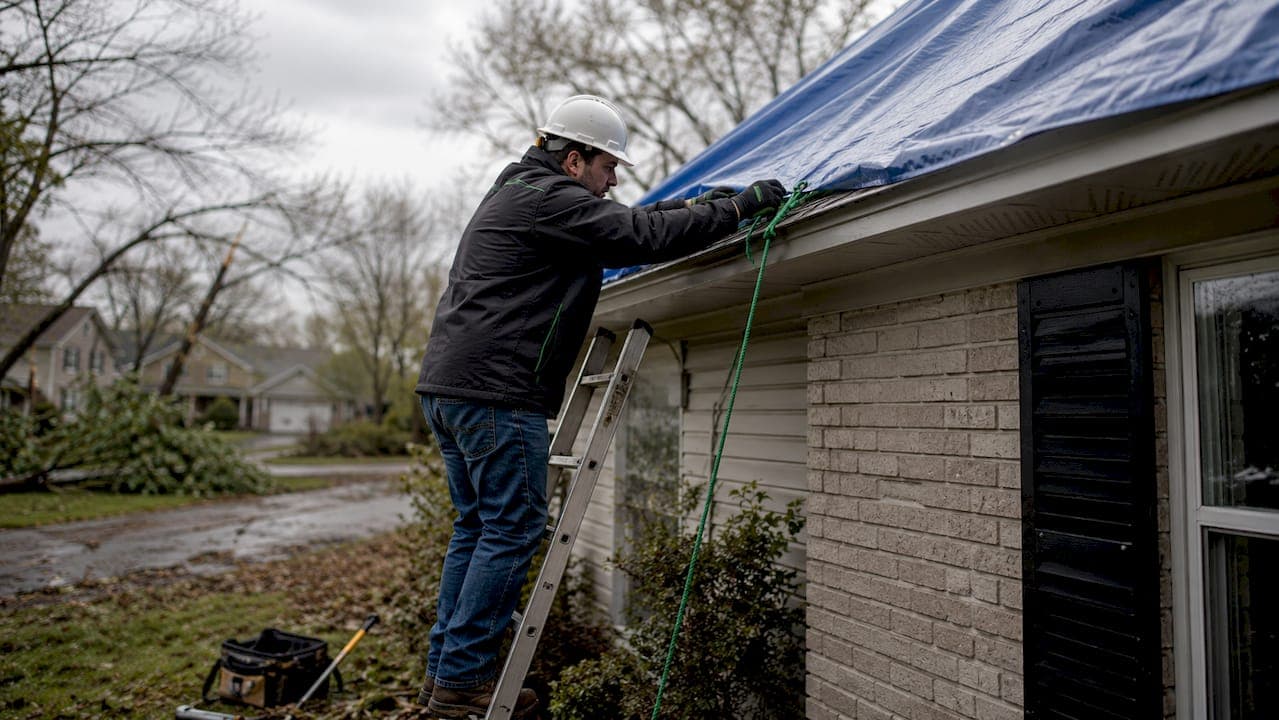
Temporary roof repair is defined as short-term weatherproofing applied immediately after storm damage to stop water intrusion until permanent work can be completed. Understanding why temporary roof repairs matter is the difference between a manageable repair bill and a catastrophic one. A damaged roof left open to rain, wind, and humidity does not stay at the same level of damage. It gets worse, fast. Chattanoogaroofrepairs sees this pattern repeatedly across Chattanooga and the surrounding region: homeowners who act within hours protect their homes; those who wait face mold, structural rot, and insurance disputes.
Why temporary roof repairs matter: stopping damage before it spreads
The most important thing a temporary repair does is interrupt the damage timeline. Once a storm tears away shingles, opens a seam, or punches a hole through decking, water has a direct path into your home. Temporary roof repairs provide short-term weatherproofing that prevents water intrusion from damaging insulation, drywall, framing, ceilings, and belongings. That list is not abstract. Each item represents a separate, expensive repair category.
Here is how damage typically progresses when a roof breach goes unprotected:
- Hours 1–6: Water soaks into attic insulation, reducing its thermal value and creating a wet environment.
- Hours 6–24: Moisture reaches ceiling drywall, causing staining, bubbling, and eventual collapse in severe cases.
- Day 1–3: Wood framing absorbs moisture, beginning the process of swelling, warping, and weakening.
- Day 3–7: Mold spores, which are always present in air, begin colonizing wet surfaces. Delaying temporary roof protection allows damage to escalate into mold growth and structural deterioration, greatly increasing repair complexity and cost.
- Week 2 and beyond: Structural members may require replacement rather than simple repair, and mold remediation adds a separate contractor and cost layer.
The financial implication is significant. A tarp installed within a few hours of storm damage can cost a few hundred dollars. Mold remediation alone can run into the thousands, and that cost sits on top of the original roof repair. Acting fast is not just about protecting your home. It is about protecting your budget.
Pro Tip: Even after a tarp is in place, the clock on interior moisture does not stop. Internal moisture requires active mitigation like drying and extraction to prevent mold from forming beneath the surface.
Temporary vs. permanent roof repairs: what is the real difference?
Many homeowners assume a tarp on the roof means the problem is solved. It is not. Temporary roof tarps typically last 30–90 days and are not permanent fixes. They buy time for documentation, inspections, and scheduling permanent work. Roofing professionals are clear on this point: emergency tarping is mitigation, not repair. It stabilizes damage and stops progression, but it does not fix the underlying structural breach.
Here is a direct comparison of the two approaches:
| Feature | Temporary Repair | Permanent Repair |
|---|---|---|
| Purpose | Stop water intrusion immediately | Restore full structural integrity |
| Typical duration | 30–90 days | 20+ years with quality materials |
| Materials used | Polyethylene tarps, roofing tape, boards | Shingles (GAF, Owens Corning), underlayment, decking |
| Fixes underlying damage | No | Yes |
| Insurance role | Satisfies mitigation duty | Final restoration of covered loss |
| Professional inspection needed | Recommended | Required |
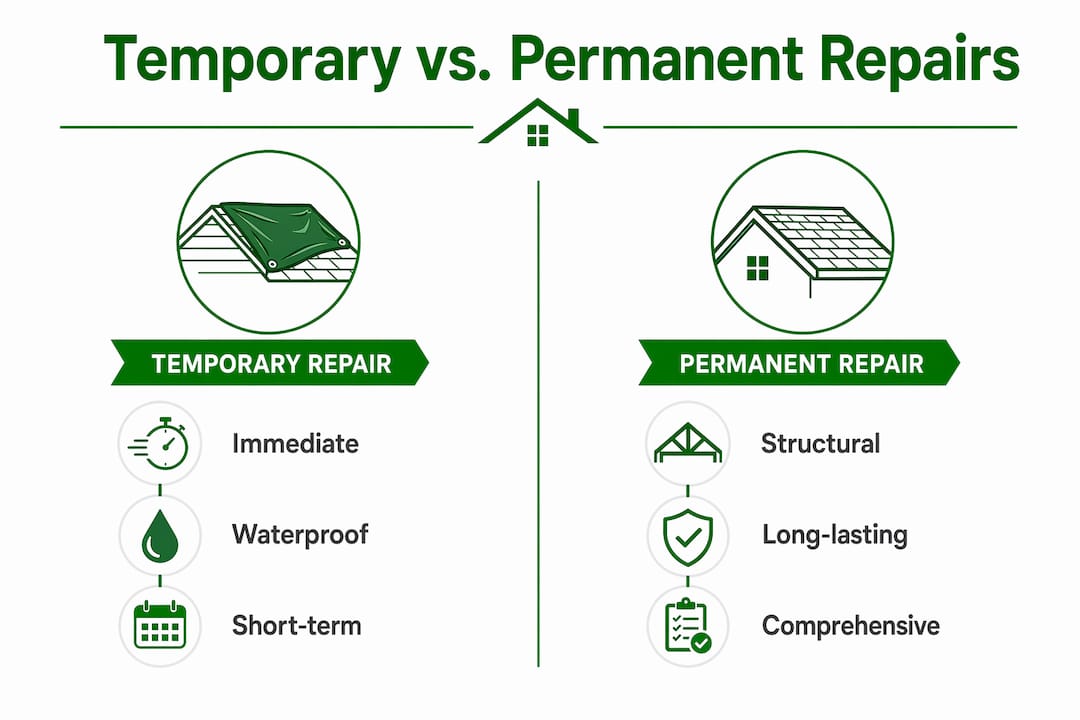
The most common misconception is that a tarp is a long-term solution. Tarps are exposed to UV radiation, wind, and rain. Even FEMA's Operation Blue Roof program, which provides free tarps to disaster-impacted homeowners, designs those tarps to last roughly 30 days. Treating a tarp as a permanent fix leads to a second round of water damage when the tarp fails.
Pro Tip: Schedule a professional roof inspection within two weeks of tarp installation. Hidden damage beneath the surface often exceeds what is visible from the ground.
How do temporary repairs affect your insurance claim?
Most homeowner insurance policies include a duty to mitigate. That means you are required to take reasonable steps to prevent further damage after a covered loss. Insurers expect mitigation within 24–72 hours with supporting photos and receipts. Failing to act within that window can give your insurer grounds to reduce your payout or deny the claim for secondary damage.
Follow these steps to protect your claim from the moment damage occurs:
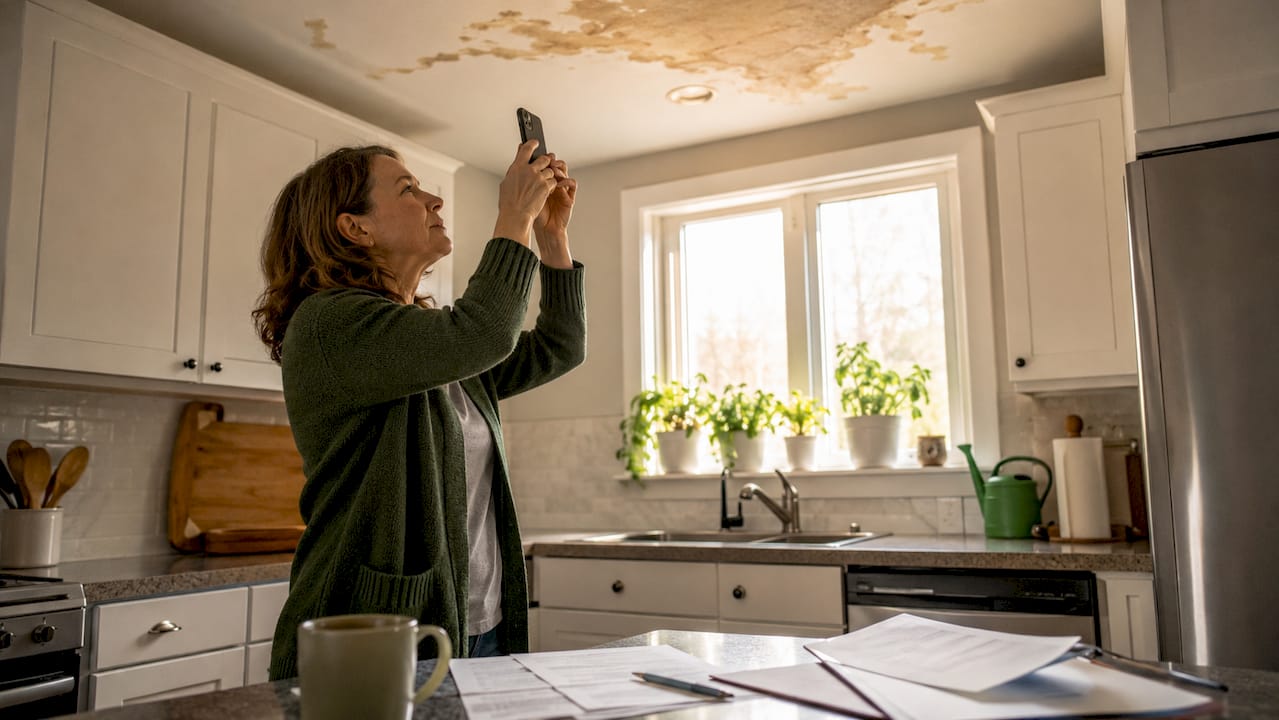
- Photograph everything before any work begins. Take wide shots of the roof, close-ups of the damaged area, and interior shots showing water intrusion. Timestamp matters.
- Contact a licensed roofing contractor for emergency tarping. Professional installation creates a documented record of the repair.
- Save all receipts. Documenting repairs with photos and receipts creates the evidence needed to support your claim and avoid disputes.
- Notify your insurer promptly. Report the damage and the steps you have taken. Do not wait for an adjuster visit to begin mitigation.
- Do not discard damaged materials. Keep torn shingles, broken decking pieces, and any debris. Adjusters use physical evidence to verify the cause of loss.
"Insurance adjusters view well-documented temporary repairs as reasonable actions that uphold policyholder duties and preserve claim validity." — Property Claim Checklist
The documentation you create during the temporary repair phase becomes the foundation of your permanent repair claim. Homeowners who skip this step often find themselves in disputes over what damage existed before the storm versus what developed afterward. Good records eliminate that ambiguity.
Why speed and safety both matter in emergency roof repairs
Speed is the defining factor in emergency roof repair outcomes. Temporary roof tarps can be installed within a few hours post-storm to create a waterproof barrier while permanent repairs are coordinated. Every hour without protection is an hour of potential water infiltration, especially in Chattanooga where storms can bring sustained rainfall.
Safety is the other side of that equation. Here is why professional installation matters:
- Roof surfaces after storms are unstable. Wet decking, loose shingles, and debris create fall hazards that are not visible from the ground.
- DIY tarping often fails to seal properly. Gaps at the edges or around penetrations allow water to channel underneath, sometimes directing it to new areas of the home.
- Incorrect tarp anchoring can cause additional damage. Improperly weighted or nailed tarps can tear away in wind, pulling shingles with them.
- Professional crews carry liability insurance. If additional damage occurs during installation, you are protected. A DIY attempt leaves that risk entirely on you.
FEMA's Operation Blue Roof program provides free temporary tarps to eligible homeowners in declared disaster areas, with eligibility requiring that damage covers less than 50% of the roof area. That program exists because federal disaster planners recognize that fast, professional-grade temporary protection is a public health and safety priority, not just a homeowner convenience.
Long delays in temporary roof protection degrade materials and expand repair scope, making restoration harder and more expensive. The cost of professional emergency tarping is almost always recovered through reduced permanent repair costs and preserved insurance coverage.
Key takeaways
Temporary roof repairs are the single most effective action a homeowner can take in the first 24 hours after storm damage to prevent escalating costs, mold, and insurance complications.
| Point | Details |
|---|---|
| Act within 24–72 hours | Insurers expect prompt mitigation; delays can reduce or void coverage for secondary damage. |
| Tarps last 30–90 days only | Temporary repairs stabilize damage but require a follow-up permanent repair before the tarp fails. |
| Document everything | Photos, receipts, and contractor records protect your insurance claim from disputes. |
| Professional installation is safer | DIY tarping risks falls, improper sealing, and additional damage not covered by insurance. |
| Interior moisture needs attention | A tarp stops new water entry but does not dry existing moisture; active drying prevents mold. |
What i have learned from years of storm damage calls
After years of responding to storm damage across Chattanooga, the pattern I see most often is not the storm itself causing the worst damage. It is the 48 hours after the storm, when homeowners are waiting to "see if it gets worse" before calling anyone.
Water does not wait. I have walked into homes where a single missing shingle turned into a soaked attic, buckled drywall, and early-stage mold growth, all within four days of a storm. The homeowners thought they were being cautious by waiting for the adjuster. Instead, they gave water a four-day head start.
The other mistake I see regularly is treating the tarp as the finish line. A tarp is a pause button, not a solution. The roof still has a breach. The decking may be compromised. Hidden damage beneath the surface often does not show up until a thorough roof damage assessment is completed by a qualified inspector. Skipping that step means you are planning a permanent repair without knowing the full scope of what needs to be fixed.
My advice is straightforward: call a licensed contractor within hours of storm damage, not days. Get the tarp installed, get the documentation started, and schedule a full inspection before the tarp comes down. That sequence protects your home, your claim, and your budget.
— Steve
How Chattanoogaroofrepairs can help after storm damage
When a storm hits, you need a team that responds the same day, not a week later. Chattanoogaroofrepairs provides same-day emergency tarping for storm-damaged homes across Chattanooga and the surrounding areas, using materials and methods that hold up until permanent repairs are scheduled.
Beyond tarping, Chattanoogaroofrepairs offers comprehensive storm damage repair services including 21-point roof inspections, transparent pricing, and permanent repairs using materials from GAF and Owens Corning. Whether you need a quick tarp today or a full roof repair and replacement plan, the team is licensed, insured, and ready to walk you through every step. Contact Chattanoogaroofrepairs for a no-pressure inspection and get your home protected before the next storm arrives.
FAQ
What does a temporary roof repair actually do?
A temporary roof repair, most commonly a polyethylene tarp, creates a waterproof barrier over a damaged area to stop water intrusion until permanent repairs are completed. It is a stabilization measure, not a fix for the underlying structural damage.
How long does a temporary roof tarp last?
Temporary roof tarps typically last 30–90 days depending on weather conditions and installation quality. FEMA's emergency tarps are designed for roughly 30 days, so permanent repairs should be scheduled well before that window closes.
Will my insurance cover temporary roof repairs?
Most homeowner policies cover documented temporary repairs when completed promptly, typically within 24–72 hours of the damage event. Save all receipts and photographs to support your claim and satisfy your policy's duty-to-mitigate requirement.
Is it safe to install a roof tarp yourself?
DIY tarping carries significant fall risks on wet, unstable surfaces and often results in improper sealing that redirects water to new areas. Professional installation is safer, better documented, and more likely to hold up under continued weather exposure.
When should i schedule a permanent repair after tarping?
Schedule a professional inspection within two weeks of tarp installation and plan permanent repairs before the tarp's 30–90 day lifespan expires. Waiting longer risks a second round of water damage if the tarp fails or shifts in wind.