
A roofing estimate breakdown is the itemized document that shows exactly how a contractor calculated your total project cost, line by line. Understanding this breakdown is the single most effective way to compare bids fairly, avoid surprise charges, and protect your home investment. The National Roofing Contractors Association recommends that homeowners always request a fully itemized estimate before signing any contract. Chattanoogaroofrepairs builds every estimate around transparent line items so you know precisely what you are paying for and why.
What does a roofing estimate breakdown include?
Materials and labor are the two largest cost drivers in any roofing quote. Materials typically represent 30%–50% of the total cost, while labor accounts for 50%–70%. That split means a $16,000 roof replacement could carry $7,000 in materials and $9,000 in labor, depending on your roof's size and complexity.
A professional estimate lists every line item by product name, quantity, and unit price. You should see shingles specified by brand and grade, such as GAF Timberline HDZ or Owens Corning Duration, not just "asphalt shingles." Vague material descriptions make it impossible to verify what you are actually getting installed.
Beyond materials and labor, a complete estimate covers these standard components:
- Tear-off: Removal of existing shingles and disposal fees
- Decking allowance: A budgeted amount for replacing damaged plywood or OSB boards
- Underlayment: The waterproof layer installed beneath shingles
- Flashing and drip edge: Metal pieces that seal roof edges and penetrations
- Accessories: Ridge cap, starter strips, pipe boots, and ventilation components
- Permits: Local building permit fees required by Chattanooga and surrounding jurisdictions
- Waste factor: Typically 10% added to material quantities for cuts and overlaps
- Property protection: Tarping landscaping and covering AC units during tear-off
Pro Tip: Ask your contractor to list property protection as a named line item. Roofing debris commonly damages windows, landscaping, and AC units during tear-off, and a written line item creates clear contractor accountability.
| Line Item | Typical Cost Range |
|---|---|
| Shingle materials (per square) | $80–$150 |
| Labor (per square) | $150–$300 |
| Tear-off and disposal | $1,000–$2,500 |
| Decking allowance (per sheet) | $70–$120 |
| Permits | $150–$500 |
| Accessories and flashing | $500–$1,500 |
How is the roofing cost calculated?
Roofing professionals measure roof area in "squares," where one square equals 100 square feet of roof surface. The standard cost formula is: (number of squares × material cost per square) + (number of squares × labor cost per square) + tear-off + decking allowance + accessories + permits. That formula gives you the base price before any complexity adjustments.
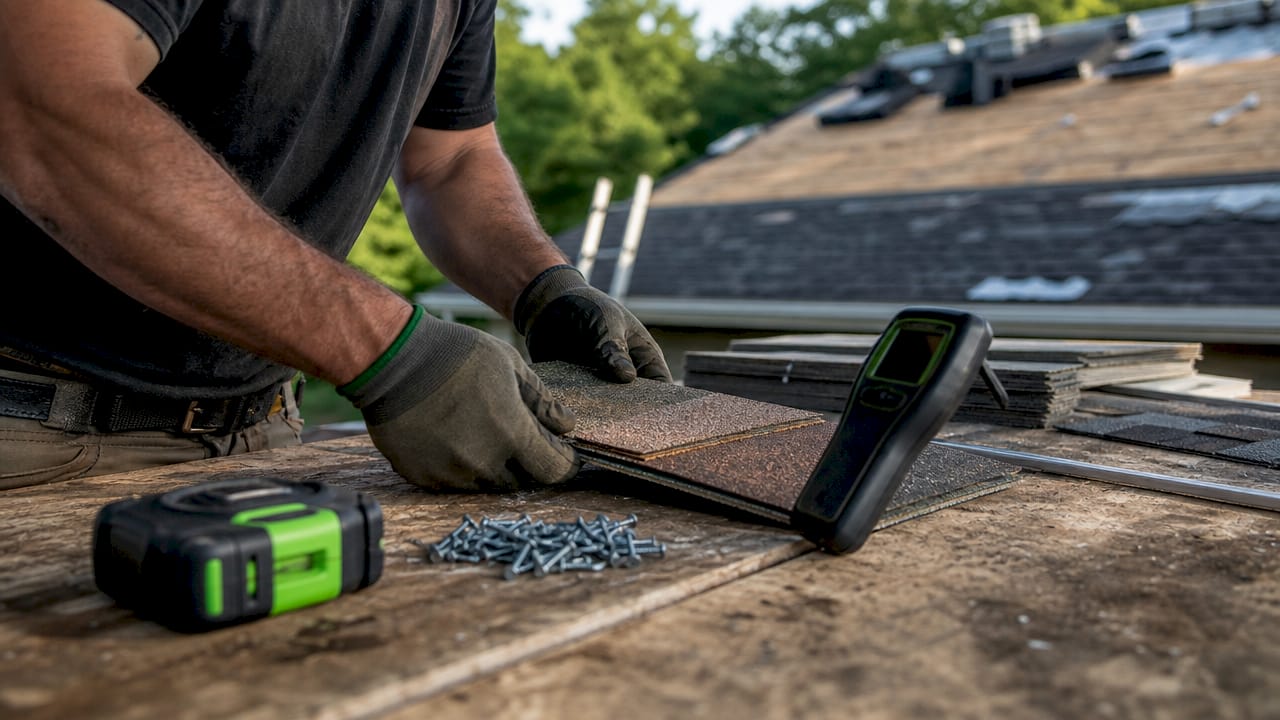
Regional and complexity factors then adjust that base number up or down. A steep roof pitch adds a 40%–60% labor premium because crews work slower and need additional safety equipment. A roof with multiple valleys, dormers, or skylights also increases both labor time and material waste. Your location affects material shipping costs and local permit fees as well.
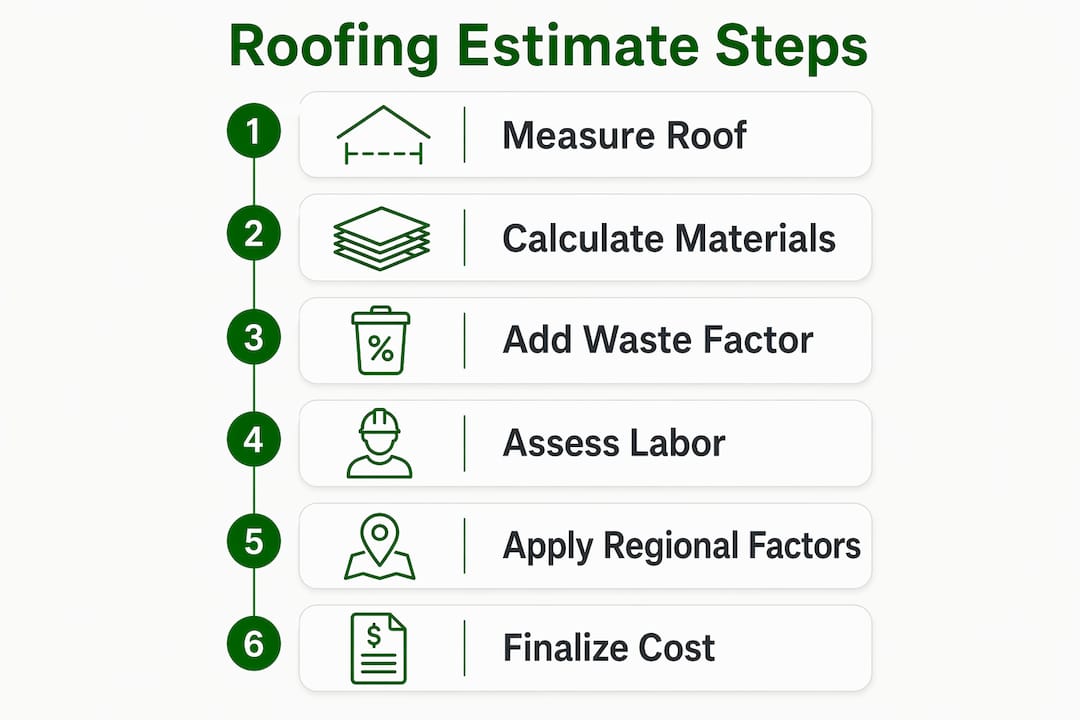
The waste factor deserves special attention. A standard 10% waste factor is added to material quantities to account for cuts around edges, valleys, and penetrations. This is not padding. Estimates that omit a waste percentage often signal under-ordering, which causes project delays when additional materials must be sourced mid-job.
For a typical 2,000 square foot home, a full asphalt roof replacement ranges from $12,000 to $20,000 depending on pitch, material grade, and local labor rates. That wide range is exactly why understanding each line item matters. Two bids at $14,000 and $18,000 may cover completely different scopes of work.
Pro Tip: Calculate the cost per square yourself by dividing the total bid by the number of squares listed. If two contractors measured the same roof but show different square counts, ask both to walk you through their measurements.
How do you read and evaluate a roofing estimate?
A legitimate roofing estimate runs 4–8 pages and covers at least 10 distinct sections. Those sections include contractor license and insurance information, a full material specification list, scope of work, warranty terms, payment schedule, project timeline, and cleanup plan. A single-page document with one total price is not a complete estimate.
What to check first
Start by confirming the scope of work matches your project. If you have two layers of existing shingles, the tear-off line should reflect that added labor. Check that the estimate names specific products rather than generic categories. "30-year shingle" is not a specification. "GAF Timberline HDZ, 30-year architectural, Pewter Gray" is.
Payment schedule and price validity
A fair payment schedule requires a 10%–25% deposit upfront with the balance due after project completion. Never pay more than 25% before work begins. The estimate should also state a price validity window of at least 30 days, protecting you from material cost increases between signing and project start.
Red flags to watch for
- A lump-sum price with no line items
- No mention of decking allowance or tear-off layers
- Missing warranty details for both materials and labor
- No property protection line item
- Pressure to sign immediately without time to compare bids
- No contractor license number or proof of insurance
A vague lump-sum estimate hides omitted work. When a contractor skips flashing replacement or underlayment upgrades to lower the headline price, you only discover the gap after the job is done and problems appear. Itemized estimates eliminate that risk by making every decision visible before work starts.
What additional factors can affect your final roofing cost?
Unforeseen conditions discovered during tear-off are the most common source of final bills that exceed the original estimate. Damaged decking is invisible until shingles come off. A decking replacement allowance of 5%–15% of the total deck area is standard practice and should appear in every estimate as a budgeted line item priced per sheet.
A well-written estimate does not just list what the contractor plans to do. It also defines what happens when something unexpected is found, who approves additional work, and at what price per unit. That language protects you from open-ended change orders.
Here is what a transparent estimate handles in advance:
- Decking allowance: A set number of sheets budgeted at a fixed price per sheet, with homeowner approval required before any additional replacement begins
- Rotted fascia or soffit: Priced per linear foot with a stated allowance
- Additional tear-off layers: Clearly noted if the contractor discovers more layers than expected
- Mold or moisture remediation: Listed as a conditional line item with a per-square-foot rate
Detailed estimates allocate allowances upfront and require your approval before any extra work proceeds. That approval step is what separates a professional contractor from one who surprises you with a larger invoice on completion day. If an estimate does not address these contingencies in writing, ask for an addendum before you sign.
Single-page or vague estimates consistently lead to higher final bills. The missing details do not disappear. They reappear as change orders once the crew is already on your roof and you have limited leverage to negotiate.
Key Takeaways
A roofing estimate breakdown is a project roadmap, not just a price tag, and every line item protects you from hidden costs and poor workmanship.
| Point | Details |
|---|---|
| Materials vs. labor split | Materials run 30%–50% of cost; labor runs 50%–70%. Both must be itemized separately. |
| Waste factor is legitimate | A 10% waste factor covers cuts and overlaps. Estimates without it risk material shortages mid-project. |
| Decking allowance matters | Budget 5%–15% of deck area for replacement. Require written approval before extra work begins. |
| Red flag: lump-sum bids | A single-page estimate hides omitted work. Always request 4–8 pages with at least 10 sections. |
| Payment schedule standard | Pay no more than 10%–25% upfront. Balance is due only after the project is complete. |
Why I trust detailed estimates more than low bids
After years of working with homeowners on roofing projects in the Chattanooga area, the pattern is clear. The homeowners who end up frustrated are almost never the ones who paid more. They are the ones who chose the lowest bid without reading what it actually covered.
A detailed estimate is not a formality. It is the document that defines your entire project. When a contractor lists the brand of shingle, the number of sheets in the decking allowance, the payment terms, and the cleanup plan, they are telling you they have thought through every step. That level of preparation shows up in the quality of the finished roof.
The waste factor question is one I hear often. Homeowners sometimes push back on it, assuming the contractor is padding the material order. Waste factor is a standard industry practice for accurate material ordering. A contractor who removes it to lower the bid is not saving you money. They are setting up a mid-project material shortage that delays your job and costs more to fix.
My honest advice: if a contractor hands you a one-page estimate with a single total, hand it back and ask for the full breakdown. A contractor who cannot or will not provide that detail is not someone you want on your roof.
— Steve
Chattanoogaroofrepairs provides clear, itemized estimates you can trust
Chattanoogaroofrepairs has built its reputation in Chattanooga on one principle: you deserve to know exactly what you are paying for before any work begins. Every estimate we provide covers materials by brand and grade, labor by task, tear-off, decking allowance, permits, and property protection as named line items.
Whether you need a residential roofing repair or a full replacement, our team walks you through every line of your estimate before you sign. We use GAF and Owens Corning materials backed by manufacturer warranties, and our 21-point inspection process catches hidden damage before it becomes a surprise charge. Request your no-pressure, detailed estimate today and see the Chattanoogaroofrepairs difference for yourself. Visit our roofing services page to get started.
FAQ
What is a roofing estimate breakdown?
A roofing estimate breakdown is an itemized document listing every cost in a roofing project, including materials, labor, tear-off, decking, permits, and accessories. It shows how the total price was calculated, line by line.
How many pages should a roofing estimate be?
A complete roofing estimate runs 4–8 pages and covers at least 10 sections. A single-page estimate almost always omits critical details like warranty terms, decking allowances, and cleanup plans.
What is the waste factor in a roofing estimate?
The waste factor is an additional 10% of materials added to account for cuts, overlaps, and irregular roof shapes. It is a standard industry requirement, not padding, and estimates that omit it risk running short on materials mid-project.
What deposit is normal for a roofing project?
A standard deposit runs 10%–25% of the total project cost, paid upfront. The remaining balance is due after the project is fully complete. Never agree to pay more than 25% before work begins.
What is a decking allowance in a roofing estimate?
A decking allowance is a budgeted line item covering the cost to replace damaged plywood or OSB boards discovered after shingle removal. It typically covers 5%–15% of the total deck area and should require your written approval before any additional replacement begins.