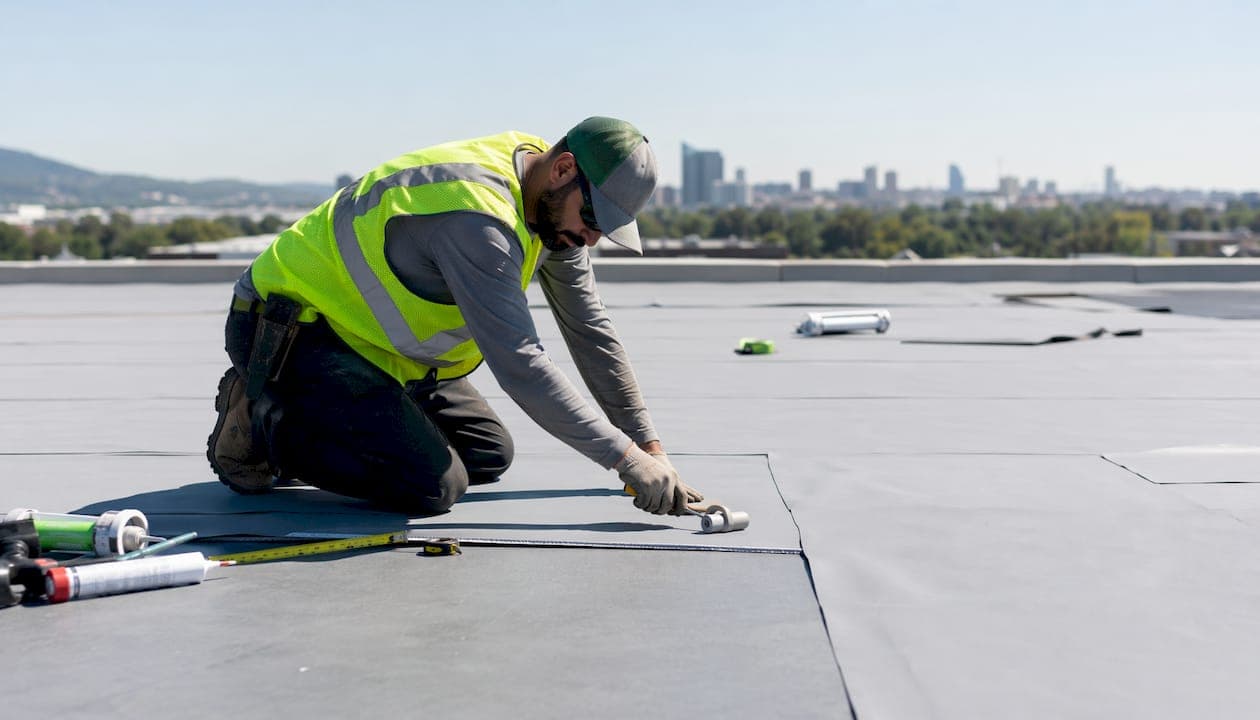
The five materials that dominate commercial roofing each deliver a distinct combination of durability, energy performance, and cost profile. Choosing the wrong one for your building's climate, usage, and budget can mean years of avoidable repairs and inflated utility bills. Here is a quick-reference summary before we go deeper:
- TPO: Reflective white surface cuts cooling costs; heat-welded seams resist leaks; best for hot, sunny climates
- EPDM: Outstanding flexibility in cold weather; 20–50 year lifespan; low-cost repair; ideal for freeze-thaw regions
- Modified Bitumen: Puncture-resistant; handles moderate foot traffic; works well as a retrofit over existing systems
- Metal: Longest lifespan of any common commercial material; Class A fire rating; reflective coatings reduce cooling costs by 10–25%
- PVC: Chemically resistant; fire retardant; strong choice for restaurants, food processing, and industrial facilities
Building codes in many U.S. jurisdictions now require minimum fire ratings and energy performance thresholds, so material selection is not purely a budget call. The sections below break down each material's real-world advantages so you can match the right system to your building.
Table of Contents
- 1. Why TPO roofing delivers strong energy and durability benefits
- 2. How EPDM roofing performs in cold climates and tough conditions
- 3. What makes Modified Bitumen a practical choice for commercial retrofits
- 4. Metal roofing gives commercial buildings the longest service life available
- 5. PVC roofing stands out where chemical resistance matters most
- 6. How to choose the right commercial roofing material for your building
- Key Takeaways
- Chattanoogaroofrepairs brings certified expertise to your commercial roofing decision
1. Why TPO roofing delivers strong energy and durability benefits
Thermoplastic Olefin, or TPO, has become one of the most widely specified single-ply membranes in commercial construction, and the primary reason is its white reflective surface. That surface bounces solar radiation away from the building, which directly reduces mechanical cooling loads during summer months. For a warehouse or big-box retail space in the Sun Belt, that translates to measurable savings on electricity bills year after year.
TPO's other defining feature is its seam strength. Installers use hot-air welding to fuse overlapping membrane sections, creating bonds that are often stronger than the membrane itself. That matters because seam failure is the leading cause of single-ply roof leaks. Thicker membranes, typically 60 mil or 80 mil, extend service life and add puncture resistance for roofs with HVAC equipment or regular foot traffic.
Key TPO advantages at a glance:
- Energy efficiency: Reflective white surface lowers cooling demand in hot climates
- Seam integrity: Heat-welded seams outperform adhesive or tape-bonded alternatives
- Flexibility: Accommodates building movement and thermal expansion without cracking
- Installation speed: Lightweight rolls install faster than multi-layer systems
- Warranty coverage: Manufacturer warranties typically cover extended periods depending on membrane thickness and installation method
- Building code compliance: Meets ENERGY STAR and Cool Roof Rating Council standards in most U.S. markets
One honest caveat: TPO's long-term track record is shorter than EPDM or metal, so membrane quality varies significantly by manufacturer. Specifying a recognized brand and a certified installer protects your warranty.
2. How EPDM roofing performs in cold climates and tough conditions
EPDM, short for Ethylene Propylene Diene Monomer, is the material of choice when freeze-thaw cycles are a real concern. Its rubber-based composition stays flexible at temperatures well below freezing, which means it does not crack or split when a Midwest winter hammers a flat roof repeatedly. That flexibility also makes it forgiving during building settlement and thermal movement.
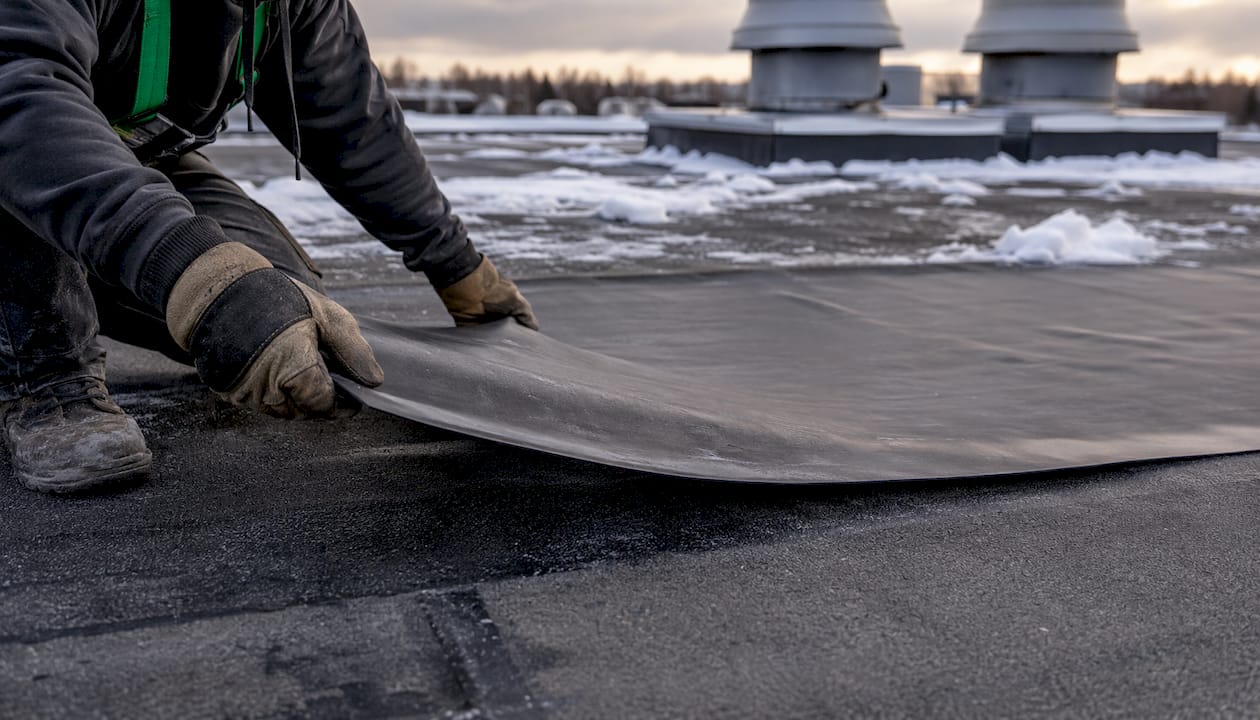
The lifespan of EPDM runs multiple decades with proper maintenance, putting it among the longer-lasting single-ply options. Repairs are straightforward: a patch kit and adhesive can seal most punctures or seam separations without calling in a full crew. That ease of repair keeps maintenance costs low over the life of the roof.
EPDM benefits worth knowing:
- Cold-climate resilience: Remains pliable in sub-zero temperatures; resists freeze-thaw damage
- Long service life: 20–50 years depending on installation quality and maintenance frequency
- Repair simplicity: Patch repairs are fast and inexpensive compared to other membrane systems
- UV resistance: Carbon black formulations resist ultraviolet degradation effectively
- Cost-effectiveness: Generally lower installed cost than TPO or PVC on large flat roofs
- Environmental profile: EPDM contains no chlorine and is recyclable at end of service life
The main trade-off is color. Traditional EPDM is black, which absorbs heat rather than reflecting it. White and light-gray EPDM membranes exist, but they carry a cost premium. In cold climates, the heat absorption can actually be a benefit during winter months, reducing heating loads slightly.
3. What makes Modified Bitumen a practical choice for commercial retrofits
Modified Bitumen is essentially an evolution of traditional built-up roofing, reinforced with polymer modifiers, either APP (Atactic Polypropylene) or SBS (Styrene-Butadiene-Styrene), to improve flexibility and weather resistance. It is a multi-layer system, which gives it genuine redundancy: if one layer is compromised, the others continue protecting the building.
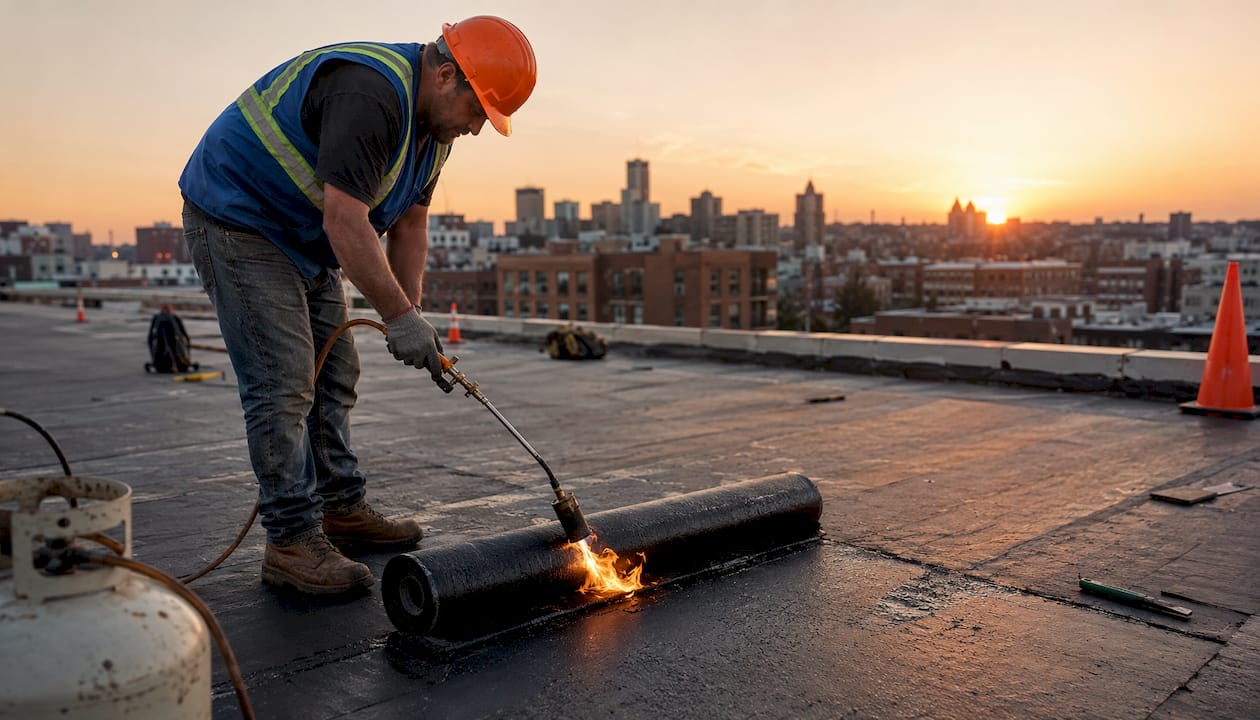
For property managers dealing with older buildings, Modified Bitumen is often the most practical retrofit option. It bonds well to existing substrates, tolerates moderate foot traffic from maintenance crews, and does not require the specialized welding equipment that TPO or PVC installation demands. Application methods include torch-applied, cold-adhesive, and self-adhering, giving contractors flexibility based on building conditions.
Modified Bitumen advantages:
- Puncture resistance: Multi-layer construction handles foot traffic and equipment loads better than single-ply membranes
- Retrofit compatibility: Adheres to a wide range of existing roof substrates without full tear-off in many cases
- UV protection: Granule-surfaced cap sheets reflect UV radiation and protect underlying layers
- Moderate cost: Falls between single-ply membranes and premium metal systems in installed price
- Lifespan: Typically 15–25 years with routine maintenance and proper installation
- Weather resistance: Performs reliably across a broad range of U.S. climates, from humid Southeast to arid Southwest
Pro Tip: If your building has an existing built-up roof in fair condition, a Modified Bitumen overlay can extend service life significantly without the disposal cost of a full tear-off. Removing existing roofing layers can add roughly 25% to total project cost due to disposal and prep labor, so a compatible overlay is worth evaluating first.
4. Metal roofing gives commercial buildings the longest service life available
Standing seam metal roofing is the premium tier of commercial roofing, and the performance data supports that position. Lifespans of several decades are realistic for properly installed steel or aluminum systems, which means a metal roof installed today may outlast two or three replacement cycles of a single-ply membrane. For a property owner thinking in decades rather than years, that math changes the investment calculus entirely.
Fire resistance is another area where metal stands apart. Most metal roofing systems carry a Class A fire rating, the highest available under ASTM E108 and UL 790 standards. That rating can translate directly into lower commercial property insurance premiums, partially offsetting the higher upfront cost. Reflective coatings on metal panels reduce cooling costs significantly in hot climates, and in hurricane-prone regions, standing seam metal is specifically recommended for its wind resistance performance.
Metal roofing benefits at a glance:
- Exceptional lifespan: Up to 70 years for standing seam systems, far exceeding single-ply alternatives
- Class A fire rating: Highest fire resistance classification under ASTM and UL standards
- Energy savings: Reflective coatings cut cooling costs by 10–25% in warm climates
- Weather resilience: Handles hail, high winds, heavy snow loads, and fire exposure
- Low maintenance: No granule loss, no membrane blistering; periodic inspections and fastener checks suffice
- Recyclability: Steel and aluminum are fully recyclable, supporting LEED certification goals
- Solar integration: Standing seam profiles accommodate solar panel clamps without penetrating the roof surface
- Design flexibility: Available in standing seam, corrugated, and metal shingle profiles to suit different building aesthetics
The upfront cost is real. Metal systems cost more to install than single-ply membranes. But when you factor in the extended lifespan, reduced maintenance, potential insurance savings, and energy performance, the lifecycle cost advantage of metal becomes clear for buildings intended to operate for 30 or more years.
5. PVC roofing stands out where chemical resistance matters most
Polyvinyl Chloride roofing is the go-to membrane for commercial buildings where the roof surface is exposed to grease, chemicals, or industrial runoff. Restaurants with rooftop exhaust systems, food processing plants, and chemical storage facilities all benefit from PVC's resistance to oils and solvents that would degrade TPO or EPDM over time. That chemical resistance is built into the membrane's composition, not a surface coating that wears away.
PVC is also fire retardant and highly durable when properly installed. Its reflective white surface delivers energy efficiency comparable to TPO, making it a strong performer in warm climates where cooling costs are a concern. Heat-welded seams, similar to TPO installation, create watertight bonds that hold up well on complex roof geometries with multiple penetrations and drainage points.
PVC roofing benefits:
- Chemical resistance: Withstands grease, oils, and industrial chemicals that degrade other membranes
- Fire retardancy: Inherently fire-resistant composition, not dependent on surface treatments
- Energy efficiency: Reflective white surface reduces cooling loads in warm climates
- Seam strength: Hot-air welded seams provide reliable waterproofing on complex roof layouts
- Durability: Lifespan of about two to three decades with proper installation and routine maintenance
- Warranty coverage: Manufacturers typically offer 15–25 year warranties on commercial PVC systems
- Adaptability: Performs well on roofs with multiple penetrations, skylights, and HVAC equipment
The primary limitation is cost. PVC membranes are generally priced higher than TPO or EPDM. For buildings where chemical exposure is not a factor, that premium may not be justified. But for the right application, PVC is the most durable membrane option available.
6. How to choose the right commercial roofing material for your building
Selecting a commercial roofing material is a building-specific decision, not a one-size-fits-all call. The factors below are the ones that consistently separate a well-matched system from an expensive mistake.
Climate and weather exposure should be your starting point. Cold climates with heavy freeze-thaw cycling favor EPDM's flexibility. Hot, sunny regions benefit from TPO or PVC's reflective surfaces. Buildings in hurricane zones should prioritize standing seam metal for its wind resistance. A material that performs well in Phoenix may fail prematurely in Minneapolis.
Building usage and roof traffic matter more than most owners realize. A roof that maintenance crews walk regularly needs puncture resistance. Modified Bitumen and metal handle foot traffic better than thin single-ply membranes. If your HVAC equipment requires frequent service access, factor that into your membrane specification.
Lifecycle cost, not just upfront price. Prioritizing low upfront costs over long-term performance is one of the most common and costly mistakes in commercial roofing. Higher-quality materials, like thicker TPO membranes and premium metal systems, reduce total cost by extending lifespan and reducing downtime. A roof that costs 30% more to install but lasts twice as long is the better financial decision.
Key selection criteria:
- Local climate: Match material flexibility, reflectivity, and weather resistance to your region
- Roof slope and geometry: Flat roofs favor single-ply membranes; sloped roofs open up metal options
- Building use: Chemical exposure, foot traffic, and interior humidity all influence material choice
- Budget and financing: Evaluate total cost of ownership over 20–30 years, not just installation day
- Energy requirements: Reflective membranes and cool-roof coatings can qualify for utility rebates
- Maintenance capacity: Some systems require more frequent inspection and upkeep than others
- Warranty terms: Evaluate contractor bids carefully to separate labor and material costs, since warranties often bundle both
Routine maintenance is a factor that owners consistently underestimate. Regardless of material, regular inspections and cleaning of seams and drainage points significantly extend roof life. A $500 annual inspection can prevent a $50,000 emergency repair.
When reviewing contractor proposals, ask for a line-item breakdown separating material costs from labor. That separation lets you make accurate comparisons across bids and understand what you are actually paying for. Our guide on roofing bid evaluation walks through exactly what to look for.
Pro Tip: Standardizing roofing profiles, gauges, and colors across multiple buildings or project phases reduces installation errors and material waste. For property managers overseeing a portfolio of commercial buildings, that consistency translates directly into lower per-project costs and faster installation timelines.
Key Takeaways
The right commercial roofing material matches your building's climate, usage, and long-term cost goals rather than simply the lowest installation price.
| Point | Details |
|---|---|
| Metal offers the longest lifespan | Standing seam metal systems last up to 70 years, far exceeding single-ply membrane alternatives. |
| EPDM suits cold climates best | EPDM's rubber composition stays flexible through freeze-thaw cycles, with a service life of 20–50 years. |
| Lifecycle cost beats upfront price | Higher-quality materials reduce total cost by extending lifespan and cutting maintenance and downtime expenses. |
| PVC is the chemical-resistance leader | PVC membranes withstand grease and industrial solvents that degrade TPO or EPDM over time. |
| Chattanoogaroofrepairs for local guidance | Chattanoogaroofrepairs provides certified commercial roofing services in Chattanooga with transparent pricing and manufacturer-backed warranties. |
Chattanoogaroofrepairs brings certified expertise to your commercial roofing decision
Knowing which material fits your building is one thing. Getting it installed correctly, with the right warranty backing and no surprises on the final invoice, is another. Chattanoogaroofrepairs gives commercial property owners in Chattanooga and the surrounding area exactly that: licensed, insured installation using materials from trusted manufacturers, paired with transparent pricing that separates labor from material costs before you sign anything.
Whether you are evaluating a full commercial roof replacement or need a fast, reliable repair to protect your building between seasons, our team brings the same certified workmanship to every project. We also offer metal roofing installation for property owners ready to invest in a premium, long-life system. Every project starts with a no-pressure assessment so you understand your options before any work begins. Contact Chattanoogaroofrepairs today to schedule your commercial roofing consultation.