
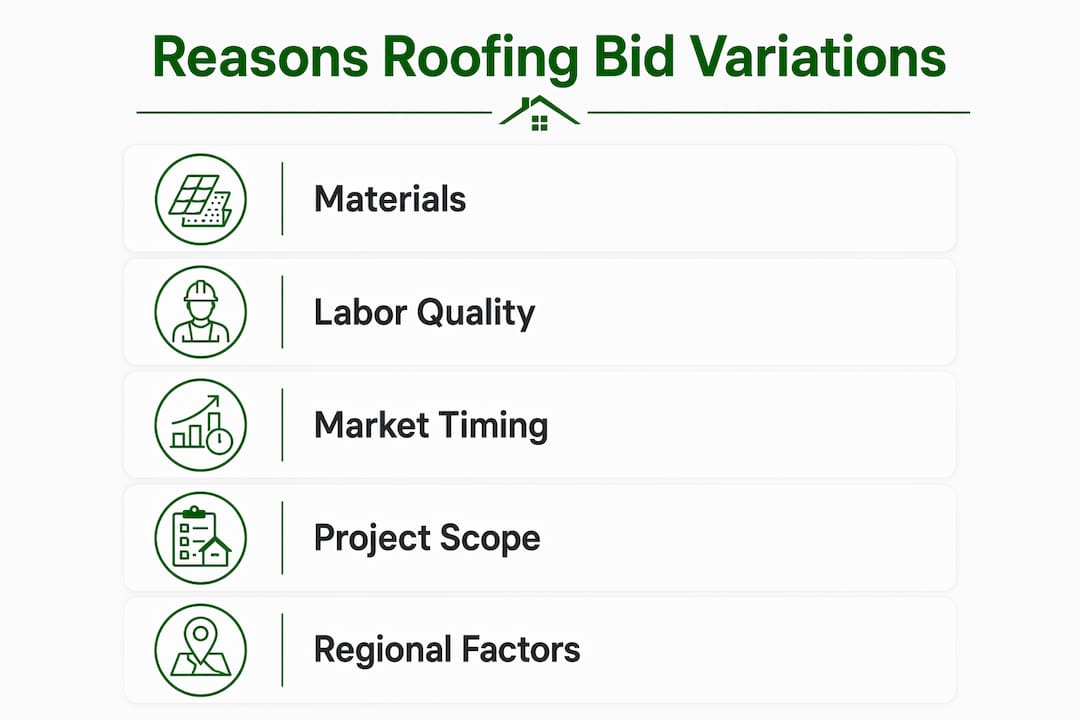
Roofing bids differ widely because each contractor makes independent assumptions about materials, scope, labor, and local costs. That's the core of it. Legitimate bid variance for the same house normally falls between 15–25%. Bids differing by more than 30% almost always signal that contractors are pricing different projects, not the same one. Understanding why roofing estimates differ puts you in control of the conversation before you sign anything.
Here's what drives the gap:
- Material quality: Builder-grade shingles versus premium architectural shingles from brands like GAF or Owens Corning can create a $3,000–$8,000 spread on a single project.
- Scope of work: Full tear-off versus overlay, flashing replacement, decking repairs, and ventilation upgrades each add cost that some bids include and others quietly skip.
- Labor: Labor accounts for 40–60% of total residential roofing costs, and contractor efficiency, crew size, and wage rates vary considerably.
- Licensing and insurance: Licensed and insured contractors typically charge 20–30% more due to overhead and liability protections.
- Regional factors: Local building codes, permit fees, and labor shortages push costs up or down depending on your market.
- Warranties: A 50-year manufacturer warranty paired with a 2-year workmanship guarantee is structurally weaker than a 30-year manufacturer warranty backed by 20 years of labor coverage.
Homeowners often misread bid differences as contractor dishonesty. Scope differences are the main cause of pricing disparity, not dishonesty.
## 1. How materials and project scope drive roofing cost differences
Material choice is one of the clearest reasons why roofing bids vary so much. A standard asphalt shingle replacement for a medium-sized home costs significantly more for architectural shingles compared to builder-grade, with premium or impact-resistant options costing considerably more. That spread exists before labor, permits, or any hidden work enters the picture.
GAF and Owens Corning both offer tiered product lines, from entry-level 3-tab shingles to high-performance designer series. A contractor specifying GAF Timberline HDZ prices differently than one quoting a builder-grade 3-tab, even on the same roof. If bids don't name the exact manufacturer, product line, and model, you can't make a real comparison. Check out this roofing material upgrade guide for a breakdown of how product tiers affect total cost.
Scope divergences compound the problem fast. A roofing system involves far more than shingles. Ventilation, waterproofing, flashing, and decking are all part of a complete installation, and bids that focus only on shingles likely omit necessary system-level protections. Common scope items that separate bids include:
- Full tear-off versus overlay (one layer versus multiple layers removed)
- Decking replacement, priced per sheet or as a vague flat allowance
- Flashing replacement at chimneys, skylights, and valleys
- Ice and water shield coverage at eaves and penetrations
- Ventilation upgrades required by local code
Pro Tip: Before you call a single contractor, write down your roof's square footage, current material, known problem areas, and your preferred shingle tier. Giving every contractor the same starting document collapses bid variance and makes your comparison far more meaningful.
## 2. Why labor costs and contractor quality affect your roofing estimate
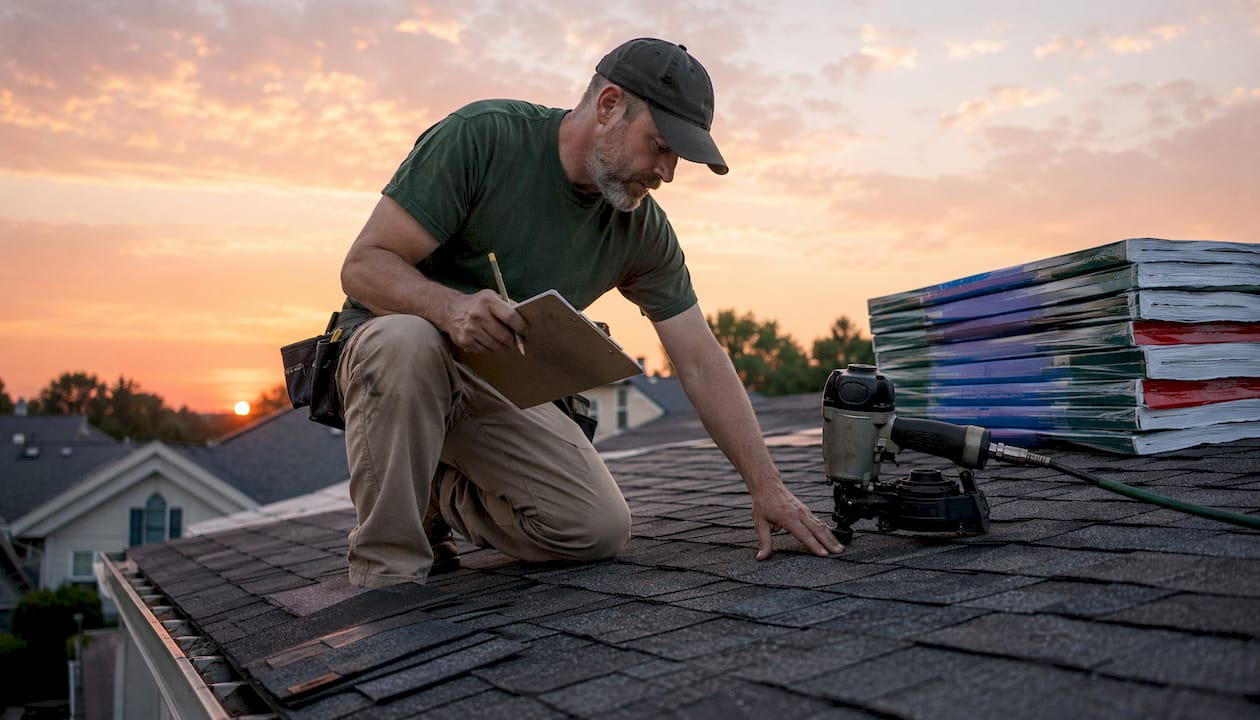
Labor is the largest single cost driver in most residential roofing projects. It also reflects choices in crew size and quality, impacting overall costs. A low bid often means a smaller crew, fewer safety measures, or workers without proper training, and those choices tend to show up as problems after the job is done.
Licensed and insured contractors carry overhead that unlicensed operators don't. Workers' compensation, general liability insurance, and proper licensing all add cost, which is why credentialed contractors typically price higher. That premium isn't padding. It's the cost of protection for you as the homeowner. If an uninsured worker is injured on your property, you could be liable.
Higher bids from established contractors often reflect:
- Larger, experienced crews that finish faster and reduce weather exposure during installation
- Workers' compensation and general liability coverage
- Manufacturer-certified installation methods required for premium warranties like GAF Golden Pledge
- Proper safety equipment per OSHA roofing standards
A contractor with a truck and no overhead can undercut a licensed crew by 20–30% and still turn a profit. The question is what you're left with when something goes wrong.
## 3. How market demand, timing, and regional factors shift roofing prices
Where you live and when you need the work done both move the price. Regional labor shortages, building codes, permit fees, and climate requirements cause multi-thousand-dollar cost variances on identical roofing projects in nearby areas. A roof replacement in a high-growth metro with a tight labor pool costs more than the same job in a slower market, even with identical materials.
Market demand during peak storm seasons and contractor backlogs push prices up. After a major hail event or hurricane season, local contractors are booked out for weeks, and pricing reflects that demand. Conversely, a suspiciously low bid during a busy season can signal a contractor struggling to find work, which raises its own questions about quality and reliability.
Broader economic forces are also at play. Tariffs on steel, aluminum, and chemical inputs have created a structural reset in roofing costs that industry analysts don't expect to reverse soon. Asphalt shingles are petroleum products, and oil price swings affect production costs directly. These aren't temporary fluctuations. They're baked into the current pricing floor.
Key regional and timing factors that affect what you'll pay:
- Local permit fees, which vary by municipality and project type
- State-specific building code requirements for ice and water shield, ventilation, or wind resistance
- Seasonal contractor availability and post-storm demand spikes
- Freight costs, since roofing materials are heavy and shipping rates have risen
## 4. Expert insights on reading and comparing roofing bids
The most useful shift you can make is to read a roofing bid as a scope document first and a price document second. Experts consistently emphasize this point. A detailed, itemized bid from a licensed contractor tells you exactly what work is planned, what materials are specified, and what's excluded. A lump-sum bid with no line items is a flag, not a bargain.
An independent scope baseline is the single most effective tool for getting truly comparable estimates. That means creating a document with your roof's actual measurements, material specifications, and defined scope before any contractor prices the job. When every contractor bids against the same baseline, the variance that remains reflects real differences in labor rates, overhead, and profit margin. That's the comparison you actually want.
Low bids frequently exclude synthetic underlayment, flashing replacement, or decking repair, costs that surface as change orders after tear-off begins. A project that starts at $11,000 can reach $18,500 once hidden decking damage, reflashing, and ventilation work are added. Getting a detailed roofing estimate breakdown before committing helps you spot these gaps early.
Practical steps for evaluating bids with confidence:
- Require itemized quotes, not lump sums. A contractor who won't itemize is hiding assumptions.
- Confirm the exact shingle brand, product line, and model number in writing.
- Ask for the unit price on decking repair, not just a flat allowance.
- Verify licensing and insurance through your state's contractor licensing board, such as IDFPR in Illinois or your state's equivalent agency.
- Compare warranty terms carefully: workmanship coverage duration matters more than manufacturer warranty length alone.
Pro Tip: Demand itemized quotes and clarify warranty terms and labor coverage before deciding. A 20-year workmanship warranty from a licensed installer protects you far better than a 50-year manufacturer warranty with only 2 years of labor coverage.
Getting three bids is the standard minimum. For projects over $20,000 or involving tile, slate, or extensive decking replacement, five bids give you a clearer market picture. Once scope is locked and consistent across all bids, some variance is normal. Spreads significantly above that typically indicate bids pricing different projects.
Get a transparent, itemized roofing estimate in Chattanooga
Chattanoogaroofrepairs works with GAF and Owens Corning certified materials and provides fully itemized quotes so you know exactly what you're paying for. No lump sums, no hidden allowances. Our roofing services in Chattanooga cover repair, replacement, and 21-point inspections, with same-day tarping available for storm damage. If you've received bids that don't add up, we'll walk you through a clear, no-pressure comparison. Contact Chattanoogaroofrepairs today for an honest estimate.
Key Takeaways
Roofing bid variance is almost always a scope problem, not a honesty problem, and understanding the difference helps you choose the right contractor at the right price.
| Point | Details |
|---|---|
| Normal variance range | Legitimate bids for the same project normally fall between 15–25%. |
| Labor is the largest cost | Labor accounts for 40–60% of total roofing costs and varies by crew quality and market. |
| Licensed contractors cost more | Licensed and insured contractors charge 20–30% more, but that premium covers your liability. |
| Scope drives price gaps | Differences in tear-off, flashing, underlayment, and decking create most of the spread between bids. |
| Use a scope baseline | An independent scope document given to all contractors collapses unwarranted variance before bids arrive. |