Most roof repairs take anywhere from 2 hours to several days, depending on the size and type of damage. Understanding how long roof repairs typically take helps you plan your budget, schedule contractors, and set realistic expectations before a small problem becomes a costly one. The full repair timeline includes more than just the physical work. Scheduling, material availability, weather, and insurance claims all add calendar time that surprises many homeowners and property managers.
How long do roof repairs take by repair type?
The duration of roof repairs depends almost entirely on what needs to be fixed. Minor repairs take 2–4 hours, while larger structural jobs can stretch across multiple days. Knowing the category of your damage gives you the clearest starting point for planning.
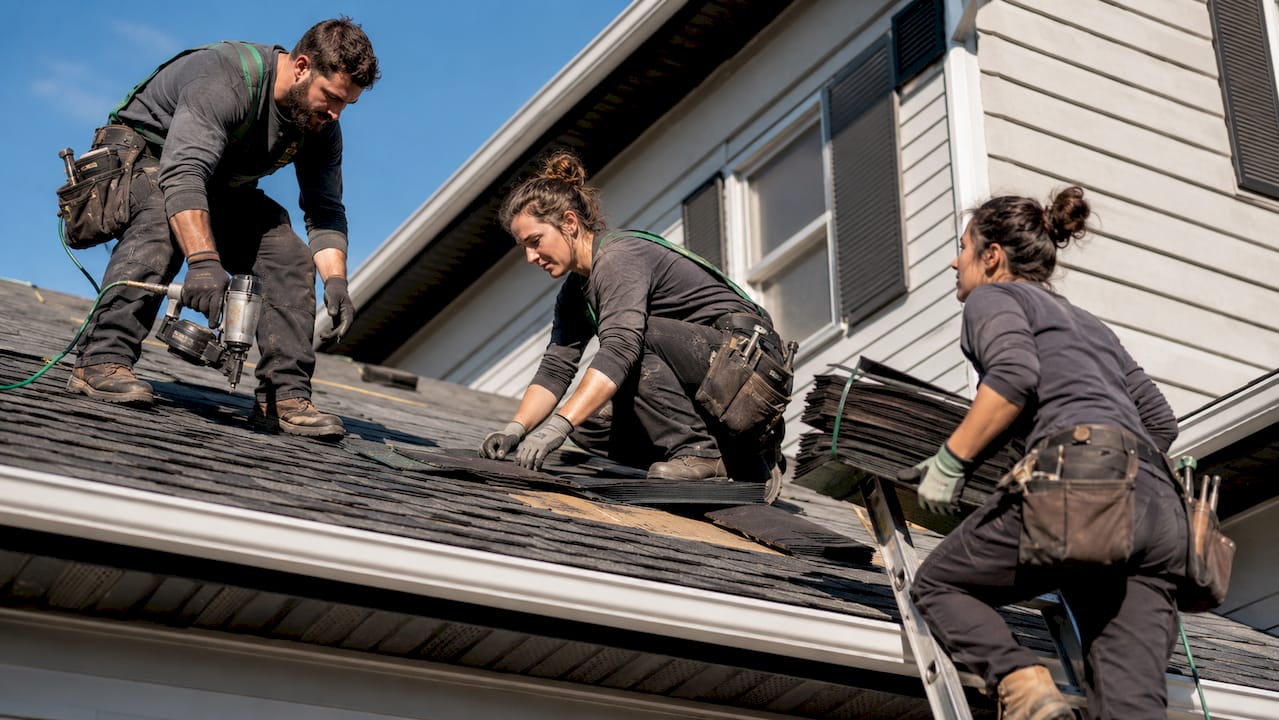
Here is a breakdown of the most common repair types and their typical timelines:
| Repair Type | Typical Time Frame |
|---|---|
| Shingle replacement (minor) | 2–4 hours |
| Small leak repair | 3–6 hours |
| Flashing repair or replacement | 4–8 hours |
| Emergency tarping | 1–3 hours (same day) |
| Moderate storm damage | 1–2 days |
| Widespread or structural damage | 3–10+ days |
Storm damage repairs range from 1–2 hours for a handful of missing shingles to over 10 days when structural framing is compromised. That wide range reflects how dramatically damage severity drives the roof repair time frame.
For most standard residential jobs, most repairs finish within 2 days. Larger structural repairs may extend to 3–4 days. The physical labor is rarely the bottleneck. Scheduling and logistics usually take longer than the work itself.
Pro Tip: Get a written scope of work from your contractor before any job starts. It should list the repair type, materials, and estimated hours. This protects you if the timeline shifts.
What factors affect roof repair time?
Several variables outside the contractor's control directly affect the average roof repair duration. Understanding these factors helps you build a realistic schedule rather than an optimistic one.
- Weather conditions. Rain, high winds, and freezing temperatures halt roofing work. Chattanooga's spring storm season creates backlogs that push scheduling out by days or weeks. Weather and contractor scheduling often impact timelines more than the actual physical work time.
- Material availability. Standard GAF or Owens Corning shingles are usually in stock locally. However, specialty or custom materials add 3–7 days of lead time before work can even begin. Confirming exact materials upfront is the single best way to avoid this delay.
- Contractor scheduling and peak demand. After a major storm event, every reputable contractor in the area fills up fast. Calling within 24–48 hours of damage gives you a significant scheduling advantage.
- Roof complexity and material type. A simple three-tab shingle repair on a low-slope roof moves faster than a repair on a steep metal roof or one with multiple valleys and dormers. Complexity adds labor hours directly.
- Insurance claim processing. When insurance is involved, the physical repair often waits on adjuster visits and claim approvals. This adds weeks to the overall calendar time, even when the actual repair takes only a few hours.
- Permit requirements. Some jurisdictions require permits for structural repairs. Permit processing adds 1–5 business days before work can legally begin.
The key insight here is that what affects roof repair time is rarely the crew's speed. It is the chain of events before and after the crew arrives that determines how long you wait.
Emergency tarping vs. permanent repairs: what is the difference?
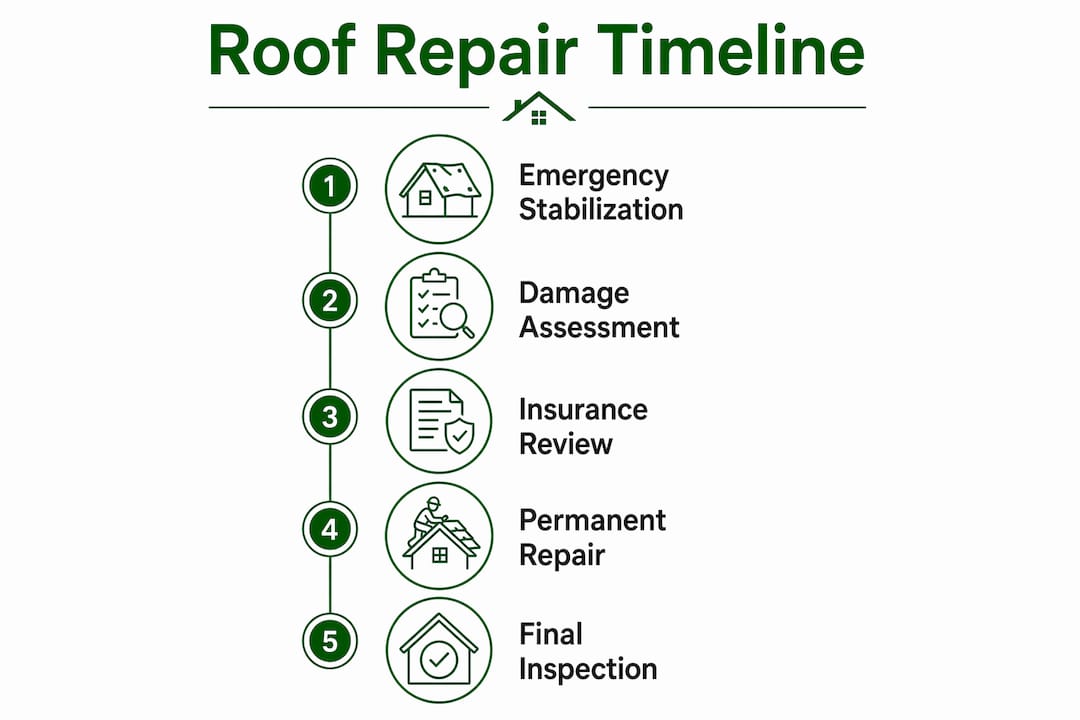
Emergency tarping and permanent repair are two separate phases of the roof repair timeline. Mixing them up leads to frustration and poor decisions.
Here is how the two phases work in sequence:
- Emergency tarping (same day, 1–3 hours). A licensed crew installs a heavy-duty tarp over the damaged area to stop water intrusion immediately. This is triage, not a fix. Emergency tarping happens same day, with permanent repair scheduling following 1–5 days later depending on damage scope.
- Assessment and documentation (1–3 days). After stabilization, a thorough inspection documents all damage. This step feeds both the repair scope and any insurance claim. Skipping it leads to missed damage and surprise costs later.
- Permanent repair scheduling (days to weeks). The actual repair is scheduled based on material availability, contractor capacity, and insurance approvals. Physical installation then takes hours to several days depending on scope.
Emergency tarps last approximately 30–90 days under normal weather conditions. That window is enough time to complete a proper assessment and schedule permanent work, but it is not unlimited. A tarp that fails at day 60 because permanent repairs were delayed causes secondary water damage that costs far more than the original repair.
Pro Tip: Check your tarp after every significant rain or wind event. A loose or torn tarp provides no protection. Schedule your permanent repair well before the 90-day mark to avoid being caught without coverage.
Treating emergency tarping as a permanent solution is one of the most expensive mistakes homeowners make. Planning permanent work promptly after tarping prevents costly secondary damage to insulation, drywall, and framing.
How do insurance claims affect the roof repair timeline?
Insurance involvement adds significant calendar time to any roof repair project. The physical repair might take one day. The insurance process can take weeks.
Straightforward insurance claims add 4–8 weeks to the total repair timeline. Complex claims involving disputed damage assessments or multiple trades can stretch to several months. That gap between damage and completed repair is entirely normal, but it requires active management.
"Insurance processes extend total repair timelines beyond contractor labor. Budgeting for these delays avoids surprises for property managers." — Gates Roofing
Here is how to move through the process faster:
- Document damage immediately. Photos and video taken within hours of a storm are the strongest evidence in any claim. Detailed roof damage documentation speeds adjuster reviews and reduces back-and-forth.
- File your claim the same day. Delays in filing give insurers grounds to question whether damage is storm-related or pre-existing.
- Request a specific adjuster appointment. Open-ended scheduling adds unnecessary days. Ask for a confirmed date and time.
- Get your contractor's estimate before the adjuster visits. A written contractor estimate gives the adjuster a benchmark and reduces negotiation time.
- Follow up in writing. Email confirmations of every conversation create a paper trail that speeds resolution if disputes arise.
Property managers overseeing multiple units benefit most from this process. Treating insurance claims as a parallel workflow rather than a sequential one cuts total calendar time significantly.
Key takeaways
The roof repair timeline is defined by three phases: emergency stabilization, assessment, and permanent repair. Each phase has its own duration and requirements.
| Point | Details |
|---|---|
| Minor repairs are fast | Shingle replacements and small leaks typically finish in 2–6 hours on the day of service. |
| Scheduling delays exceed labor time | Weather, contractor availability, and materials often add more calendar days than the physical work itself. |
| Tarping is temporary | Emergency tarps last 30–90 days and must be followed by permanent repairs to prevent secondary damage. |
| Insurance adds weeks | Straightforward claims add 4–8 weeks; complex claims can extend the total timeline to several months. |
| Document early and often | Same-day damage documentation speeds insurance approvals and reduces scheduling delays. |
What i've learned about managing roof repair timing
After years of working through roof repairs with homeowners and property managers across Chattanooga, the biggest source of frustration is not the repair itself. It is the gap between what people expect and what the process actually requires.
Most homeowners call after a storm expecting a crew the next morning and a finished roof by the weekend. That expectation is reasonable for a minor shingle repair. It is not realistic for anything involving insurance, specialty materials, or structural damage. The homeowners who handle the process best are the ones who treat it in three distinct phases: stop the bleeding, document everything, then schedule the fix.
The contractors who cause the most problems are the ones who skip the assessment phase and jump straight to repair. They miss hidden damage, underbid the job, and come back for more money later. A thorough storm damage assessment before any permanent work begins is not a delay. It is what makes the repair last.
My honest advice for property managers: build a 10-week buffer into any repair budget that involves insurance. For cash repairs, a two-week scheduling window from first call to completed work is realistic for most standard jobs. Anything involving custom materials or structural framing needs more. Call early, confirm materials upfront, and check your tarp weekly. Those three habits eliminate most of the surprises.
— Steve
Get fast, reliable roof repairs in chattanooga
When timing matters, working with a contractor who responds the same day makes a real difference.
Chattanoogaroofrepairs provides same-day emergency tarping for storm damage across Chattanooga and surrounding areas. Our team uses certified materials from GAF and Owens Corning, and every job starts with a comprehensive 21-point inspection so nothing gets missed. We handle the documentation, coordinate with your insurance adjuster, and keep you informed at every step. Whether you need a quick shingle replacement or a full storm damage repair, our licensed and insured crew is ready to get your home protected without the runaround. Contact us today for a free, no-pressure estimate.
FAQ
How long does a minor roof repair take?
Minor shingle repairs typically finish in 2–4 hours, and small leaks usually take 3–6 hours. Most minor repairs can be completed on the same day the crew arrives.
How long does emergency roof tarping take?
Emergency tarping is typically completed within 1–3 hours on the same day as the call. It is a temporary measure that lasts 30–90 days before permanent repairs must be scheduled.
What is the average roof repair duration for storm damage?
Storm damage repairs range from 1–2 hours for missing shingles to over 10 days for severe structural damage. The scope of damage is the primary driver of total repair time.
How long does an insurance claim add to the repair timeline?
A straightforward insurance claim adds 4–8 weeks to the total calendar time. Complex claims involving disputed assessments can extend the process to several months.
Can i speed up my roof repair scheduling?
Yes. Call within 24–48 hours of damage, confirm material availability upfront, and file your insurance claim the same day. Reviewing a roof contractor checklist before hiring also helps you avoid contractors who cause scheduling delays.