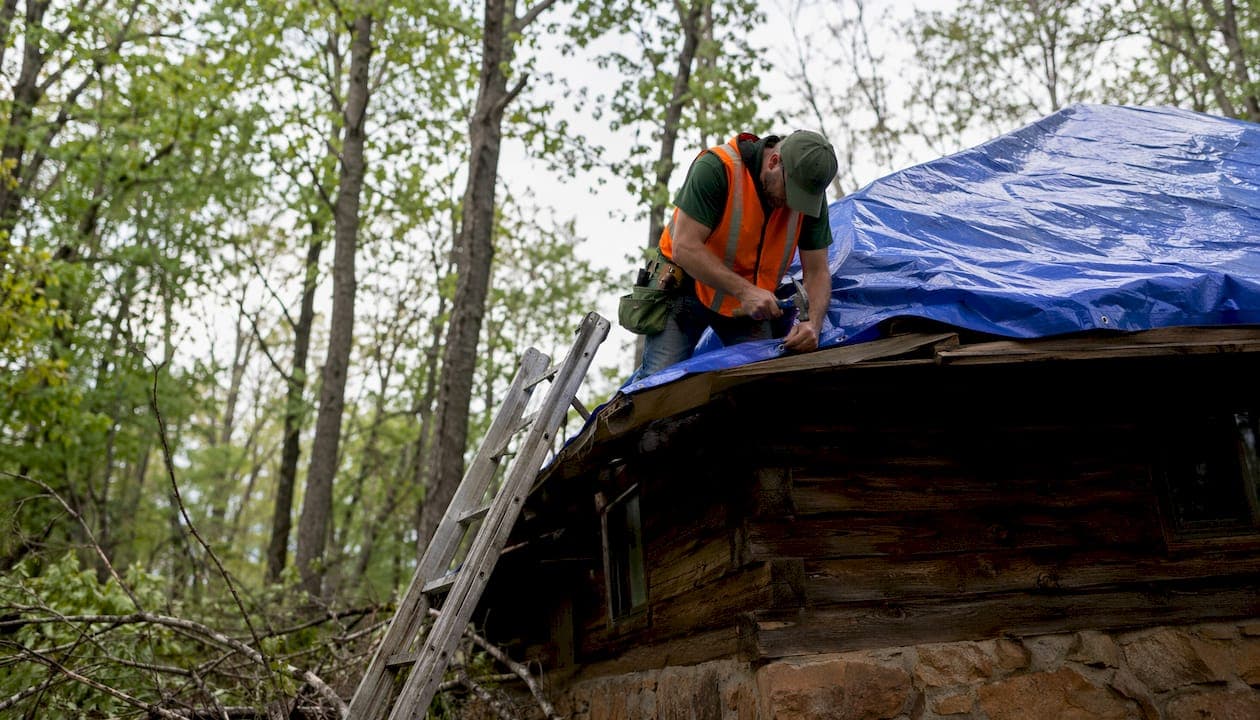
Emergency roof tarping is defined as the installation of a waterproof polyethylene cover over a storm-damaged roof to stop water intrusion before permanent repairs can begin. The emergency roof tarping benefits go far beyond keeping rain out. A tarp installed within 24–48 hours after storm damage can prevent mold growth, protect your insulation, satisfy your insurance company's mitigation requirements, and save you thousands of dollars in secondary damage costs. Tarping is a stop-gap measure, not a permanent fix. Think of it as a shield that buys you time to schedule the right repairs with the right contractor.
1. Emergency roof tarping benefits: stopping water damage before it spreads
Water intrusion is the single fastest way to turn a manageable roof repair into a full-scale restoration project. Once rain gets through a damaged roof, it soaks into insulation, drywall, wood framing, and flooring within hours. Secondary water damage accounts for up to 80% of total storm repair costs. Stopping the leak at the source with a properly installed tarp is the most direct way to keep that number from climbing.
2. Preventing mold growth within the critical window
Mold begins growing within 24–48 hours in humid conditions after moisture enters a home. Once mold takes hold in wall cavities or attic insulation, remediation costs can rival the roof repair itself. A tarp installed the same day as the storm closes that window before spores have a chance to establish. This is especially true in Chattanooga, where summer humidity creates near-ideal conditions for rapid mold growth.
3. Preserving insulation and structural integrity
Wet insulation loses up to 50% of its R-value, meaning your home loses half its heat resistance when insulation stays saturated. Wooden rafters exposed to ongoing moisture lose 20–30% of their load-bearing capacity over time. That kind of structural degradation turns a repair job into a replacement project. A tarp cuts off the moisture source before that deterioration begins.
4. Meeting your insurance policy's duty to mitigate
Most homeowner insurance policies include a "duty to mitigate" clause. This clause requires you to take reasonable steps to prevent further damage after a covered loss. Many policies require documented emergency tarping within 24–72 hours for claim approval, and 15–20% of claims are denied for failure to mitigate damage. Installing a tarp promptly is not just smart. It is often a policy requirement.
Pro Tip: Call your insurance company before the tarp goes up if time allows. Ask specifically what documentation they need. A quick phone call can prevent a claim denial later.
5. Supporting your insurance claim with proper documentation
A tarp does more than protect your roof. It creates a clear record of your response to the damage. Photographing damage before and after tarping, and keeping detailed installation invoices, gives your adjuster the evidence they need to approve your claim. Insurers reimburse emergency tarping costs when the underlying damage is a covered peril. That means the tarp often pays for itself through your claim.
6. Buying time to find the right contractor
Storm damage creates high demand for roofing contractors. Rushing into a permanent repair with an unvetted crew can cost you more in the long run. A professionally installed tarp gives you 30–90 days of reliable protection to research contractors, get multiple quotes, and schedule repairs on your terms. That window is valuable. Use it to find a licensed, insured roofer rather than the first truck that shows up after the storm.
7. Protecting personal property inside your home
Furniture, electronics, clothing, and flooring are all at risk the moment water enters through a damaged roof. A tarp stops that exposure immediately. Homeowners who delay tarping often face not just structural repairs but also personal property replacement claims. Acting fast with temporary roof cover solutions protects both the building and everything inside it.
8. Choosing a cost-effective solution over expensive alternatives
Emergency tarping costs a fraction of what delayed repairs require. UV degradation and weather exposure limit a tarp's lifespan to about 90 days, after which more durable options like shrink wrapping become necessary. Shrink wrapping costs significantly more than standard tarping. Acting within the first day or two after storm damage keeps you in the lower-cost range and out of the more expensive alternatives.
9. Why professional installation outperforms DIY tarping
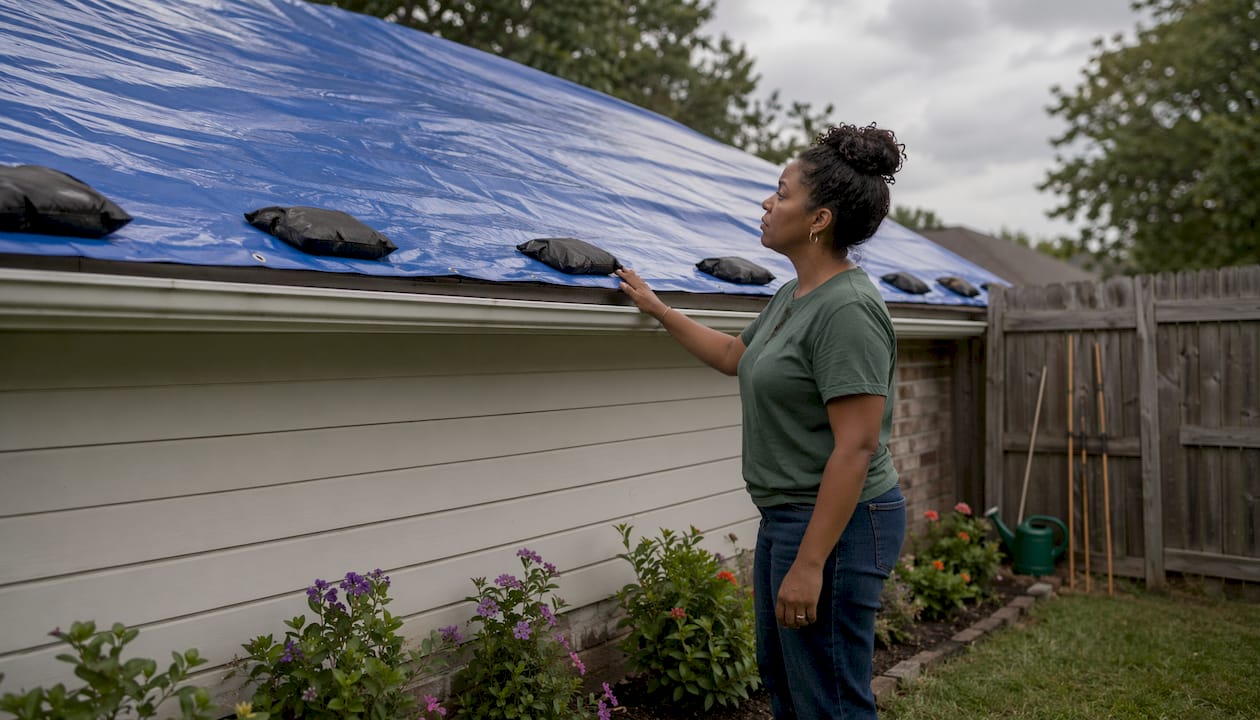
DIY tarping has a 40% failure rate in high winds compared to 15% for professional installations. That gap exists because proper tarping requires mechanical fasteners anchored into the roof decking, not just weighted edges or bungee cords. Loose or weighted-down tarps fail in wind and rain, leaving your home exposed again. A failed DIY tarp can also damage roofing materials and void manufacturer warranties, which complicates your insurance claim.
Pro Tip: Never walk on a storm-damaged roof without fall protection and proper footwear. Steep, wet, or structurally compromised roofs are the leading cause of DIY tarping injuries. Call a licensed contractor instead.
10. How professional tarping is done right
Professional emergency roof tarping uses heavy-duty polyethylene sheeting secured with furring strips and mechanical fasteners driven into the roof decking. This method holds the tarp flat and tight, preventing wind uplift and water pooling. The tarp extends past the ridge and down the sides to create a complete water barrier. A properly installed tarp from a licensed contractor, like the team at Chattanoogaroofrepairs, holds up through wind, rain, and temperature swings for the full 30–90 day service window.
Key elements of a professional tarp installation include:
- Heavy-duty polyethylene rated for outdoor weather exposure
- Furring strips screwed into the roof decking for a secure hold
- Full coverage extending past the ridge line
- Sealed edges to prevent wind from lifting the tarp
- Inspection of the damaged area before installation to assess scope
Tarping followed by a thorough inspection is the correct sequence. The tarp protects the home while the inspection determines whether repair or full replacement is needed.
How emergency tarping fits into the insurance claims process
Insurance adjusters look for evidence that you acted quickly and responsibly after storm damage. Emergency tarping is the clearest proof of that.
"Insurers require documented prompt mitigation. Taking before-and-after photos and retaining tarp installation invoices is critical for claim reimbursement. Failure to provide documentation often leads to claim denials or delays."
Best practices for insurance documentation include:
- Photograph all visible damage before the tarp goes up
- Photograph the completed tarp installation from multiple angles
- Keep the tarp installation invoice separate from other repair estimates
- Note the date and time of the storm and the tarp installation
- Contact your insurer within 24 hours of the damage event
Common reasons claims get denied include failure to mitigate, lack of photographic evidence, and missing invoices. A professional contractor who understands the emergency roof repair process can help you avoid all three.
What happens when you delay tarping after storm damage
Delay is expensive. Water intrusion can begin within hours of roof damage, and mold can establish itself within 24–48 hours in humid climates. The longer a roof stays open to the elements, the more the damage compounds.
| Delay Period | Likely Damage | Estimated Impact |
|---|---|---|
| 0–24 hours | Surface water intrusion | Contained, manageable repair |
| 24–72 hours | Insulation saturation, mold start | Significant cost increase |
| 72+ hours | Structural wood damage, mold spread | Possible full replacement needed |
| 1 week+ | Rafter failure, interior collapse risk | Major structural restoration |
Secondary water damage accounts for up to 80% of total storm repair costs. That means the roof breach itself is often the smaller part of the bill. The water that follows it through an unprotected opening is where costs spiral. Homeowners who wait often find they need full roof replacement instead of targeted repair, simply because the underlying structure deteriorated while the roof stayed open.
When to call a professional for emergency tarping
Some situations require a professional immediately. Do not attempt DIY tarping in any of these scenarios:
- You can see daylight through the roof decking or attic ceiling
- Multiple shingles are missing or peeled back across a wide area
- A tree limb or debris has punctured the roof surface
- Active leaks are causing water stains or drips inside the home
- The roof is steep, multi-story, or shows signs of structural compromise
- The damage occurred during or immediately after an active storm
DIY tarping is only reasonable for very small, clearly accessible damage on a single-story home with a low-pitch roof. Any other scenario carries real safety risk and a high chance of tarp failure. Chattanoogaroofrepairs offers same-day tarping for storm damage across Chattanooga and surrounding areas, so professional help is a phone call away.
Key Takeaways
Emergency roof tarping is the most cost-effective immediate action a homeowner can take after storm damage to prevent mold, structural loss, and insurance claim denial.
| Point | Details |
|---|---|
| Act within 24–48 hours | Mold and structural damage begin fast; early tarping contains costs. |
| Professional beats DIY | Pro installations fail at half the rate of DIY in high winds. |
| Document everything | Photos and invoices before and after tarping protect your insurance claim. |
| Tarp lifespan is 30–90 days | Plan permanent repairs before UV and weather degrade the tarp. |
| Secondary damage is the big cost | Up to 80% of storm repair costs come from water damage, not the breach itself. |
Why I think most homeowners underestimate what a tarp actually does
Most people think of a roof tarp as a patch. A blue sheet thrown over a hole to keep the rain out until the real fix arrives. That framing undersells it significantly.
A professionally installed tarp is a calculated decision that affects your insurance payout, your repair timeline, your mold exposure, and your structural repair costs. I have seen homeowners wait three or four days after a storm because they assumed the damage was minor. By the time a contractor got on the roof, the insulation was saturated, the decking had started to swell, and what should have been a $4,000 repair had become a $15,000 replacement.
The tarp is not the repair. It is the decision that makes a good repair possible. When you install it fast and install it right, you keep your options open. You get to choose your contractor, negotiate your claim, and plan the permanent fix on a reasonable schedule. When you skip it or delay it, those choices get made for you by water, mold, and a weakening roof structure.
My honest advice: treat tarping as the first step in your storm response plan, not an afterthought. Call a licensed contractor the same day. Get it documented. Then take the time to find the right permanent solution.
— Steve
Chattanoogaroofrepairs is ready when the storm hits
When a storm damages your roof, the clock starts immediately. Chattanoogaroofrepairs provides same-day emergency tarping across Chattanooga and the surrounding area, backed by certified expertise and transparent pricing.
Our team handles the full process, from securing your roof with a properly installed tarp to documenting the damage for your insurance claim. We use materials from trusted brands like GAF and Owens Corning, and our 21-point inspection gives you a clear picture of what your roof needs before any permanent work begins. When you are ready to move from temporary protection to a lasting fix, our roof leak repair service and full roofing services cover everything from targeted repairs to complete replacements. Call us today for a no-pressure assessment.
FAQ
How long does an emergency roof tarp last?
A professionally installed emergency roof tarp lasts 30–90 days under normal weather conditions. Extended exposure beyond 90 days causes UV degradation and increases the risk of failure, at which point more durable options like shrink wrapping are recommended.
Does insurance cover emergency roof tarping?
Most homeowner insurance policies reimburse emergency tarping costs when the underlying damage is a covered peril. Keeping your installation invoice and before-and-after photos is required for reimbursement.
Can I tarp my own roof after a storm?
DIY tarping is only safe for small, accessible damage on low-pitch single-story roofs. DIY tarping fails at twice the rate of professional installations in high winds, and improper installation can damage roofing materials and affect your insurance claim.
How quickly should I tarp my roof after storm damage?
Act within 24–48 hours. Mold can begin growing within that window in humid conditions, and delayed tarping significantly increases the risk of insulation loss, structural damage, and insurance claim denial.
What is the difference between roof tarping and shrink wrapping?
Roof tarping uses polyethylene sheeting secured with furring strips and is the standard short-term solution for 30–90 days. Shrink wrapping uses a heat-applied plastic membrane that lasts longer but costs more, and is typically used when permanent repairs are delayed beyond the tarp's service life.