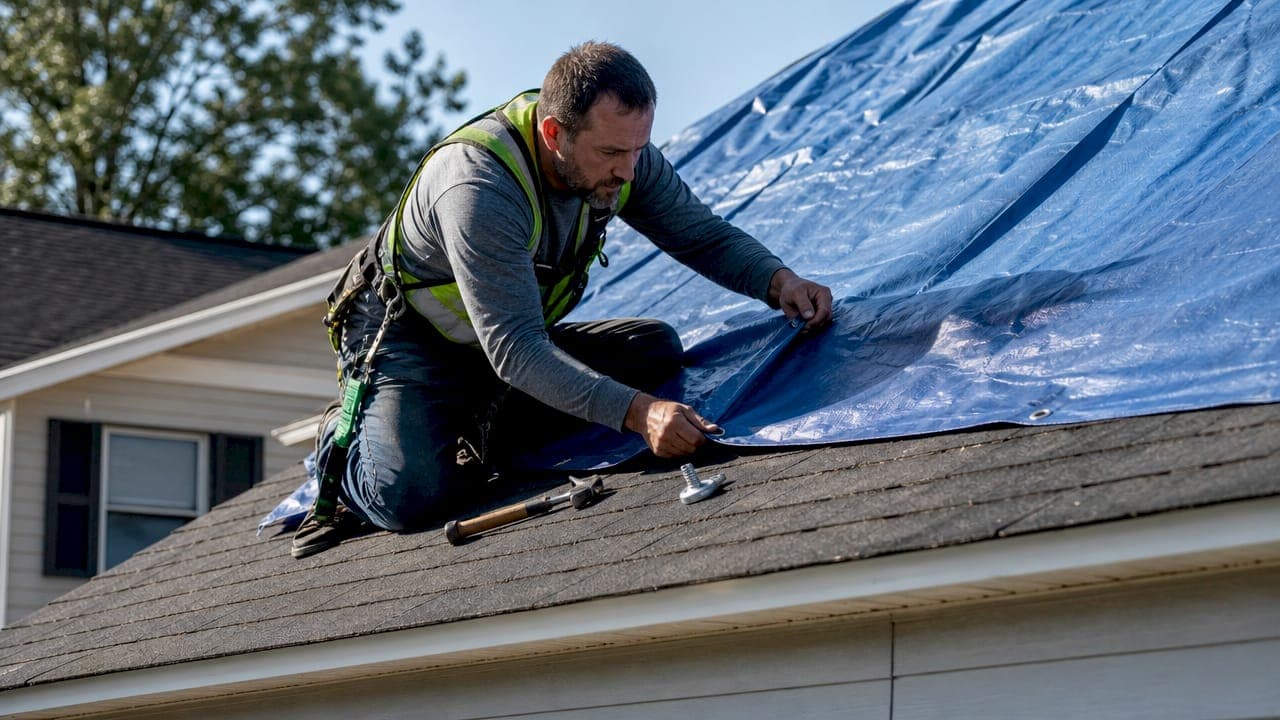
Emergency roof tarping is the professional installation of heavy-duty, waterproof tarps over damaged roof areas to stop water from entering your home until permanent repairs are completed. This temporary protective measure is the first line of defense after storm damage from hail, high winds, or fallen trees. Without it, water enters within hours and triggers a chain of secondary damage that costs far more to fix. Understanding what is emergency roof tarping, how it works, and when to call for it can save you thousands of dollars and weeks of stress.
What is emergency roof tarping and how does it work?
Emergency roof tarping is a temporary protective measure that uses reinforced polyethylene tarps secured over damaged sections of your roof to block rain, wind, and debris from reaching your home's interior. The industry term for this service is "emergency mitigation," and tarping is its most common form after storm events. It is not a repair. It is a barrier that buys time.
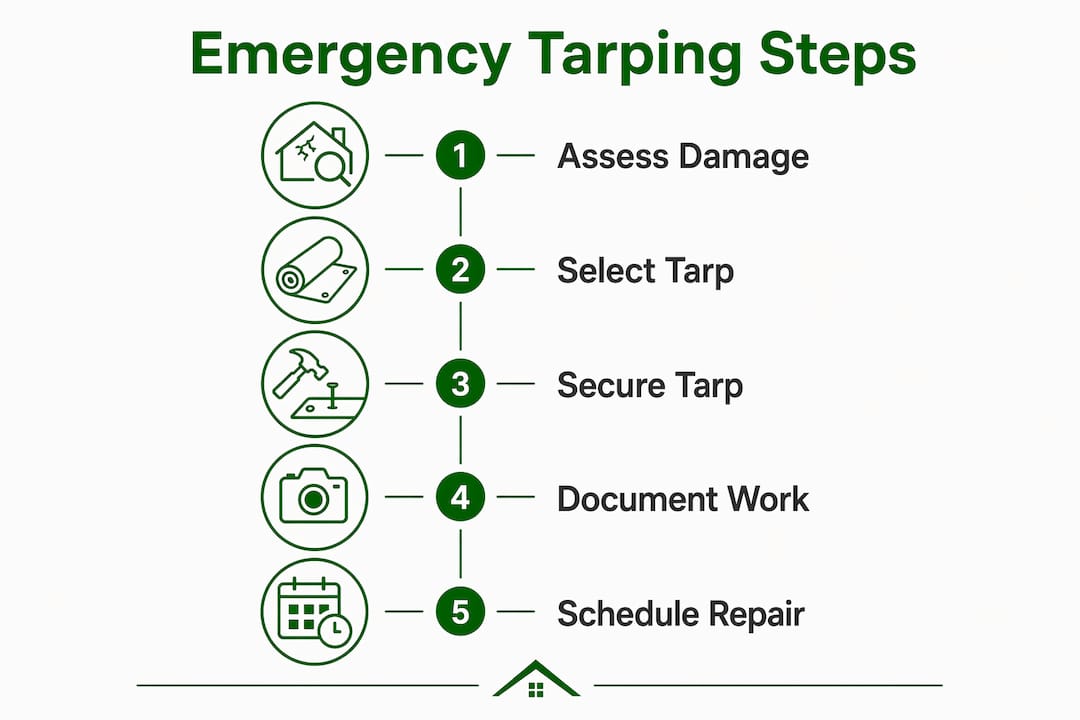
The installation process follows a clear sequence:
- Ground-level inspection. The crew assesses the full extent of visible damage before anyone steps onto the roof.
- Debris removal. Broken shingles, branches, and loose material are cleared from the damaged area.
- Tarp measurement and placement. A reinforced polyethylene tarp is sized to cover the damaged section plus a generous overlap on all sides.
- Secure anchoring. Wooden boards and roofing-rated fasteners are used to pin the tarp flat, allowing water to shed off rather than pool underneath.
- Quality check. The crew confirms the tarp lies tight, with no gaps or loose edges that wind can catch.
Proper installation reduces water ingress by up to 95% compared to an improperly secured tarp. That gap in effectiveness is why professional installation matters. A tarp that flaps in the wind or traps moisture against the wood decking causes additional damage rather than preventing it.
Tarps typically last 30–90 days before UV exposure and weather cycles degrade the material. That window is your timeline for scheduling permanent repairs.
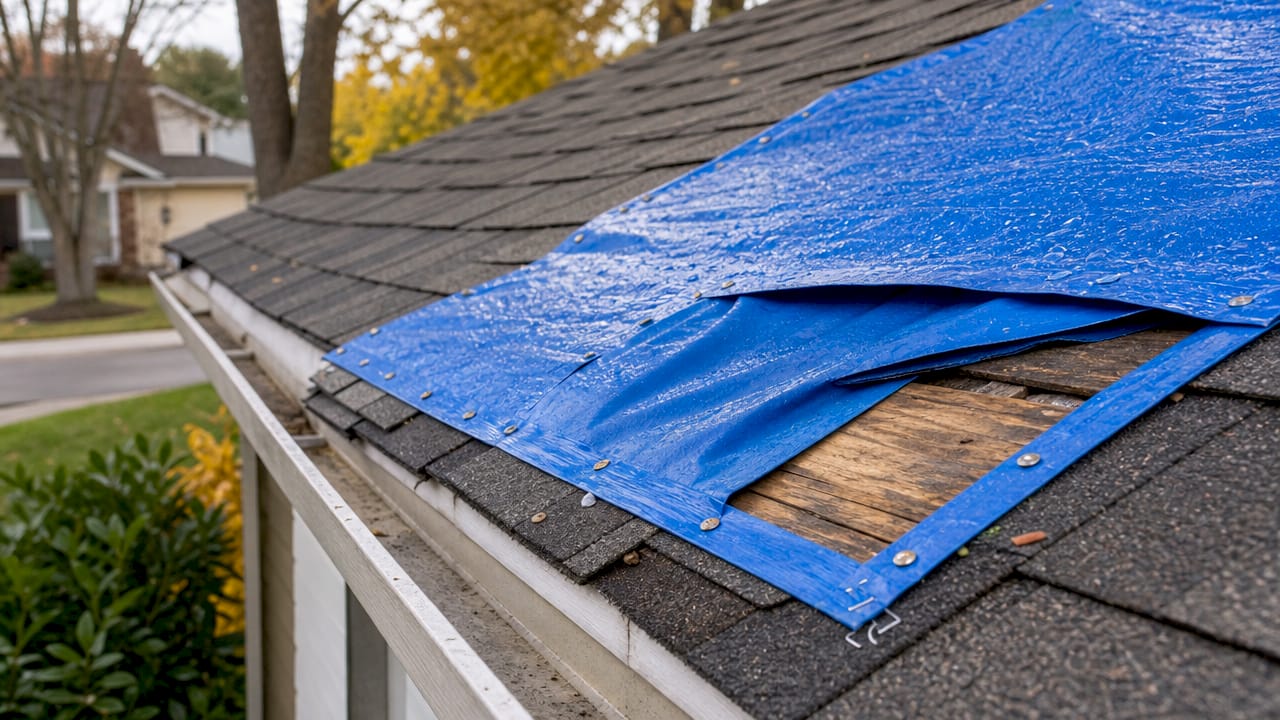
Pro Tip: Never treat a tarp as a finished repair. Schedule your permanent roof repair within 60 days of installation to avoid tarp degradation and the secondary damage that follows.
When and why do you need emergency tarping after storm damage?
A roofing emergency requiring tarping is easier to identify than most homeowners expect. The signs are direct and visible.
- Visible holes or punctures in the roof surface
- Missing shingles exposing the wood decking beneath
- Active water leaks inside the home during or after rain
- Daylight visible through the attic ceiling
- Sagging ceiling drywall or water stains appearing within hours of a storm
- Fallen tree limbs resting on the roof
If you see daylight through your roof, interior structures have already been reached by moisture. That is not a warning sign. That is confirmation that damage is active and spreading.
Delaying tarping after storm damage dramatically increases repair costs. A small breach left unprotected can escalate a $1,000 repair into a $15,000 project once mold, ceiling collapse, and structural rot are factored in. Water does not wait for a convenient repair window.
Hail, high winds, and falling trees are the most common causes of sudden roof damage in the Chattanooga area. Each creates a different type of breach. Hail punctures and cracks shingles. Wind peels them back or removes them entirely. Fallen trees create large, irregular holes that are impossible to address with DIY materials. All three scenarios require professional tarping within hours, not days.
The temporary roof protection that tarping provides is not optional after major damage. It is the step that determines whether your home sustains manageable damage or catastrophic interior loss.
How does emergency tarping protect your home and what about insurance?
Emergency tarping protects your attic, insulation, ceiling joists, drywall, and interior walls from water intrusion. These are the components that absorb the most damage when a roof breach goes unaddressed. Attic insulation saturated with water loses its thermal value and becomes a breeding ground for mold within 24–48 hours. Ceiling drywall begins to sag and fail within days.
Tarping is mitigation, not repair. That distinction matters for your insurance claim. Most homeowners insurance policies in 2026 cover emergency mitigation services, including roof tarping, under the overall restoration claim. In many cases, no separate deductible is required for the tarping portion of the claim.
Federal programs like Operation Blue Roof exist for catastrophic regional disasters and provide temporary protection through the U.S. Army Corps of Engineers. For standard residential storm damage, private licensed contractors remain the faster and more reliable option.
Documentation is the key to a smooth claim. Your contractor should provide detailed invoices and before and after photos of the damage and the installed tarp. Thorough documentation expedites claim processing and prevents disputes with your insurer. Request this paperwork before the crew leaves your property.
Pro Tip: Call your insurance company the same day you call for tarping. Reporting the damage promptly and providing contractor documentation from the start protects your claim timeline.
What should you expect from a professional roof tarping service?
Professional emergency response for roof tarping typically arrives within 2–4 hours under normal conditions. After a major regional storm, response times can extend to 24–72 hours due to contractor demand. Knowing this helps you plan and prioritize your call.
A qualified roof tarping service will walk through these steps on your property:
- Initial assessment. A licensed technician inspects the roof from the ground and then from above to map the full damage area.
- Debris clearing. All loose material is removed before the tarp is placed to prevent punctures and uneven coverage.
- Tarp sizing and placement. The tarp extends well beyond the damaged area on all sides to create a reliable seal.
- Anchoring and fastening. Wooden boards and roofing nails secure the tarp against wind uplift.
- Final inspection. The crew confirms water will shed off the tarp rather than pool or seep underneath.
Emergency tarping costs between $0.70 and $2.00 per square foot, with most jobs averaging $175 to $700. Professional service typically starts around $575. Roof size, damage extent, and regional contractor availability all affect the final price. These costs are generally covered under your insurance mitigation clause, so the out-of-pocket impact is often minimal.
Choosing a licensed and insured contractor protects you from liability if a worker is injured on your property. It also protects the quality of the installation. Ask for proof of insurance and a written estimate before work begins.
Best practices and common mistakes to avoid with roof tarping
The most common mistake homeowners make is treating a tarp as a finished repair. A tarp is a stopgap. Leaving it in place beyond 90 days exposes your roof to UV degradation and freeze-thaw cycles that can cause the tarp to fail and create new leaks on top of the original damage.
DIY tarping is the second most common mistake. Homeowners who attempt tarping without proper equipment risk improper securing, tarp failure in the next wind event, and serious personal injury from falls. Professionals carry the right tools, safety equipment, and anchoring materials to do the job correctly the first time.
Follow these practices to protect your home and your claim:
- Call a licensed, insured roofing contractor immediately after discovering damage.
- Document all visible damage with photos before any work begins.
- Notify your insurance company the same day as the storm event.
- Request a detailed invoice and photos from your contractor for claim submission.
- Schedule permanent repairs within 30–90 days to stay ahead of tarp degradation.
- Keep communication open between your contractor and your insurer throughout the process.
The storm repair process moves faster when homeowners stay organized and proactive. Delays in scheduling permanent repairs after tarping are where most additional costs accumulate.
Pro Tip: Ask your contractor to include the tarp installation date in writing. That date starts your 30–90 day repair window and gives your insurer a clear timeline for the claim.
Key takeaways
Emergency roof tarping is the single most effective step you can take immediately after storm damage to prevent a manageable repair from becoming a catastrophic loss.
| Point | Details |
|---|---|
| Tarping is temporary mitigation | A tarp lasts 30–90 days and must be followed by permanent repairs within that window. |
| Professional installation matters | Proper anchoring reduces water ingress by up to 95% compared to improperly secured tarps. |
| Insurance typically covers tarping | Most policies include tarping under mitigation costs, often with no separate deductible required. |
| Delays multiply costs | An unprotected breach can escalate repair costs from $1,000 to over $15,000 due to mold and structural damage. |
| Documentation protects your claim | Before and after photos plus a detailed contractor invoice are required to expedite insurance processing. |
Why I tell every homeowner to call before they climb
After years of working with storm-damaged roofs across the Chattanooga area, the pattern I see most often is this: a homeowner waits 48 hours after a storm, convinced the damage looks minor from the ground. By the time we arrive, the attic insulation is soaked, the ceiling drywall has started to bow, and what would have been a straightforward repair has turned into a full interior remediation project.
The real cost of storm damage is not the hole in the roof. It is the water moving silently through your decking, insulation, and framing while you wait. Tarping closes that gap fast. A properly installed tarp is genuinely the best insurance policy you have against escalating damage in the days after a storm.
I also want to be direct about DIY attempts. I understand the impulse to get up there and cover the damage yourself. But a tarp that is not anchored with wooden boards and roofing-rated fasteners will lift in the next wind event. When it does, it can peel back shingles that were not previously damaged. You end up with a bigger problem and a harder insurance conversation.
Call a licensed professional. Get the tarp installed correctly. Then focus your energy on documenting the damage and communicating with your insurer. That sequence works. Skipping the first step rarely does.
— Steve
Chattanoogaroofrepairs is ready when the storm hits
When a storm damages your roof, the clock starts immediately. Chattanoogaroofrepairs provides same-day emergency roof tarping for homeowners and property managers across Chattanooga and the surrounding areas. Our licensed, insured crews respond fast, install tarps correctly, and document everything your insurance company needs.
We handle the full process from initial damage assessment through permanent repair, using materials from GAF and Owens Corning backed by manufacturer warranties. Our 21-point inspection gives you a complete picture of your roof's condition before and after every storm event. If you need storm damage repair or want a no-pressure assessment after recent weather, contact Chattanoogaroofrepairs today. We are local, we are fast, and we stand behind our work.
FAQ
What is emergency roof tarping?
Emergency roof tarping is the professional installation of heavy-duty, waterproof tarps over damaged roof sections to stop water intrusion until permanent repairs are completed. It is a temporary mitigation measure, not a repair, and typically lasts 30–90 days.
What does emergency tarping protect?
Emergency tarping protects your attic, insulation, ceiling joists, drywall, and interior walls from water damage after a roof breach. Without it, water can enter within hours and cause mold, structural rot, and ceiling failure.
What is same day roof tarping?
Same-day roof tarping is emergency tarping service completed within hours of a storm event, before additional rain or weather causes further damage. Chattanoogaroofrepairs offers same-day response for storm-damaged homes in the Chattanooga area.
Does homeowners insurance cover roof tarping costs?
Most homeowners insurance policies cover emergency tarping under the mitigation of damages clause, typically bundled with the restoration claim and without a separate deductible. Providing your insurer with contractor invoices and before and after photos expedites the claim.
How long does an emergency tarp last on a roof?
A professionally installed emergency tarp lasts 30–90 days depending on weather conditions and material quality. UV exposure and freeze-thaw cycles degrade tarps over time, so permanent repairs should be scheduled well within that window.