
An honest roofing estimate checklist is a structured tool that verifies every line item in a roofing bid, from contractor credentials to warranty terms, so you never pay for surprises after the job starts. A legitimate estimate runs 4 to 8 pages and covers materials, labor, permits, and cleanup in full detail. A one-line total is a red flag, not a bargain. Whether you are managing a single-family home or a rental portfolio, using a checklist to compare roofing quotes line by line is the most reliable way to separate honest contractors from risky ones.
1. What an honest roofing estimate checklist must include
A complete roofing estimate functions as a contract preview, detailing scope, materials, and protections before any work begins. Vague estimates or lump sums signal poor professionalism. Every item below should appear in writing before you sign anything.
Contractor credentials and licensing
- State contractor license number and expiration date
- Proof of general liability insurance and workers' compensation
- Physical business address (not just a P.O. box)
- References from recent local jobs
Scope of work breakdown
- Number of shingle layers to be torn off
- Deck inspection plan and defined allowance for damaged boards
- Flashing replacement at all valleys, chimneys, and pipe boots
- Ventilation upgrades or confirmation of code compliance per IRC R806
- Debris removal and daily cleanup plan
Material specifications
- Manufacturer name (such as GAF or Owens Corning), product line, and color
- Underlayment type (synthetic or felt) and weight
- Ice and water shield coverage area
- Starter strip and ridge cap product names
Permits, warranties, and payment terms
- Who pulls the permit and who pays for it
- Manufacturer warranty length (typically 25 to 50 years or more) and certification level
- Workmanship warranty length (typically 1 to 15 years)
- Deposit amount and payment milestones
- Project start date and estimated completion date
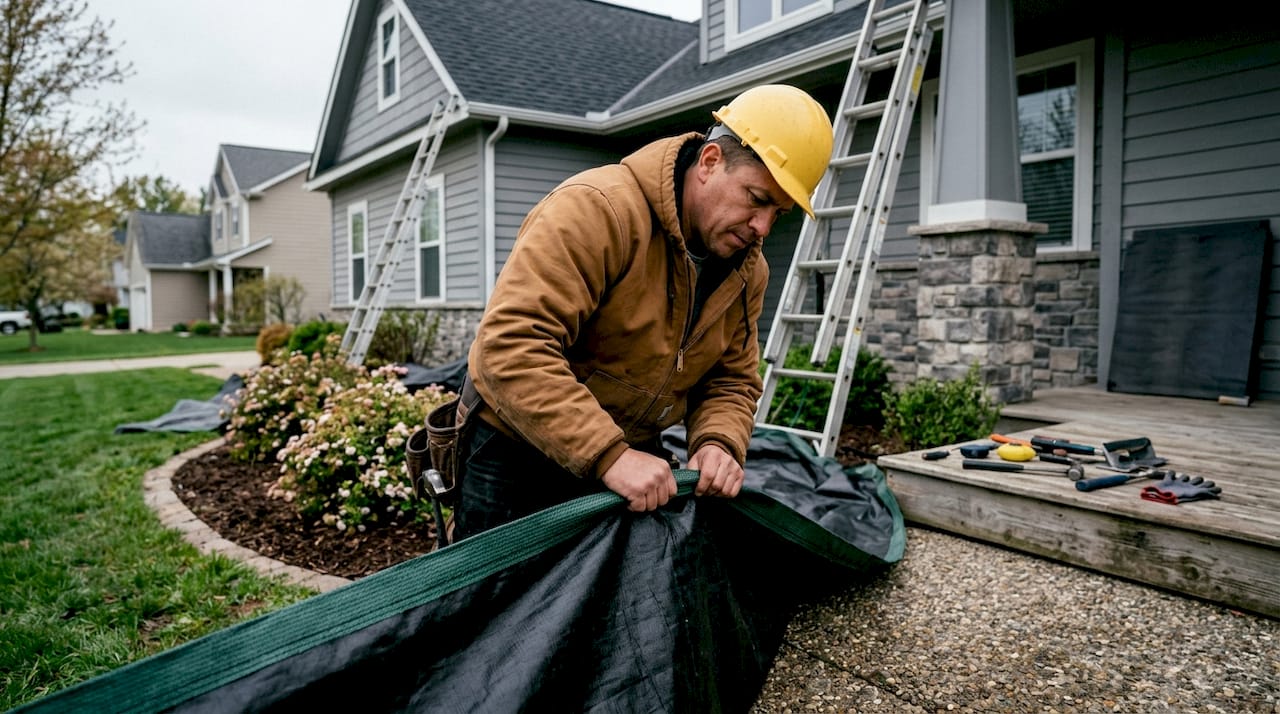
Pro Tip: Request that property protection measures, such as landscaping covers and window protection, appear as itemized line items. Their absence signals a liability risk if plants or windows are damaged during the job.
2. How to assess roofing costs and spot red flags
Labor costs represent 35% to 45% of total roofing cost on a standard project. That means a quote that looks low is often cutting labor corners, not passing savings to you.
For a 2,000 square foot home with standard asphalt shingles, a fair installed price typically falls in the $9,000 to $16,000 range. Quotes significantly below that range often omit key scope items. Here are the most common red flags to watch for:
- Single lump-sum price. A one-line total with no breakdown is the clearest sign of a bid that hides omitted work or future change orders.
- Vague material descriptions. "Standard shingles" with no manufacturer or product line means you cannot verify what you are actually getting.
- No license or insurance documentation. Estimates missing this information expose you to liability for injuries and possible code violations.
- Padded or missing tear-off costs. Tear-off, disposal, and dumpster fees are three of the most commonly inflated line items. They should appear as separate, priced entries.
- No decking allowance. Decking repair should be priced per sheet, typically $75 to $150 installed. A missing allowance means you will face a surprise bill mid-project.
- Residential project management fees. These fees should not exist on a standard residential job. Their presence signals padding.
- High upfront deposit. A deposit above 10% to 15% of the total before work starts is a warning sign.
- Pressure to sign immediately. "Today-only" pricing is a sales tactic, not a reflection of real market conditions.
Pro Tip: The most expensive estimate is often the most complete. Comparing bids line by line reveals what cheaper quotes left out, not what you saved.
3. Steps to compare multiple roofing quotes fairly
Getting reliable roofing quotes requires a process, not just a phone call. Follow these steps to build a fair comparison.
- Collect at least three written estimates. The industry standard is a minimum of three bids from licensed contractors, delivered within 2 to 3 business days after inspection. Fewer bids give you no baseline for comparison.
- Lock in the scope before you compare prices. Confirm that every contractor is quoting the same number of tear-off layers, the same underlayment type, and the same flashing plan. Comparing prices on different scopes is meaningless.
- Normalize the terms. One contractor may call it "ice and water shield" while another writes "leak barrier." Match the products, not the labels, when you review each line.
- Document warranty and payment terms side by side. A roofing estimate comparison checklist makes this easier. Write the workmanship warranty length, manufacturer warranty level, deposit amount, and payment schedule for each bid in one place.
- Select the best value, not the lowest price. The goal is a complete, well-documented job at a fair price. A bid that is $1,500 lower but omits decking allowances, cleanup, or flashing replacement will cost more in the end.
You can also review a detailed roofing estimate breakdown to understand how each line item should be structured before you start collecting bids.
4. Professional roof inspection checklist essentials
A professional roof inspection informs every number in an honest estimate. Without a thorough inspection first, contractors are guessing at scope, and guesses become change orders.
A standard professional inspection covers 30 or more key items across six systems: shingles, flashing, ventilation, gutters, the roof deck, and the attic. The inspection typically takes 75 to 90 minutes and costs $150 to $650. That cost is worth paying before you commit to a $10,000-plus project.
| Inspection area | What the inspector checks |
|---|---|
| Shingles | Cracking, curling, granule loss, missing tabs |
| Flashing | Seal integrity at valleys, chimneys, and vents |
| Ventilation | Soffit and ridge vent clearance, IRC R806 compliance |
| Gutters | Attachment, slope, debris buildup, downspout drainage |
| Roof deck | Soft spots, rot, delamination visible from attic |
| Attic | Moisture staining, insulation condition, airflow |
A written inspection report with photos and severity ratings is the document that justifies every line item in your estimate. If a contractor cannot explain why a cost appears in the estimate by pointing to an inspection finding, ask them to. Understanding what a free roof inspection covers helps you ask the right questions before work begins.
The inspection report and the estimate should align. If the inspection found failed flashing at the chimney, the estimate must include a flashing replacement line item with a price. Gaps between the two documents are where hidden costs live.
What a complete inspection report must include:
- Photos of every deficiency with location noted
- Severity rating for each finding (minor, moderate, urgent)
- Estimated remaining roof life
- Recommended repair or replacement scope
- Inspector's license number and company information
5. Warranty terms and what they actually protect
Warranties are the most misunderstood section of any roofing estimate. Two separate warranties cover every professional roof installation, and both must appear in writing.
The manufacturer warranty covers defects in the shingle or material itself. Standard coverage runs 25 to 50 years, but the actual protection level depends on the contractor's certification status with the manufacturer. GAF Master Elite contractors and Owens Corning Preferred contractors unlock enhanced warranty tiers that cover both materials and workmanship under a single manufacturer program. A contractor without that certification can only offer the base material warranty.
The workmanship warranty covers installation errors. It is issued by the contractor, not the manufacturer, and typically runs 1 to 15 years. A one-year workmanship warranty from an uncertified contractor is a thin safety net. Five years or more from a certified contractor is a meaningful protection.
Your estimate must specify the warranty length for both types, the remediation process if a claim is needed, and the contractor's certification level with the manufacturer. If any of those three details are missing, ask for them in writing before you sign.
Key Takeaways
An honest roofing estimate is a multi-page, itemized document that covers contractor credentials, material specs, scope of work, warranty terms, and payment schedule. Any estimate missing those elements is incomplete and carries financial risk.
| Point | Details |
|---|---|
| Estimate length and detail | A legitimate estimate runs 4 to 8 pages with full line-item breakdowns, not a single total. |
| Red flag: lump-sum pricing | Single-price bids hide omitted work and lead to costly change orders mid-project. |
| Decking allowance | Decking repair must be priced per sheet ($75–$150) to prevent surprise mid-job costs. |
| Collect three bids minimum | Three written estimates from licensed contractors give you a reliable baseline for comparison. |
| Warranty specifics matter | Confirm both manufacturer and workmanship warranty lengths and the contractor's certification level. |
What I have learned from years of roofing estimate reviews
The single biggest mistake homeowners make is treating the total price as the estimate. They compare three numbers and pick the middle one, assuming it is the safest choice. That logic fails every time a change order arrives for decking, flashing, or disposal costs that were never in the original bid.
The most telling moment in any estimate review is the decking section. A contractor who prices decking repair at a defined rate per sheet, with a stated allowance, has done this job before and respects your budget. A contractor who leaves it blank or writes "additional costs may apply" is transferring all the risk to you. That single line item has cost homeowners thousands of dollars in unexpected bills.
Pressure tactics are the other pattern I see consistently. A contractor who tells you the price is only good today is not managing material costs. They are managing your hesitation. A confident, experienced contractor gives you time to review the estimate, ask questions, and compare bids. That patience is itself a quality signal.
My honest advice: insist on a written, itemized estimate every time. Ask for the inspection report that supports it. Verify the license number with your state contractor board. And never let a low headline price override a thorough line-by-line review. The roof protects everything inside your home. The estimate protects your wallet.
— Steve
Chattanoogaroofrepairs: honest estimates backed by certified expertise
Chattanoogaroofrepairs provides fully licensed, insured roofing services across Chattanooga and surrounding areas, with a commitment to transparent, itemized pricing on every job.
Every estimate from Chattanoogaroofrepairs includes a detailed scope of work, named material specifications from top brands like GAF and Owens Corning, and clear warranty terms. Their comprehensive inspection process covers all the critical systems, so the estimate reflects what your roof actually needs, not a best guess. Whether you need roof leak repair or a full replacement, Chattanoogaroofrepairs delivers no-pressure quotes backed by real inspection findings. Schedule a free consultation and get a written estimate you can actually compare.
FAQ
What should a roofing estimate include?
A complete roofing estimate includes contractor license and insurance information, a detailed scope of work, named material specifications, permit responsibilities, warranty terms, a payment schedule, and project dates. Estimates missing any of these elements are incomplete.
How many roofing estimates should I get?
Get a minimum of three written estimates from licensed contractors. Three bids give you enough data to identify outliers, whether a bid is unusually low due to omitted scope or unusually high due to padding.
What are the biggest red flags in a roofing estimate?
The biggest red flags are a single lump-sum price, vague material descriptions, no license or insurance documentation, a missing decking allowance, and pressure to sign the same day. Each signals a contractor who is not being fully transparent about scope or costs.
How does a roof inspection connect to the estimate?
A professional roof inspection covering 30 or more items produces the findings that justify every line item in an honest estimate. If the estimate includes a cost that does not correspond to an inspection finding, ask the contractor to explain it.
What is a fair deposit for a roofing project?
A fair deposit is typically 10% to 15% of the total project cost, paid at contract signing. Deposits above that range before any work begins are a warning sign and a common pattern among contractors who may not complete the job as quoted.