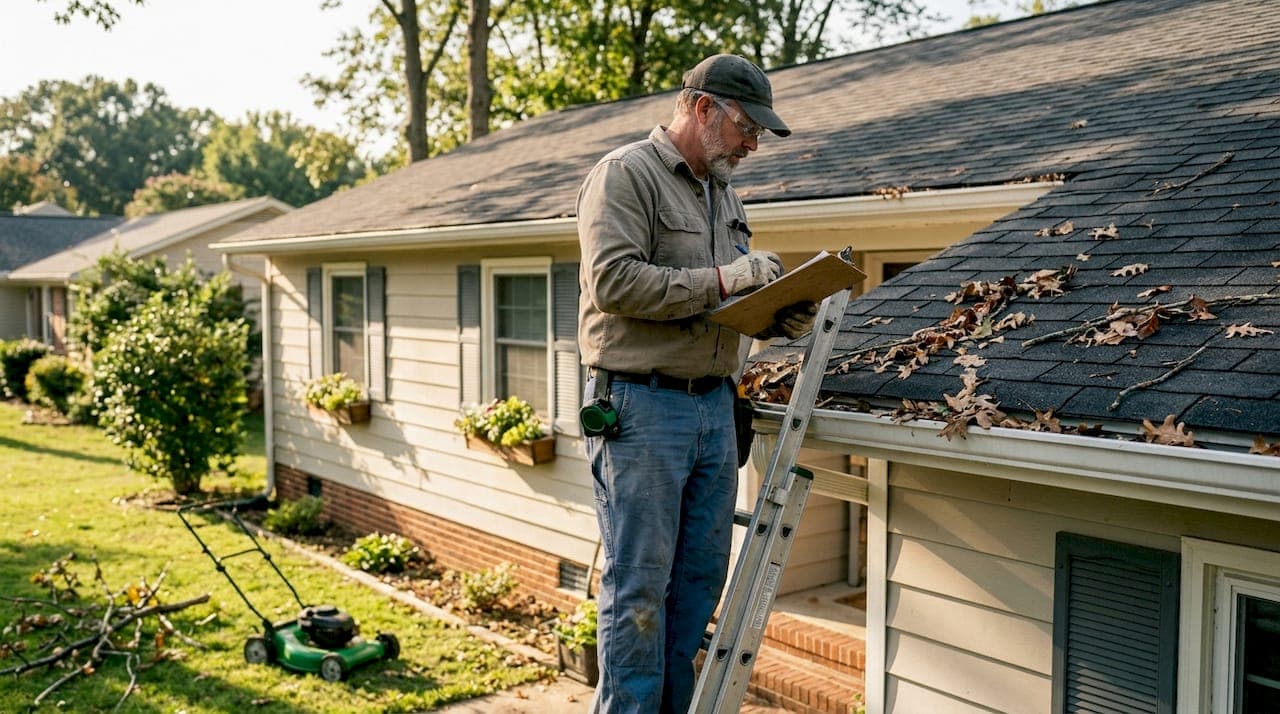
Storm debris damages shingles through two distinct mechanisms: direct physical impact and prolonged moisture exposure, both of which compromise your roof's protective layers faster than most homeowners realize. A fallen branch, a layer of wet leaves, or even a coating of pollen can trigger damage that shortens shingle lifespan, invites water infiltration, and leads to repairs that cost far more than a timely cleanup. Understanding how storm debris damages shingles is the first step toward protecting your home and your budget. Chattanoogaroofrepairs sees this pattern repeatedly across Chattanooga and the surrounding area, and the damage is almost always worse than it looks from the ground.
How does storm debris physically damage roof shingles?
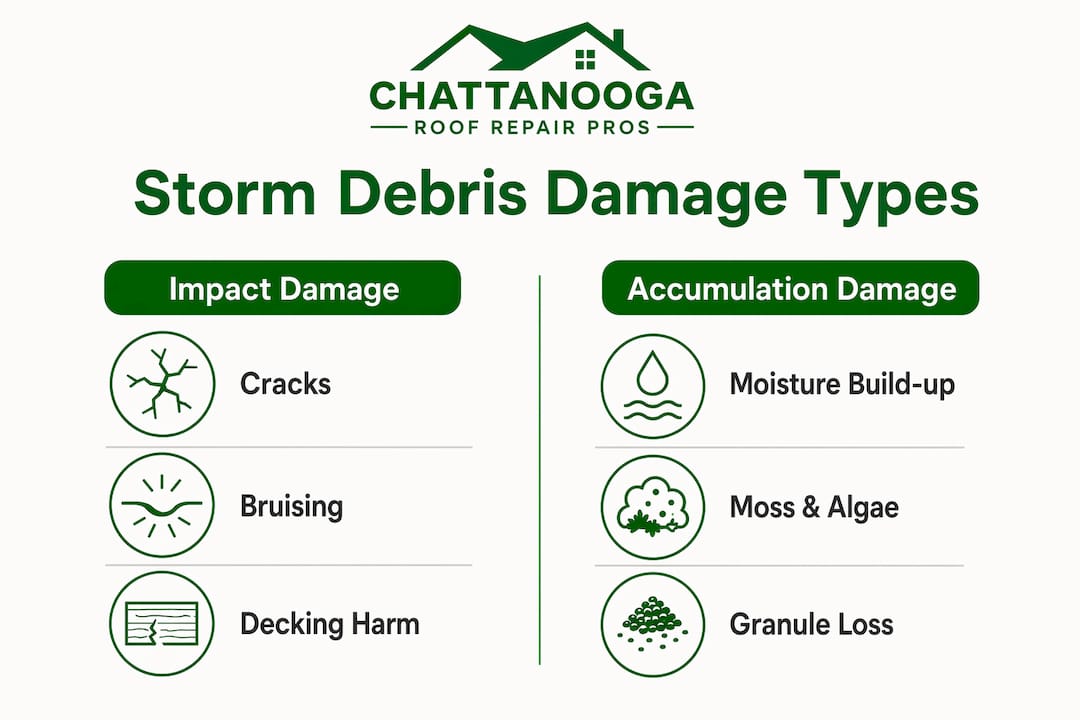
Storm debris causes two categories of harm: impact damage and accumulation damage. Each works differently, but both degrade shingles faster than normal weathering alone.
Impact damage from branches and heavy objects
A large branch is the most dramatic offender. A 3-inch branch dropped from 40 feet can crack roof decking outright. That kind of force does not just break shingles on the surface. It can split the wood decking underneath, creating a structural weak point that holds moisture and rots from the inside out. Even smaller branches scrape across shingles as they fall, tearing off the mineral granules that protect the asphalt layer beneath.
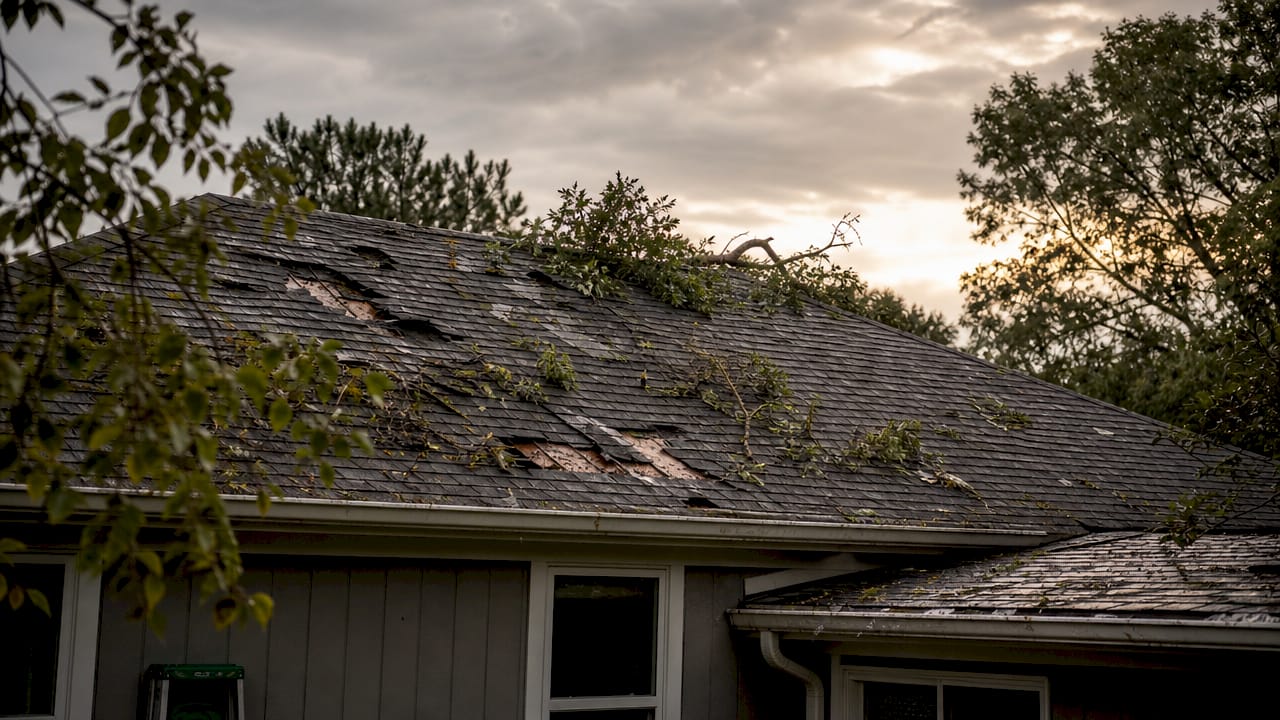
Impact damage often causes internal bruising of shingles, compromising waterproofing without leaving a visible hole. That is the detail most homeowners miss. The shingle looks intact, but its ability to shed water is already gone.
Wind-blown debris adds another layer of risk. Wind damage can occur at speeds as low as 45 mph, with suction forces exceeding 150 pounds per square foot at roof edges. At those forces, even small airborne objects hit shingles with enough energy to dislodge granules and crack the asphalt substrate.
Accumulation damage from leaves, pine needles, and pollen
Wet organic debris is a slower threat, but it is just as destructive. Wet leaves and pine needles can shorten shingle lifespan by 2 to 5 years through moisture retention and chemical degradation. Decomposing leaves release acids that break down asphalt over time. Pine needles trap water in tight clusters, keeping shingles wet long after a storm passes.
Pollen and organic debris create a damp microclimate that encourages moss and algae growth, which lifts shingle edges and interferes with water drainage. Once a shingle edge lifts, water gets underneath. Once water gets underneath, the problem compounds quickly.
| Debris type | Primary damage mechanism | Visible signs |
|---|---|---|
| Large branches | Impact cracks, decking fractures | Broken or missing shingles, dents |
| Small branches and sticks | Granule scraping, surface abrasion | Bare asphalt patches, granules in gutters |
| Leaves and pine needles | Moisture retention, chemical degradation | Moss, algae, lifted edges |
| Hail | Granule loss, bruising | Circular dents, granule deposits in gutters |
| Pollen | Damp microclimate, biological growth | Green or black streaking, edge lifting |
Pro Tip: After any storm, check your gutters for granules. A heavy deposit of granules after a single storm signals significant shingle wear, even if the roof looks fine from the street.
What are the signs of storm debris damage on shingles?
Visible damage is only part of the picture. Many of the most serious effects of debris on roofing stay hidden until water is already inside your home.
Visible signs you can spot from the ground or a safe vantage point include:
- Missing, cracked, or creased shingles in areas where debris landed
- Shingle edges that are curled upward or lifted away from the roof surface
- Dark streaks or green patches indicating moss or algae growth
- Granule deposits collecting in gutters or at the base of downspouts
- Sagging sections of the roof deck, which signal moisture damage below the surface
Hidden damage requires a closer look. Debris impact scrapes away protective mineral granules, exposing asphalt to UV degradation and accelerating aging without any immediate visible sign. A shingle that has lost its granules looks slightly discolored or shiny. That subtle change means the asphalt underneath is now exposed to sun and rain every day.
Clogged gutters are another warning sign that homeowners often overlook. When debris blocks gutters, water backs up under the shingles at the roof edge. That standing water accelerates rot and can lead to fascia board replacement costs of $15–$25 per linear foot. A gutter problem that starts with leaves can end with structural repairs.
Professional inspections catch what you cannot see. Storm damage often layers with wind and water intrusion, causing underlayment and decking harm that is invisible without getting on the roof and knowing what to look for. A storm damage roof assessment by a licensed contractor is the only reliable way to confirm what a storm actually did to your roof.
Pro Tip: Document everything before cleanup. Take photos of debris on the roof, in gutters, and on the ground around your home. This documentation supports insurance claims and gives your contractor a clearer picture of what happened.
How does debris damage accelerate shingle aging?
Debris damage does not stay contained to the point of impact. It triggers a chain of deterioration that spreads across the roof system over months and years.
Granule loss is the starting point. Granules are the mineral coating on asphalt shingles that block UV radiation and shed water. Once debris scrapes them away, the asphalt layer absorbs heat and moisture directly. UV exposure causes asphalt to dry out, crack, and shrink. Moisture causes it to swell and soften. That cycle repeats with every weather event, and the shingle ages at two to three times its normal rate.
A lifted shingle edge breaks the waterproof seal and acts as a lever during the next windstorm. Each gust pushes under the edge, stressing the adhesive strip and the nails holding the shingle down. This is the start of the zipper effect.
A lifted shingle edge initiates a zipper effect that can peel multiple shingles off during subsequent storms. One lifted shingle becomes three, then ten. The adhesive strips that bond shingles together lose bonding strength after 4 to 5 years of exposure, so older roofs are especially vulnerable to this chain reaction.
The financial stakes are real. Minor repairs costing $200 can escalate to $20,000 roof replacements if the zipper effect goes unchecked. That is not a worst-case scenario. That is a pattern Chattanoogaroofrepairs sees regularly after severe storm seasons in the Chattanooga area.
| Damage stage | What is happening | Typical timeframe |
|---|---|---|
| Granule loss | Asphalt exposed to UV and moisture | Immediately after impact |
| Edge lifting | Seal breaks, water infiltrates | Weeks to months post-storm |
| Moss and algae growth | Shingle edges lift further, drainage disrupted | 1–3 years under debris accumulation |
| Underlayment damage | Water reaches decking, rot begins | 1–3 years if untreated |
| Structural failure | Decking rot, potential collapse risk | 3+ years of neglect |
Storm damage inspections must assess below surface layers since debris can damage underlayment and decking beyond what shingle harm alone reveals. By the time water stains appear on your ceiling, the damage has been building for months.
What are the best steps for storm debris cleanup and shingle repair?
Timely action after a storm is the single most effective way to limit costs. The longer debris sits on your roof, the deeper the damage goes.
- Clear debris safely. Remove branches, leaves, and other debris from the roof surface as soon as it is safe to do so. Use a soft-bristle roof rake from the ground when possible. Avoid walking on the roof unless you are trained and have proper safety equipment.
- Inspect gutters and downspouts. Clear all blockages so water can drain freely. Blocked gutters cause water to back up under shingles at the eaves, which is one of the fastest paths to rot.
- Document visible damage. Photograph every area where debris landed, every lifted or cracked shingle, and every granule deposit in the gutters. This record supports your insurance claim and your contractor's assessment.
- Apply temporary protection if needed. If a branch has punctured or displaced shingles, temporary roof repairs like tarping prevent further water intrusion while you wait for a professional inspection. Chattanoogaroofrepairs offers same-day tarping for exactly this situation.
- Schedule a professional inspection. A licensed contractor can assess hidden damage to granules, underlayment, and decking that you cannot see from the ground. Chattanoogaroofrepairs uses a 21-point inspection process to catch every layer of damage.
- Repair or replace damaged shingles promptly. Patching works for isolated damage. Full shingle replacement is the right call when damage is widespread or when shingles are already near the end of their lifespan. Using materials from GAF or Owens Corning ensures manufacturer-backed warranties on the repair.
Pro Tip: Fall roof debris cleanup costs average $150–$400. Compare that to ice dam repairs, which run $2,000–$5,000 when debris is left to trap moisture through winter. The math strongly favors cleanup.
Knowing the types of storm roof repairs available helps you have a more informed conversation with your contractor and avoid being upsold on work you do not need.
Key Takeaways
Storm debris damages shingles through physical impact and moisture accumulation, and both mechanisms accelerate aging in ways that are often invisible until the damage is severe.
| Point | Details |
|---|---|
| Impact damage is often hidden | Branches and hail bruise shingles internally, destroying waterproofing without leaving visible holes. |
| Organic debris shortens shingle life | Wet leaves and pine needles can cut shingle lifespan by 2 to 5 years through moisture and chemical breakdown. |
| The zipper effect multiplies damage | One lifted shingle edge can trigger a chain reaction that strips multiple shingles in the next storm. |
| Professional inspection is non-negotiable | Hidden damage to underlayment and decking requires a licensed contractor to detect and document. |
| Timely cleanup saves thousands | Clearing debris and making prompt repairs prevents $200 problems from becoming $20,000 replacements. |
What I have learned after years of storm season inspections
After inspecting hundreds of roofs following Chattanooga storms, the pattern I keep seeing is the same: homeowners underestimate what debris actually does to a roof. They look up, see shingles still in place, and assume everything is fine. That assumption is where the real damage begins.
The most costly repairs I have been called in to handle were not caused by dramatic events like a tree falling through a roof. They were caused by a season's worth of leaves sitting in a valley, or a few lifted shingle edges that nobody noticed until water showed up on the ceiling. The damage is cumulative and quiet. It does not announce itself.
My honest advice is this: treat every significant storm as a reason to inspect, not just a reason to look. If you cannot safely get eyes on your roof, call a professional within a week of any storm that brought heavy wind, hail, or falling debris. The cost of an inspection is trivial compared to the cost of finding out a year later that your decking has been rotting the whole time.
I also want to be direct about DIY repairs. Clearing debris from the ground with a roof rake is smart and safe. Climbing onto a damaged roof to patch shingles is not. The risk of injury is real, and an improper patch can actually trap moisture and make the underlying damage worse. Know where the line is, and call a professional for anything beyond surface cleanup.
— Steve
Chattanoogaroofrepairs: storm damage repair and debris protection for Chattanooga homeowners
After a storm, the last thing you need is uncertainty about the condition of your roof.
Chattanoogaroofrepairs provides storm and hail damage repair across Chattanooga and surrounding areas, with same-day tarping available when you need immediate protection. Our 21-point inspection process covers every layer of your roof, from shingles down to the decking, so nothing gets missed. We also offer gutter installation and cleaning to keep debris from backing up against your shingles in the first place. All repairs use materials from GAF and Owens Corning, backed by manufacturer warranties. Contact Chattanoogaroofrepairs for a no-pressure inspection and transparent pricing on any storm damage repair.
FAQ
How does storm debris damage shingles without visible holes?
Impact damage causes internal bruising that breaks down the waterproofing layer inside the shingle without cracking the surface. Granule loss from debris scraping also exposes asphalt to UV and moisture, accelerating wear invisibly.
How long does it take for debris to cause serious roof damage?
Moisture-related rot can begin within 3 years under organic debris accumulation. Granule loss and UV degradation begin immediately after impact, so the timeline for serious damage is shorter than most homeowners expect.
Can leaves and pine needles really shorten shingle lifespan?
Yes. Wet organic debris like leaves and pine needles can shorten shingle lifespan by 2 to 5 years through sustained moisture retention and the chemical breakdown of asphalt.
What is the zipper effect on a roof?
The zipper effect occurs when one lifted shingle edge breaks its seal and acts as a lever, causing multiple adjacent shingles to peel off during the next windstorm. It can turn a minor repair into a full roof replacement if left unaddressed.
When should I call a professional after storm debris damage?
Call a licensed contractor within one week of any storm that brought hail, high winds, or falling debris. Hidden damage to underlayment and decking requires professional assessment and cannot be reliably detected from the ground.