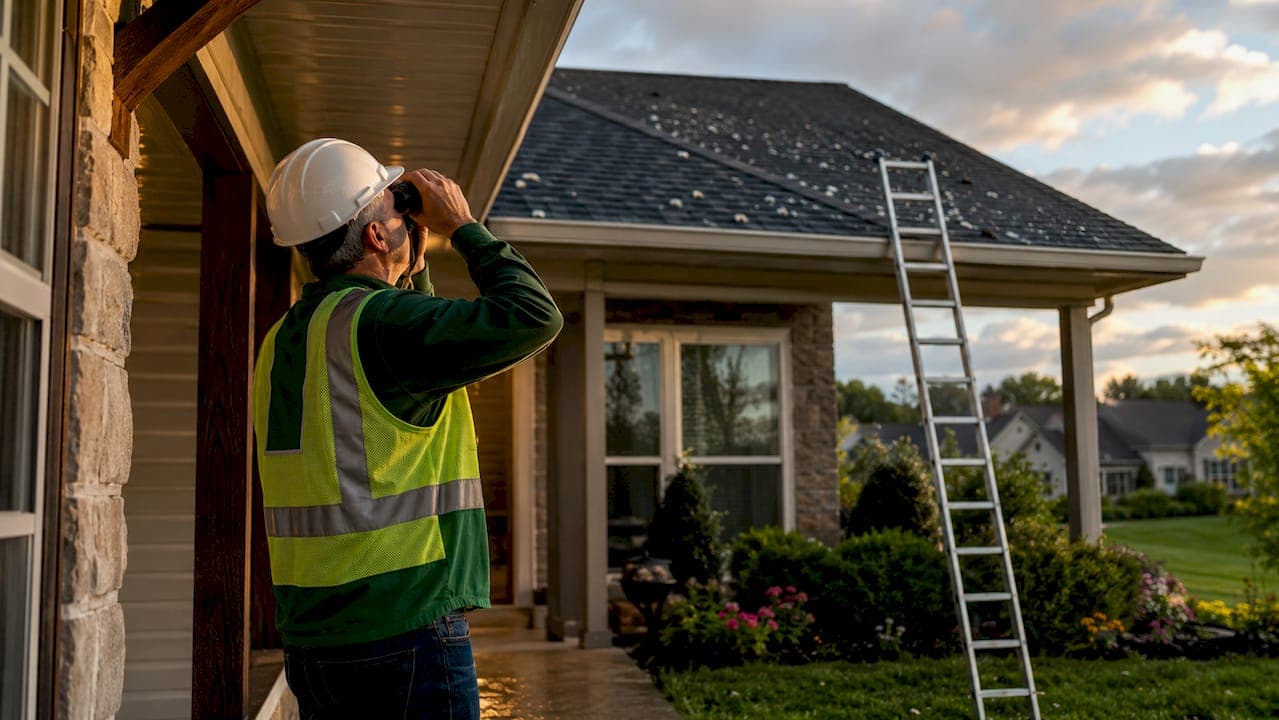
Assessing roof damage after hail is defined as the systematic inspection of roofing materials, structural components, and surrounding property to identify impact evidence, quantify functional damage, and build a defensible insurance claim. The industry term for this process is a post-storm hail damage assessment, and it covers everything from shingle bruising to dented gutters. Most hail-damaged roofs show no leaks for 2–5 years, well after the insurance claim window closes. That delay is exactly why acting fast and knowing what to look for matters so much.
How to assess roof damage after hail: start with a safe inspection
The safest way to begin your roof damage assessment guide is from the ground. You do not need to climb onto your roof to gather useful evidence, especially right after a storm when surfaces are wet and debris is unpredictable.
What to bring before you start
Gather these tools before stepping outside:
- Binoculars for close-up views of shingles, ridge caps, and flashing from the ground
- A camera or smartphone with date and time stamps enabled
- Chalk for marking damage zones if you do access the roof
- A ladder for limited eave-level inspection only
- A notepad to log observations by roof section
Ground-level inspections using binoculars, drones, or pole cameras minimize safety risks while still capturing reliable damage evidence. A pole camera or drone gives you close-up imagery of steep or fragile sections without putting you at risk.
Checking soft metals first
Before you look up, look around. Walk the perimeter of your property and examine soft metal surfaces: gutters, downspouts, AC condenser fins, vent caps, window screens, and even your mailbox lid. Damage to soft metals serves as credible evidence to insurance adjusters about hail intensity and direction. If your gutters are dented but your roof claim shows no collateral damage, adjusters grow skeptical fast.
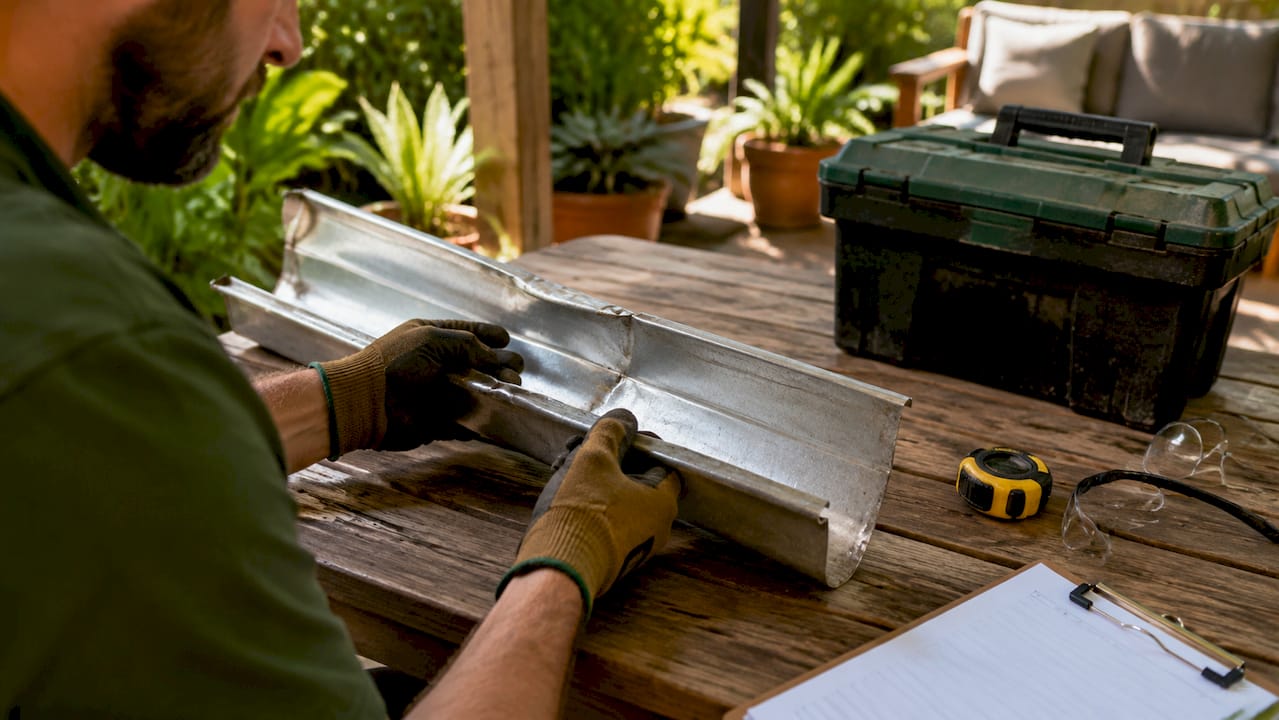
Also check your attic. Moisture stains on the decking or insulation are early signs of structural compromise, even before a visible leak appears.
Pro Tip: Use a free drone app like DJI Fly or hire a local operator for under $100 to capture high-resolution roof imagery before any debris is cleared. This footage can become your strongest claim asset.
What are the signs of hail damage on different roof types?
Hail damage looks different depending on your roofing material. Knowing what to look for on your specific roof type prevents you from missing real damage or misreading normal wear.
Asphalt shingles
Asphalt shingles are the most common roofing material in the Chattanooga area, and they show hail impact in specific ways. Look for:
- Bruising: A soft, spongy depression in the shingle mat, often with a dark center where granules have been knocked loose
- Granule loss: Bare spots exposing the black asphalt substrate underneath
- Cracked or lifted tabs: Edges that curl or crack after impact
The key distinction is between cosmetic granule loss from age or foot traffic and functional damage where the shingle mat itself is compromised. Contractors and adjusters use 10'x10' test squares to count hail bruises, and 8 or more bruises per square typically qualify for a replacement claim. Functional bruises feel soft when pressed, unlike the firm surface of an undamaged shingle.
Metal roofs
Metal roofing shows hail damage as circular dents, paint scratches, and loosened fasteners. Dents on standing seam panels are usually cosmetic unless they compromise the seam seal. Scratches that expose bare metal accelerate rust. Check fastener heads for cracks in the rubber washers, which allow water intrusion over time.
Wood shingles and shakes
Wood shakes split, crack, or show brown dented impact marks. Fresh splits have sharp edges and a lighter wood color inside. Old splits from weathering look gray and rounded. That color difference helps you tell new hail damage from pre-existing wear.
| Roof Type | Primary Damage Sign | Functional vs. Cosmetic |
|---|---|---|
| Asphalt shingles | Soft bruising, granule loss | Soft mat depression = functional |
| Metal panels | Circular dents, scratched coating | Seam compromise = functional |
| Wood shakes | Fresh splits, brown dent marks | Sharp-edged splits = functional |
Pro Tip: Press your thumb firmly on any suspected bruise on an asphalt shingle. If it gives like a bruised apple, the mat is damaged. If it feels firm, it may be cosmetic. This simple test takes seconds and tells you a lot.
How do you document hail damage for an insurance claim?
Proper documentation is the difference between a paid claim and a denial. Incomplete evidence packages often lead to denials or underpaid claims, so treat your documentation like a legal record from the start.
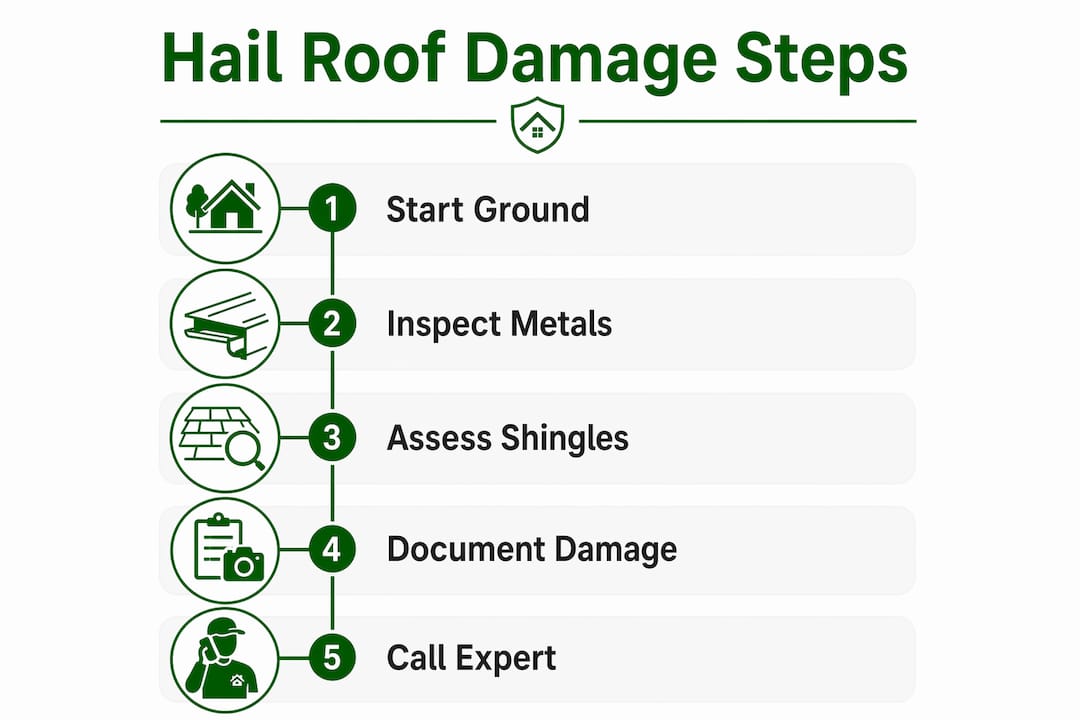
Follow these steps in order:
- Confirm the storm date. Pull the official weather report from the National Weather Service or a service like MyHailScore. Your photos must match a documented storm event.
- Photograph collateral damage first. Shoot your gutters, AC unit, vents, mailbox, and any outdoor furniture before touching anything. Collateral damage on property items beyond the roof provides compelling evidence supporting hail claims.
- Collect granules from downspout outlets. Place them in a labeled zip bag. This physical evidence shows active granule loss tied to the storm.
- Mark and photograph test squares. Use chalk to outline 10'x10' sections on the worst-exposed slope. Count and photograph every functional bruise within each square.
- Document the attic. Photograph any new moisture stains, wet insulation, or daylight visible through the decking.
- Keep all repair estimates. Written estimates from licensed contractors become part of your claim file.
Common mistakes to avoid:
- Waiting more than 30 days to file after a storm
- Cleaning gutters before photographing granule buildup
- Submitting photos without date stamps or location data
- Filing a claim before completing a full assessment
Proper documentation includes date-stamped photos, granule collection, collateral metal damage photos, and weather reports for claim success. Every piece of evidence you add reduces the adjuster's ability to dispute your claim.
When should you hire a professional roof inspector?
Some hail events clearly warrant a professional. Others leave homeowners unsure. Here is when to call a certified inspector rather than rely solely on your own assessment.
Hailstones 1 inch or larger generally trigger the need for professional inspection. A dime-sized dent on your AC fins corresponds to roughly 1-inch hail. A quarter-sized dent signals more severe impact.
A professional roof inspection covers:
- Full shingle inspection on all slopes, including test square counts
- Metal component checks: flashing, valleys, vents, and skylights
- Attic inspection for moisture intrusion and decking damage
- Photographic documentation formatted for insurance submission
- Written report with damage scope and repair recommendations
Professional hail damage inspections take 45 minutes to 2 hours depending on roof complexity. A larger home with multiple roof planes or a commercial flat roof takes longer and requires more documentation.
Most insurance carriers require 6–8 functional hail hits per 100 square feet on the worst-exposed slope to approve a full replacement. A professional inspector knows exactly how to count, document, and present those hits to meet that threshold.
Having a trusted roofing contractor on-site during the insurance adjuster's visit also matters. A contractor present during the adjuster's assessment improves claim accuracy and reduces scope disputes. Adjusters work fast. A contractor who knows your roof slows that process down in your favor.
Check your policy's claim filing deadline before scheduling. Most carriers require filing within 1–2 years of the storm date, but some Tennessee policies have shorter windows.
Key takeaways
A thorough post-storm hail damage assessment requires safe inspection methods, material-specific damage recognition, and complete documentation to protect your insurance claim.
| Point | Details |
|---|---|
| Start from the ground | Use binoculars, drones, or pole cameras to inspect safely before accessing the roof. |
| Check soft metals first | Dented gutters, AC fins, and vents are powerful evidence of hail intensity for adjusters. |
| Use the test square method | Mark 10'x10' chalk squares and count functional bruises; 8+ per square typically qualifies for replacement. |
| Document everything immediately | Date-stamped photos, granule samples, and weather reports form the core of a strong claim package. |
| Call a professional for 1-inch or larger hail | Certified inspectors know insurance thresholds and can represent your interests during adjuster visits. |
What most homeowners get wrong about hail inspections
I have seen the same mistake play out dozens of times. A homeowner waits two or three weeks after a storm, assuming no visible leak means no real damage. By the time they call us, the claim window is closing and the documentation window has already closed.
The most costly error is not the missed damage. It is the missed evidence. Granules wash out of gutters within a few rainstorms. Soft metal dents get overlooked once you stop thinking about the storm. That window of clear, undisputed physical evidence is short, usually 2–3 weeks at most.
The second mistake I see is homeowners going into an adjuster visit alone. Adjusters are professionals who move quickly. They are not adversaries, but they are also not your advocate. Having a licensed contractor walk the roof with the adjuster changes the dynamic. The contractor can point to specific test squares, explain functional damage versus cosmetic wear, and make sure nothing gets missed or minimized.
Technology has genuinely changed what is possible here. Drone imagery captured the day after a storm gives you a timestamped visual record that no one can dispute later. If your roof is steep, fragile, or still wet, a drone is not just safer. It is smarter. The storm damage assessment process has evolved, and the homeowners who get the best outcomes are the ones who treat it like a documentation project from day one.
— Steve
Get a professional hail damage inspection in chattanooga
After a hailstorm, the clock starts immediately. Chattanoogaroofrepairs provides certified hail damage inspections and storm and hail damage repair for homeowners and property managers across Chattanooga and the surrounding area. Our team uses GAF and Owens Corning materials, carries full insurance, and offers same-day tarping to protect your home while repairs are scheduled.
Our 21-point inspection covers every slope, soft metal surface, and attic space, and we provide a written report formatted for insurance submission. We also offer shingle replacement and gutter repair services to address collateral hail damage in one visit. Contact Chattanoogaroofrepairs today for a no-pressure assessment before your claim window closes.
FAQ
How soon should i inspect my roof after a hailstorm?
Inspect within 48–72 hours of the storm. Evidence like granules in gutters and soft metal dents is clearest before rain washes it away.
What size hail causes roof damage?
Hailstones 1 inch or larger typically cause functional damage to asphalt shingles and metal components. Smaller hail may still damage soft metals and skylights.
How many hail hits does insurance require for a replacement claim?
Most carriers require 6–8 functional hits per 100 square feet on the worst-exposed slope. A certified inspector counts these using the chalk test square method.
Can i inspect my roof for hail damage without climbing on it?
Yes. Binoculars, drones, and pole cameras provide reliable close-up evidence from the ground. An attic check for moisture stains adds further confirmation without roof access.
What if my roof shows no leaks after hail?
No leak does not mean no damage. Most hail-damaged roofs do not leak for 2–5 years, often after the insurance claim window has closed. Inspect and document early regardless of visible leaks.