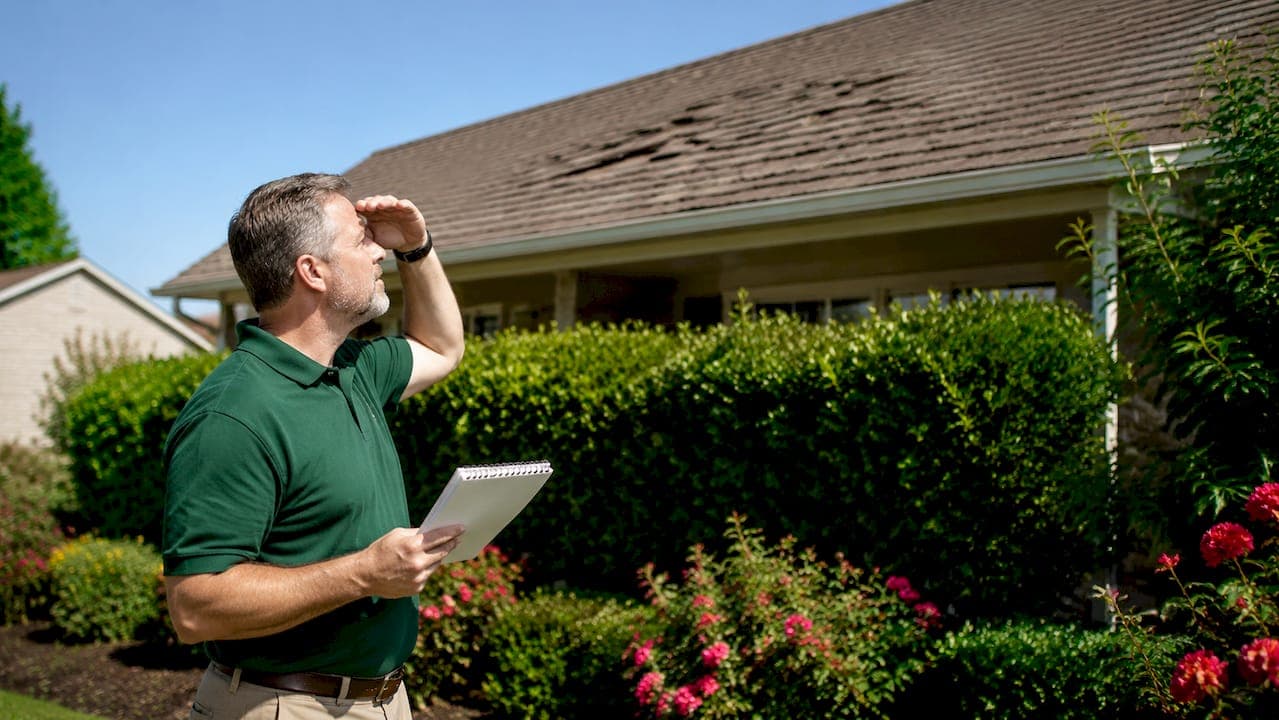
The decision between roof repair and replacement rests on four measurable criteria: roof age, the extent of damage, repair cost relative to replacement cost, and your long-term plans for the home. Getting these criteria wrong costs thousands of dollars. A repair on a roof past its useful life delays the inevitable and adds up fast. A full replacement on a roof with one isolated leak wastes money you did not need to spend. The roof repair vs replacement criteria covered here give you a clear framework to make the right call the first time.
1. How does roof age influence the repair vs replacement decision?
Roof age is the single most reliable starting point for any repair or replacement decision. The material sets the clock. Asphalt shingles last 20–30 years. Metal roofs last 40–70 years. Tile roofs exceed 50 years with proper maintenance. Knowing where your roof sits on that timeline tells you whether a repair is a sound investment or a short-term patch on a failing system.
Roofs over 15 years old with widespread issues carry a 70% chance of needing further repairs within three years. That statistic means a repair today likely becomes two or three more repairs before the roof reaches the end of its life. At that point, you have spent significant money without resetting the clock.
- Roofs under 15 years old with isolated damage are strong candidates for repair
- Roofs at 15–20 years with recurring issues warrant a full inspection before any repair
- Roofs past 80% of their expected lifespan are poor candidates for repair and replacement resets both warranty and lifespan
- Repair history matters: two or more repairs on the same area signal systemic failure
Pro Tip: Pull your home's permit records or ask your previous owner for the installation date. Many homeowners do not know their roof's actual age, which leads to underestimating how close they are to replacement territory.
2. What is the impact of damage extent on the repair vs replacement choice?
The scope of damage is the second major factor in any roof condition assessment. Localized damage confined to one slope or a single area smaller than a sheet of plywood generally merits repair rather than replacement. The key word is "localized." Once damage spreads across multiple sections, the math shifts.
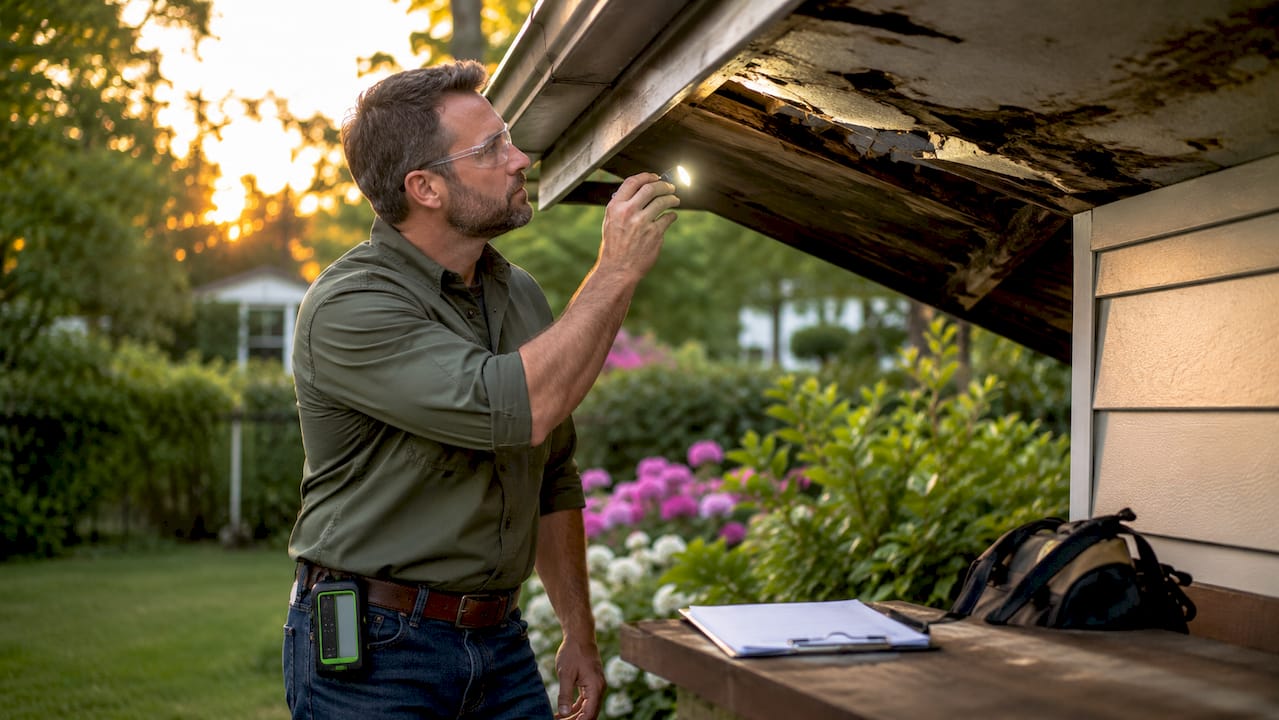
The 30% rule is the most widely used threshold in the industry. If damage affects more than 30% of the roof surface, replacement becomes more cost-effective than piecemeal repairs. The logic is straightforward: repairing 30% of a roof leaves 70% that is aging and likely to fail soon anyway.
Common signs that indicate widespread rather than localized damage include:
- Missing or curling shingles across multiple roof sections
- Granule loss visible in gutters or at downspouts
- Sagging decking or visible soft spots when walking the roof
- Visible daylight inside the attic or water stains on multiple ceiling areas
- Structural damage to the roof deck itself
Structural problems always require replacement, not repair. A sagging deck or rotted sheathing cannot be patched. Attempting to shingle over structural damage creates a safety hazard and voids any material warranty.
Pro Tip: After a storm, check your attic before calling a contractor. Daylight coming through the roof boards or wet insulation in multiple spots tells you more about damage scope than a surface inspection alone.
3. How do repair costs compared to replacement costs affect the best choice?
Cost is where most homeowners make their biggest mistakes. The instinct is to choose the lower number. But the right question is not "how much does this repair cost?" It is "how much does this repair cost relative to what a full replacement would cost?"
The industry uses two key thresholds. The 30% rule states that if repair costs exceed 30% of the full replacement price, replacement is generally the better investment. Repairs in that range typically cost $300–$1,500 for minor work, while full replacements run $12,000–$35,000 or more depending on size and materials. The 50% rule goes further: repairs costing over half the replacement price predict a poor investment and a looming failure cycle.
Consider this scenario: a $1,500 repair on a 22-year-old asphalt shingle roof may come with an 18-month warranty. A full replacement at $18,000 restores a 25-year manufacturer warranty and full life expectancy. Spread over time, the replacement delivers far better value per year of protection.
- Repair is cost-effective when damage is isolated and the roof has significant life remaining
- Replacement wins when cumulative repair costs approach or exceed the 30–50% threshold
- Repeated repairs on the same area signal replacement need and escalating risk
- Factor in the cost of interior damage from recurring leaks when calculating total repair expense
Pro Tip: Ask your contractor to give you both a repair quote and a replacement quote at the same time. Seeing both numbers side by side makes the cost-benefit comparison concrete instead of abstract.
4. How do homeowner goals and roof condition assessments shape the decision?
Financial thresholds alone do not tell the full story. Your plans for the home matter just as much as the numbers. A homeowner staying in the house for 20 more years has a very different calculation than someone planning to sell within two years.
If you plan to sell, a failing roof is a deal killer. Buyers and appraisers flag roofs with fewer than five years of life remaining, which triggers repair requirements or escrow holds. A new asphalt shingle roof adds an average of $15,247 to resale value and can increase sale price by 1–3% while reducing buyer negotiation leverage by $5,000–$15,000. That return on investment exceeds 61–68%, making replacement a strong financial move before listing.
If you plan to stay long term, the benefits of replacement extend beyond protection. New roofing materials with reflective coatings and improved ventilation reduce your HVAC load over the roof's lifetime. Energy savings and thermal performance are benefits many homeowners overlook when comparing repair and replacement costs.
"Homeowners often overlook the warranty reset that comes with a full replacement. A repair may fix the visible problem, but it does not restore the manufacturer's coverage on the rest of the roof." — GAF Roofing
Situations that favor repair over replacement include a short planned tenure in the home, a roof under 15 years old with truly isolated damage, and cases where a professional inspection confirms no structural issues. A thorough roof inspection checklist covers decking condition, flashing integrity, ventilation, and shingle wear patterns. That inspection is the foundation of any honest repair or replacement recommendation.
5. Side-by-side comparison: When to choose repair vs replacement
Combining all four criteria into one decision framework makes the choice clearer. The table below summarizes when each option makes sense.
| Factor | Repair makes sense | Replacement makes sense |
|---|---|---|
| Roof age | Under 15 years | Over 20 years or past 80% of lifespan |
| Damage extent | Under 30% of surface, localized | Over 30% of surface, multiple slopes |
| Repair cost ratio | Under 30% of replacement cost | Over 30–50% of replacement cost |
| Repair history | First or second repair on area | Two or more repairs on same spot |
| Structural condition | Deck intact, no sagging | Sagging, rot, or visible daylight in attic |
| Homeowner plans | Selling within 1–2 years with minor issues | Staying long term or selling with major wear |
Warning signs that mandate replacement regardless of other factors:
- Sagging or spongy decking anywhere on the roof
- Daylight visible through roof boards from inside the attic
- Widespread granule loss indicating shingle failure across the whole surface
- Two or more repairs on the same roof area within a short period
One common misconception is that adding a second layer of shingles over the existing roof saves money without sacrificing quality. Overlay work can void material warranties and hide deck rot that worsens unseen. Most building codes prohibit a third layer entirely, and the hidden damage compounds over time.
"The goal of any inspection is to distinguish an isolated repair need from systemic decay. Those are two very different problems with two very different solutions." — IKO Roofing
A decision checklist for homeowners:
- Get a professional inspection before committing to either option
- Ask for the repair cost as a percentage of full replacement cost
- Confirm whether the damage is structural or surface level
- Review your repair history for the past five years
- Factor in your timeline for staying in or selling the home
Pro Tip: A storm damage assessment from a licensed contractor gives you documentation for your insurance claim and a clear picture of whether the damage is localized or widespread. Get that report before making any decision.
Key takeaways
The most cost-effective roof decision combines age, damage scope, repair cost ratio, and your long-term home plans into one clear assessment rather than reacting to a single visible problem.
| Point | Details |
|---|---|
| Age sets the baseline | Roofs past 80% of their lifespan are poor repair candidates; replacement resets warranty and life expectancy. |
| The 30% rule guides cost decisions | If repair costs exceed 30% of replacement cost, replacement delivers better long-term value. |
| Damage scope drives the threshold | Damage covering more than 30% of the roof surface favors replacement over piecemeal repairs. |
| Homeowner plans change the math | Selling soon or staying long term each shifts the financial case for repair or replacement differently. |
| Structural damage requires replacement | Sagging decking, visible daylight, or rot cannot be repaired and must be replaced immediately. |
What I have learned after years of watching homeowners get this wrong
The most expensive mistake I see is not choosing replacement when repair was the right call. It is the opposite: homeowners who repair the same roof section two, three, and four times because each individual repair looks affordable on paper. By the time they finally replace the roof, they have spent $6,000–$8,000 in repairs on a roof that needed replacement after the first $1,500 fix. That is the "chasing a ghost" pattern that IKO's roofing experts warn about, and it is far more common than people realize.
The second mistake is trusting a visual inspection alone. A roof can look acceptable from the driveway and have rotted decking underneath. The only way to know is a proper inspection that includes the attic. I have seen roofs with clean-looking shingles hiding three inches of water damage in the decking because nobody looked from the inside.
The third mistake is treating overlay work as a real solution. Adding a second shingle layer saves money on day one and costs more on day three when the hidden rot accelerates. Proper deck preparation is not optional. It is the foundation that determines whether your new roof lasts 10 years or 30.
My honest advice: get the inspection first, ask for both quotes, and do the math on cost per year of protection. That single calculation changes the decision for most homeowners.
— Steve
Trusted roofing services in Chattanooga for repair and replacement
When you are ready to move from assessment to action, Chattanoogaroofrepairs provides licensed, insured roofing services across Chattanooga and the surrounding area. The team uses materials from GAF and Owens Corning, both of which carry manufacturer-backed warranties that protect your investment long after the work is done.
Chattanoogaroofrepairs offers a comprehensive 21-point inspection that covers every factor in this guide, from decking condition to shingle wear and ventilation. For storm damage, same-day tarping protects your home while the full assessment is completed. Whether you need a roof leak repair or a complete replacement, the team provides transparent pricing with no-pressure recommendations. Explore the full range of roofing services in Chattanooga and schedule your free inspection today.
FAQ
What is the 30% rule for roof repair vs replacement?
The 30% rule states that if repair costs exceed 30% of the full replacement cost, replacement is the more cost-effective choice. The same threshold applies to damage coverage: repairs become less practical when more than 30% of the roof surface is affected.
How old does a roof need to be before replacement makes more sense than repair?
Roofs over 15–20 years old with recurring issues are generally better candidates for replacement than repair. A roof past 80% of its expected lifespan rarely justifies the cost of repair since the remaining service life is too short to recover the investment.
Does a new roof increase home value before a sale?
A new asphalt shingle roof adds an average of $15,247 to resale value and can increase the sale price by 1–3%. It also removes a major negotiation point that buyers and appraisers use to reduce offers or require escrow holds.
What are the warning signs that a roof needs replacement, not repair?
Sagging decking, visible daylight through roof boards from inside the attic, granule loss across the entire surface, and two or more repairs on the same area all indicate systemic failure. These signs point to replacement rather than another round of patching.
Is adding a second layer of shingles a good alternative to full replacement?
Overlay work saves upfront costs but can void material warranties and hide deck rot that worsens over time. Most building codes prohibit a third layer, and the concealed damage often leads to a more expensive replacement down the road.