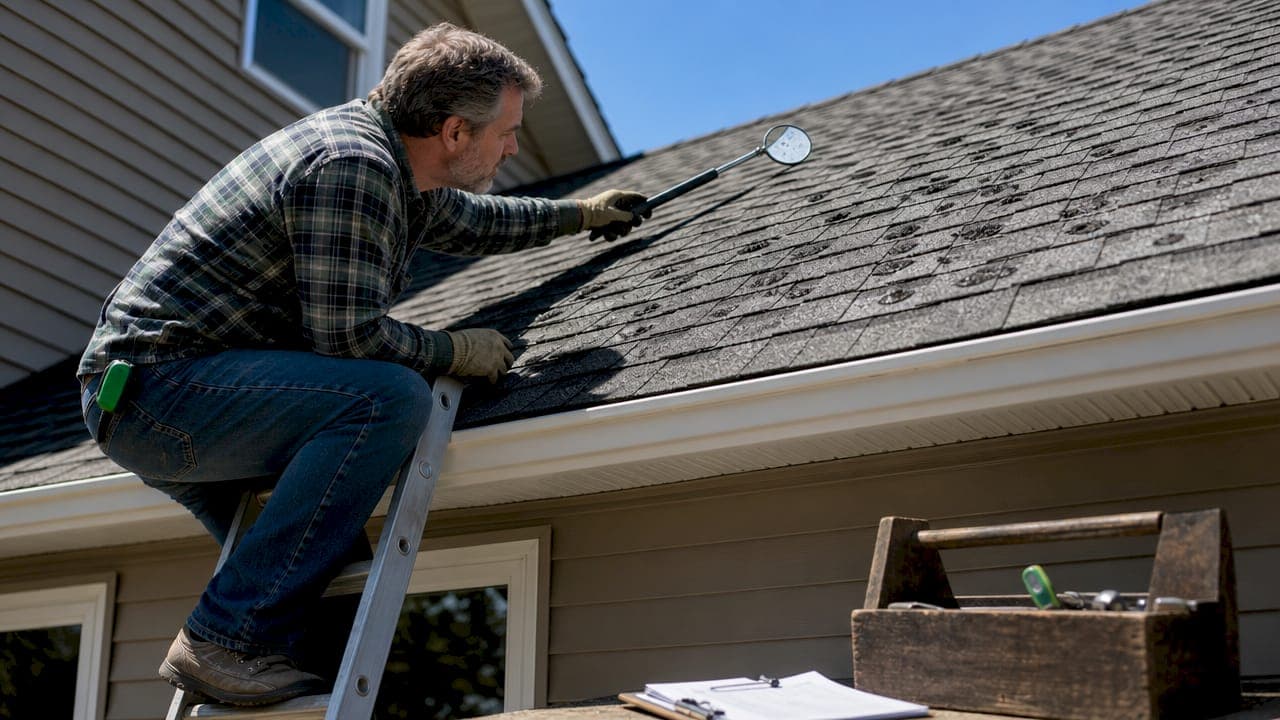
Hail damage is defined as physical impact marks on roofing materials and surrounding structures caused by falling ice, appearing as bruises, dents, granule loss, cracks, and surface fractures. Knowing what does hail damage look like is the first step toward protecting your home from hidden water intrusion. Severe hail starts at quarter-sized stones measuring roughly 1 inch in diameter. Stones that size carry enough force to compromise asphalt shingles, metal components, and vinyl siding in a single storm. The signs vary by material, but the pattern is always the same: scattered, random impact points that look nothing like normal wear.
What does hail damage look like on asphalt shingles?
Asphalt shingles show hail damage as dark, circular bruise spots where granules have been knocked away, exposing the black asphalt mat underneath. These spots range from dime to quarter size. Hail bruises feel soft or spongy when you press them with your thumb. That softness is the key indicator. It tells you the mat has been compromised, not just scratched.
The industry term for this condition is "functional damage," meaning the impact has reduced the shingle's ability to shed water and protect the roof deck. Granule loss without bruising is usually cosmetic. Bruising with granule loss is a claimable, repairable problem.
Heavier hail can crack shingles, leaving circular fractures that radiate outward from the impact point. Cracked shingles allow water to reach the roof deck directly. That is a faster path to leaks than bruising alone.
Here are the four main signs to look for on asphalt shingles:
- Dark circular spots with missing granules, roughly dime to quarter size, scattered randomly across the slope
- Soft, spongy feel when pressed at the impact point, distinguishing hail bruises from firm blistering or aging
- Radiating cracks around impact centers on shingles hit by larger stones
- Exposed black mat visible at impact points, showing the protective granule layer is gone
Pro Tip: Press each suspicious spot firmly with your thumb. A hail bruise gives slightly, like a bruise on an apple. A blister or aging mark stays firm. That single tactile test saves you from misidentifying normal wear as storm damage.
How does hail damage appear on metal components and other materials?
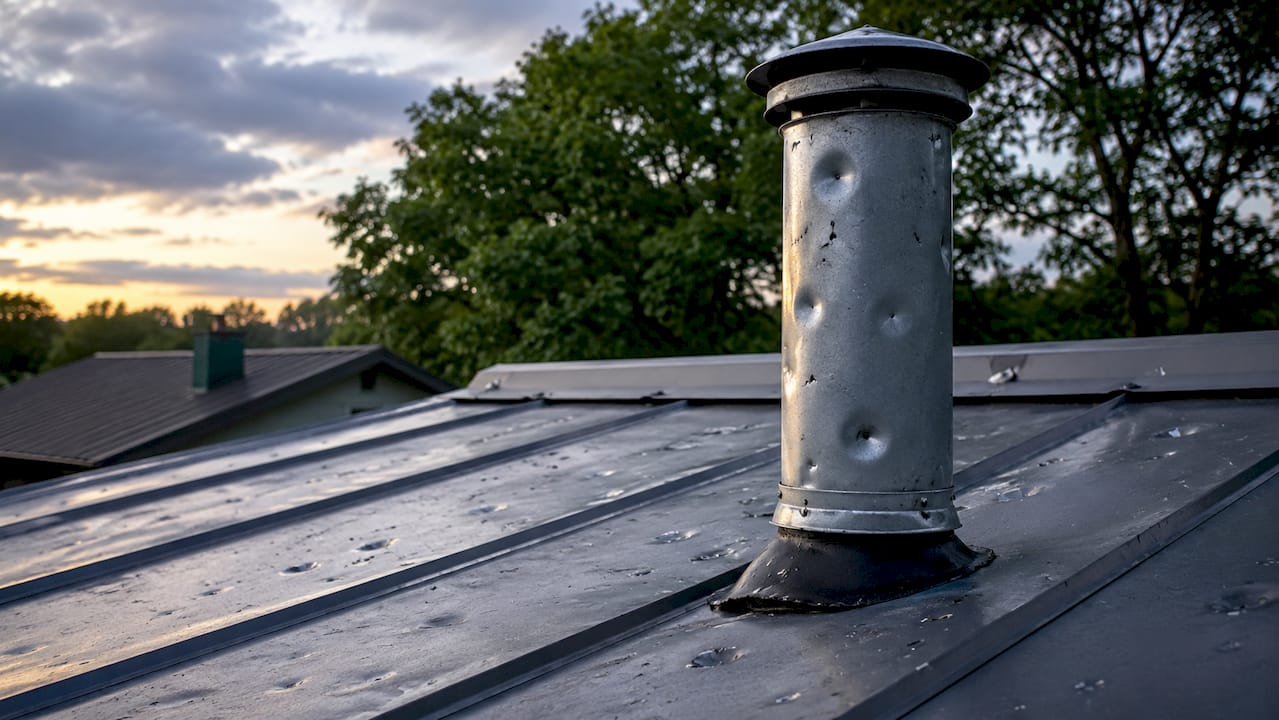
Metal components are the most reliable early indicator of a hail event. Round dents on gutters, vents, and A/C fins confirm that hail hit your property with enough force to cause damage. These dents chip the protective coating on metal surfaces, which accelerates corrosion over time. A dented gutter is not just cosmetic. It is evidence your roof likely took a hit too.
Vinyl siding tells a similar story. Vinyl can crack or dent extensively when hail exceeds roughly 1.75 to 2 inches in diameter. Wind-driven hail hits siding at an angle, so damage concentrates on the side of the house facing the storm. Checking the windward side of your home first narrows your inspection quickly.
Other surfaces show damage in these specific ways:
- Gutters and downspouts: Multiple round dents in a scattered pattern, often with paint chips at each impact point
- A/C condenser fins: Bent or flattened fins from direct hail impact, sometimes visible without climbing
- Roof vents and flashings: Dimpled metal surfaces with chipped or missing paint around each dent
- Tile roofs: Chips, cracks, or fractures at the edges and faces of individual tiles
- Stucco and brick: Surface paint scuffs or small chips, typically on the windward face
Pro Tip: Check your A/C condenser unit before climbing on the roof. The aluminum fins dent easily and show clear round impact marks. If you count more than a handful of dents, your roof almost certainly has damage worth inspecting closely.
How to differentiate real hail damage from cosmetic marks or wear
Hail damage is random and scattered across a roof slope. Distinguishing hail from blistering, foot traffic, and aging requires both pattern recognition and tactile inspection. Normal wear tends to be uniform, concentrated along ridges or high-traffic paths. Hail hits wherever the stone fell, with no logical pattern.
"Hail damage is random and scattered; other marks tend to be uniform or patterned." This distinction is the single most reliable way to separate a legitimate insurance claim from normal roof aging.
Follow these steps to confirm whether marks are hail-related:
- Check the pattern. Hail marks appear randomly across the entire slope. Blistering and aging cluster along ridges, valleys, or areas of poor ventilation.
- Press each mark. Hail bruises feel soft. Blisters, thermal cracks, and foot traffic scuffs feel firm under thumb pressure.
- Look for collateral damage. Soft metal dents confirm storm intensity on gutters, vents, and flashings. No collateral damage weakens a hail claim significantly.
- Compare granule loss location. Granules collecting in gutters after a storm point to hail. Granules at the base of downspouts from normal aging appear gradually over months, not overnight.
- Document with scale references. Documentation should capture context and scale because hail damage mimics other conditions in photos without a reference object like a coin or ruler.
Granule accumulation in gutters after a storm is one of the clearest visual clues available from ground level. A sudden heavy deposit of black grit in your downspout splash zone after a storm is not normal aging. It is a signal worth acting on.
What steps should homeowners take to assess hail damage?
Many roofs look fine from the driveway despite having hidden storm damage. A proper assessment starts at ground level and works upward systematically. Roof bruising is rarely visible from the street, which is why collateral damage on soft metals is your first checkpoint.
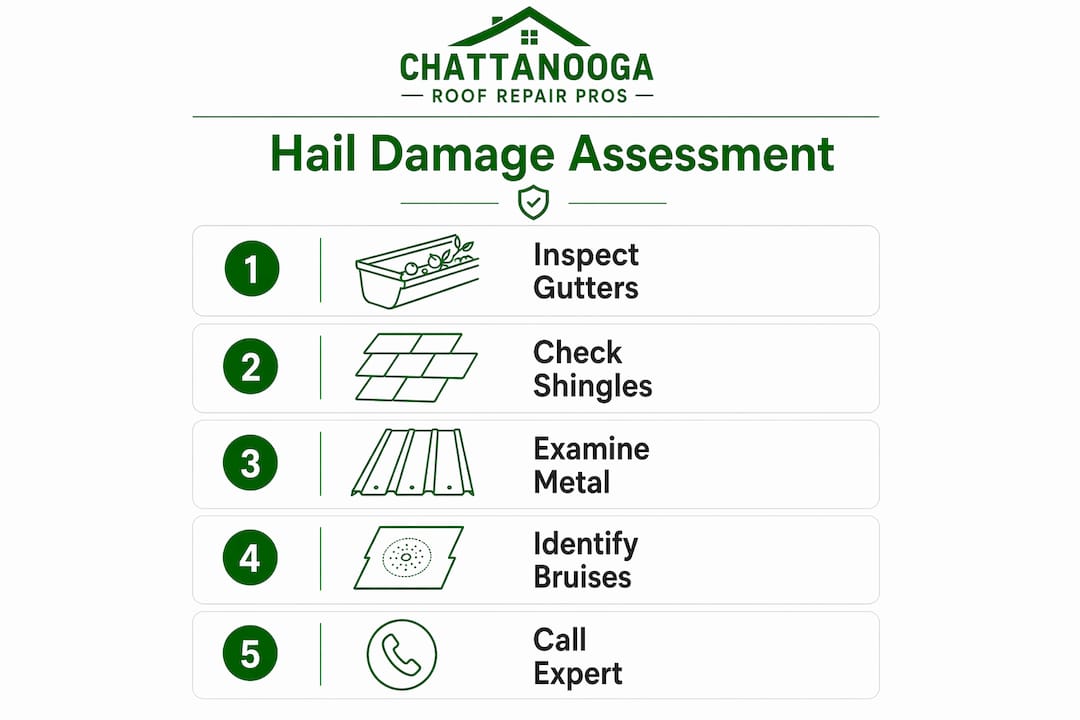
Follow this sequence for a thorough assessment:
- Walk the perimeter. Check gutters, downspouts, vents, and the A/C unit for round dents. Starting at ground level is the safest and most practical first step.
- Check downspout splash zones. Look for black granule deposits on the ground or in gutter troughs. Heavy accumulation after a storm confirms shingle granule loss.
- Inspect siding on the windward face. Cracks, dents, or paint chips on the storm-facing side of the house confirm hail direction and force.
- Access the roof safely. Use a stable ladder and inspect one slope at a time. Look for bruises, cracks, and bare mat spots systematically rather than scanning randomly.
- Use the test square method. Insurance adjusters mark bruises within 10 ft x 10 ft sections to count impact frequency. You can do the same with chalk lines to quantify damage density before calling your insurer.
- Photograph everything with scale. Place a coin or ruler next to each mark. Wide shots showing the full slope and close-ups of individual impacts give adjusters the context they need.
| Inspection area | What to look for | Why it matters |
|---|---|---|
| Gutters and vents | Round dents, chipped paint | Confirms hail hit the property |
| Downspout splash zones | Black granule deposits | Signals shingle granule loss |
| Windward siding | Cracks, dents, paint chips | Shows storm direction and force |
| Roof slope | Bruises, cracks, bare mat | Identifies functional shingle damage |
| A/C condenser | Bent or dented fins | Quick visual confirmation of hail size |
Pro Tip: If you find collateral damage on soft metals but cannot safely access the roof, call a licensed inspector before filing a claim. A professional roof damage assessment gives you documented evidence that carries weight with your insurance adjuster.
Key Takeaways
Hail damage on a roof is confirmed by soft bruises, granule loss, and collateral dents on soft metals working together as a pattern, not by any single mark alone.
| Point | Details |
|---|---|
| Bruises feel soft | Press each mark with your thumb. Hail bruises give slightly; blisters and aging marks stay firm. |
| Collateral damage confirms the event | Dents on gutters, vents, and A/C fins prove hail hit your property with damaging force. |
| Pattern reveals the cause | Hail marks are random and scattered. Aging and foot traffic marks follow predictable paths. |
| Document with scale references | Photograph each impact with a coin or ruler to give adjusters clear, usable evidence. |
| Act before leaks appear | Soft bruises cause slow water intrusion that may not show as a leak for months. |
What I've learned after years of hail damage inspections
Most homeowners walk outside after a storm, see no obvious holes or missing shingles, and assume the roof is fine. That assumption costs them. The damage that causes the most long-term harm is the kind you cannot see from the driveway.
Timely inspection prevents long-term failures because soft bruises and fractures rarely leak immediately. Water works its way through the compromised mat slowly, sometimes over six to twelve months. By the time a stain appears on your ceiling, the roof deck may already be rotting.
The collateral damage check is the step most homeowners skip entirely. Dents on your gutters and A/C unit are not just cosmetic problems. They are forensic evidence. Soft metal dents play a forensic role in confirming storm intensity for insurance claims. An adjuster who sees clean, undented gutters on a roof with alleged hail damage will question the claim. An adjuster who sees dented gutters, dented vents, and bruised shingles has a complete picture.
The other mistake I see regularly is confusing cosmetic damage with functional damage. Granule loss without bruising rarely justifies a full replacement. Bruising with granule loss, cracked shingles, and collateral dents on soft metals absolutely does. Knowing that distinction before you call your insurer puts you in a much stronger position. Good roof damage documentation is what separates a paid claim from a denied one.
— Steve
Chattanoogaroofrepairs: local hail damage repair you can count on
After a hailstorm, the last thing you need is to wait weeks for a contractor who does not know your area. Chattanoogaroofrepairs serves Chattanooga and surrounding communities with fast, certified storm damage inspections and repairs using materials from GAF and Owens Corning.

Chattanoogaroofrepairs offers same-day tarping for active storm damage, comprehensive 21-point roof inspections, and full hail damage repair services covering shingle replacement, gutter repair, and metal component restoration. The team works directly with insurance adjusters and provides transparent, no-pressure estimates. If your roof took a hit, a professional roof inspection is the fastest way to know exactly what you are dealing with and what it will cost to fix it.
FAQ
What does hail damage look like on asphalt shingles?
Hail damage on asphalt shingles appears as dark, circular bruise spots with granules knocked away, exposing the black mat underneath. These spots feel soft or spongy when pressed and range from dime to quarter size.
How do I know if my car is damaged by hail?
Hail damage on a vehicle shows as small, round dents scattered across the hood, roof, and trunk, often without paint chips on smaller impacts. Larger hail may chip paint at the center of each dent.
How soon after a storm should I inspect for hail damage?
Inspect within 24–48 hours of the storm while collateral evidence like granule deposits in gutters is still fresh and clearly storm-related. Early documentation strengthens insurance claims significantly.
Can hail damage a roof without leaving visible holes?
Yes. Hail bruises compromise the asphalt mat and accelerate granule loss without creating visible holes. These functional injuries allow slow water intrusion that may not appear as a leak for months.
What size hail causes roof damage?
Hail at or above quarter size, roughly 1 inch in diameter, is the standard threshold for roof and vehicle damage. Smaller hail can still cause granule loss on older or already-worn shingles.