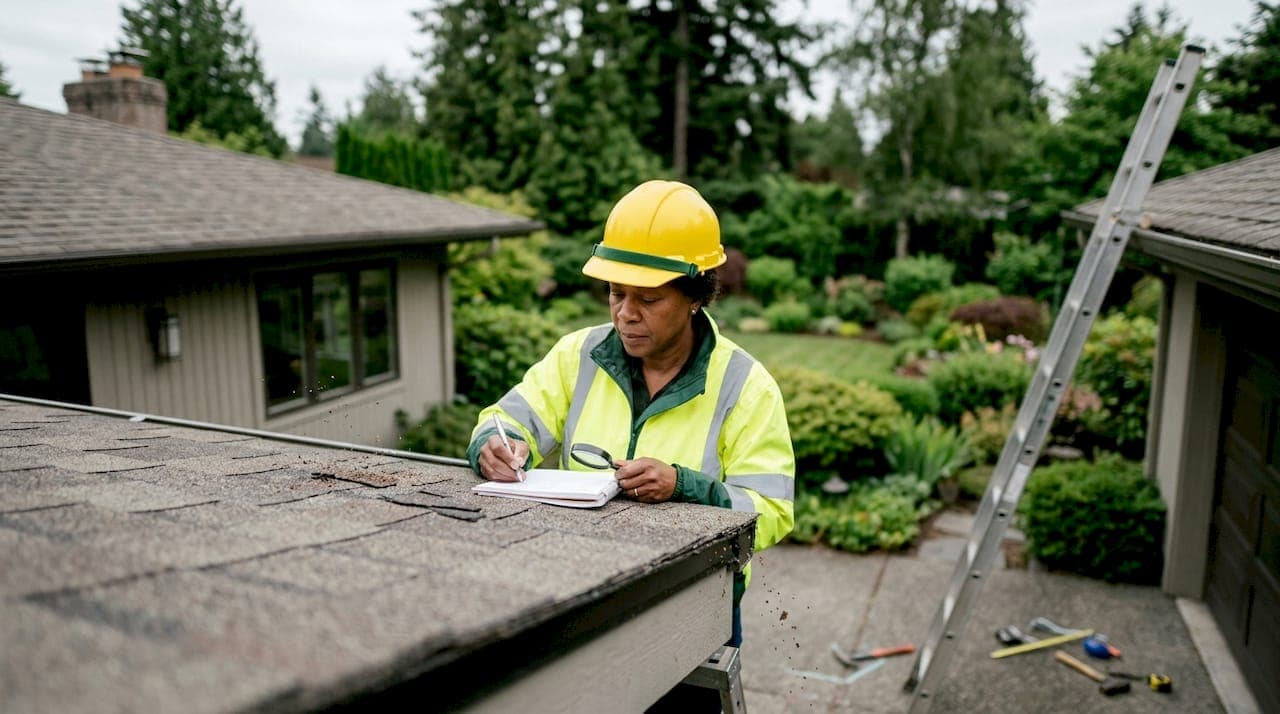
A storm damage inspection is a multi-component evaluation of a home's roofing system, structural elements, and interior spaces to identify, document, and assess all damage caused by recent severe weather. What does storm damage inspection include goes well beyond a quick visual scan of shingles. A thorough assessment covers flashings, gutters, attic interiors, and structural framing, using both hands-on examination and specialized technology. The findings feed directly into insurance claims and repair planning, making the quality of the inspection one of the most consequential decisions a homeowner makes after a storm.
What does a storm damage inspection include for your roof and home?
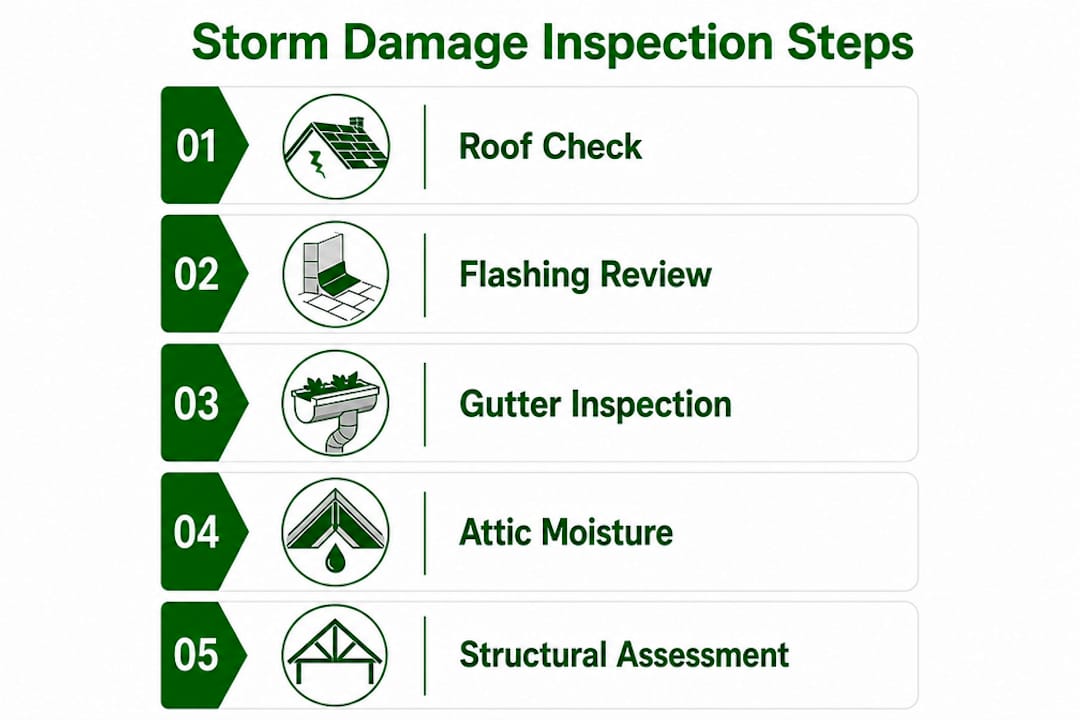
Comprehensive storm damage inspections cover roofing materials, flashings, gutters, attic interiors, and structural elements like framing and foundations. That scope matters because storm damage rarely stops at the shingle surface. Water finds its way through every weak point, and a partial inspection misses the full picture.
Roofing materials and surface damage
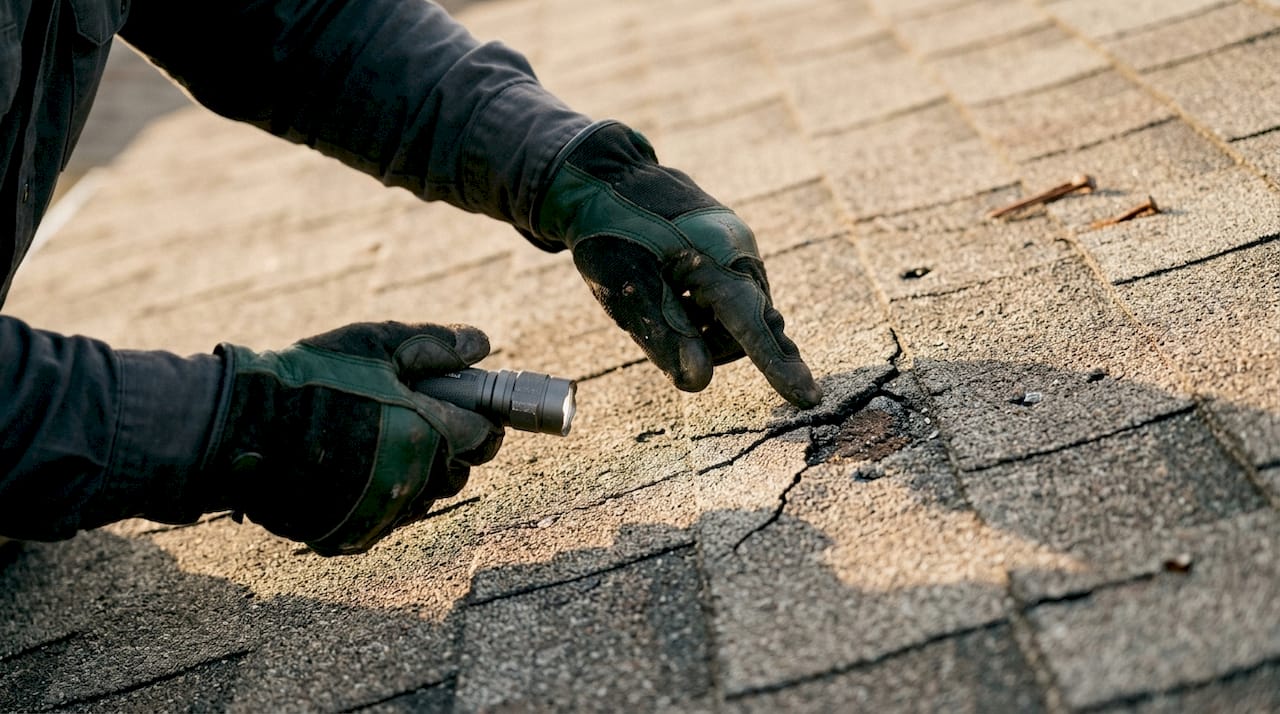
Inspectors examine every shingle for granule loss, bruising from hail, cracks, and wind-related lifting or displacement. Granule loss is particularly telling because it accelerates shingle aging and signals that the protective layer is compromised. Professional inspections check for granule loss, bruising, cracked or missing shingles, damaged flashing, gutter damage, and attic moisture infiltration. Metal roofing panels receive similar scrutiny for dents, seam separation, and coating damage.
Flashings and roof penetrations
Flashings are the metal strips that seal joints around chimneys, skylights, vents, and walls. Flashing damage around chimneys and skylights often creates hidden moisture intrusion pathways that require tactile inspection and specialized evaluation tools. An inspector will press and probe these areas, not just look at them, because a flashing can appear intact from a distance while leaking actively underneath.
Gutters, downspouts, and drainage
Gutters collect granule debris after hail storms, which is one of the clearest indicators of shingle damage. Inspectors check for dents, separation from the fascia, and blockages that redirect water toward the foundation. Downspout discharge paths also get evaluated to confirm water moves away from the structure.
Attic and interior moisture checks
The attic reveals what the roof surface hides. Inspectors look for water stains, wet insulation, mold growth, and compromised ventilation. Structural framing in the attic is checked for warping or swelling caused by moisture exposure. Foundation cracks and interior wall staining round out the structural side of the storm damage assessment details.
Pro Tip: Ask your inspector to walk you through the attic findings in person. Seeing wet insulation or stained rafters firsthand gives you far better context for understanding repair estimates.
How do modern technologies improve storm inspection accuracy?
Technology has changed what inspectors can detect and document. The storm inspection process now routinely includes tools that find damage invisible to the naked eye.
-
Drone and aerial imaging. Modern inspections employ remote aerial measuring technology and high-resolution satellite imagery to map impact zones across the entire roof surface. Drones reach steep or unsafe pitches without putting an inspector at risk, and they capture consistent, high-resolution images that hold up in insurance reviews.
-
Infrared thermography. Thermal cameras detect temperature differences caused by moisture trapped beneath roofing materials. A wet section of decking or insulation shows up as a distinct thermal signature, even when the surface above it looks dry.
-
Moisture meters. Handheld moisture meters give inspectors a numeric reading of moisture content in wood and drywall. A reading above the acceptable threshold confirms active water intrusion and supports the claim that damage is ongoing.
-
Digital documentation software. Inspectors use software to mark damage locations on roof diagrams, attach photos to specific coordinates, and generate reports that meet insurance adjuster standards. This removes ambiguity from the claims process.
| Technology | What it detects | Key benefit |
|---|---|---|
| Drone imaging | Surface impact zones, missing materials | Safe access to steep or damaged roofs |
| Infrared thermography | Hidden moisture beneath surfaces | Finds damage before it becomes visible |
| Moisture meters | Active water intrusion in materials | Provides measurable, documented readings |
| Digital report software | All damage types, mapped and photographed | Produces insurer-ready documentation |
Pro Tip: When scheduling your inspection, ask whether the contractor uses thermal imaging. Inspectors who skip this step may miss the most expensive damage of all: hidden water intrusion in the decking.
A free roof inspection overview from a qualified contractor will typically outline which technologies they use before they arrive. That transparency is a reliable sign of a thorough operation.
What does a storm inspection report include and why does it matter for insurance?
The inspection report is the official record of your roof's condition after a storm. Inspection reports function as the "official story" of the roof, translating physical damages into clear, standardized descriptions that prevent claim denials. A weak report leads to a denied or underpaid claim. A strong one gives the insurance adjuster everything needed to approve repairs.
A complete report contains:
- Itemized damage descriptions for each component, written in language that matches insurance policy terminology
- Photographs tied to specific roof sections, showing damage in context
- Measurements of the affected area, expressed in square footage for each damaged zone
- Severity classification that separates minor wear from storm-caused structural damage
- Differentiation between storm damage and pre-existing conditions, which is the single most contested issue in claim disputes
- Line-item repair cost estimates with material specifications, including brand and grade where applicable
Thorough, itemized inspection reports translated into clear plans significantly influence insurance claim approval and repair efficiency. That finding reflects what adjusters actually need: not a general description, but a component-by-component breakdown they can match against policy coverage.
The distinction between storm damage and pre-existing wear deserves special attention. Insurers routinely deny claims by arguing that damage predates the storm. A professional report addresses this directly by noting the date of the storm event, referencing weather data, and documenting damage patterns consistent with hail or wind rather than gradual deterioration. Homeowners who want to understand the full insurance claim process benefit from reviewing that documentation alongside the inspection report.
How can homeowners prepare for a storm damage inspection?
Preparation before the inspector arrives directly affects the quality of the findings and the strength of your claim. These steps make a measurable difference.
- Take date-stamped photos immediately after the storm. Homeowners who create pre- and post-storm photo records give inspectors an objective record that helps distinguish new storm damage from older conditions. Use your phone's timestamp feature and photograph every visible area from ground level.
- Document interior signs of damage. Water stains on ceilings, wet insulation in the attic, and damp walls all support the inspector's findings. Photograph these before any cleanup.
- Clear roof access points. Move vehicles, outdoor furniture, and debris away from the perimeter so the inspector can work efficiently and safely.
- Note any pre-existing issues. If you knew about a minor leak or a cracked shingle before the storm, tell the inspector. Transparency protects you. It prevents the insurer from later claiming that all damage was pre-existing.
- Schedule the inspection within 24 to 48 hours. Experts recommend scheduling a full storm damage assessment within 24 to 48 hours after severe weather to prevent secondary damage. Mold growth can begin on damp materials within that same window, and secondary damage is often not covered by insurance.
- Avoid climbing the roof yourself. Wet or damaged roofing materials are unstable. Leave the physical inspection to licensed professionals equipped with safety gear.
Pro Tip: Keep a dedicated folder on your phone for roof photos, updated after every significant storm. That running visual record is worth more than any single post-storm photo session.
Knowing how to document storm damage photos correctly before the inspector arrives puts you in a much stronger position during the claims process. The roof insurance claim guidance from qualified roofing professionals reinforces the same principle: documentation is the foundation of every successful claim.
A professional storm damage inspection covers roofing materials, flashings, gutters, attic interiors, structural elements, and hidden moisture, supported by a detailed report that directly determines insurance claim outcomes.
Key Takeaways
| Point | Details |
|---|---|
| Inspection scope is wide | A complete evaluation covers shingles, flashings, gutters, attic, and structural framing, not just the roof surface. |
| Technology finds hidden damage | Infrared thermography and moisture meters detect water intrusion that visual checks miss entirely. |
| The report drives the claim | An itemized, photo-supported report is the primary factor in insurance claim approval or denial. |
| Timing is critical | Scheduling within 24–48 hours prevents mold growth and secondary damage that insurers typically will not cover. |
| Homeowner prep matters | Date-stamped photos and interior documentation taken before the inspector arrives strengthen the official findings. |
What I've learned about storm inspections that most homeowners find out too late
The most common mistake I see is homeowners treating the inspection as a formality rather than the foundation of everything that follows. A cursory check of the shingle surface tells you almost nothing useful. The real damage, the kind that costs the most and takes the longest to fix, hides in the attic, behind the flashings, and inside the decking.
I've also watched homeowners lose legitimate claims because their inspection report was vague. "Storm damage to roof" is not a description that moves an adjuster. "Seven square feet of granule loss on the southwest slope consistent with hail impact, confirmed by moisture meter reading of 22% at the corresponding decking section" is. The specificity of the report is not a bureaucratic detail. It is the difference between a paid claim and a denied one.
The timing issue surprises people most. Homeowners often wait a week or two after a storm, assuming the damage is visible and stable. Mold begins growing within 24 to 48 hours on damp building materials. By the time some homeowners call for an inspection, they have secondary damage that the insurer correctly classifies as a maintenance failure. That outcome is avoidable with a single phone call the day after the storm.
Choose an inspector who uses thermal imaging, carries calibrated moisture meters, and produces a written report with photographs tied to specific roof coordinates. Anything less is a visual walkthrough, not a professional storm damage assessment.
— Steve
Chattanoogaroofrepairs is ready when the storm clears
After a storm, the last thing you need is uncertainty about who to call or what to expect. Chattanoogaroofrepairs provides thorough storm damage inspections across Chattanooga and surrounding areas, using advanced documentation tools and certified expertise to give you a clear picture of your roof's condition.
Our team responds quickly, including same-day tarping when your roof needs immediate protection. We handle roof leak repairs, metal roofing solutions, and gutter installation and repair with materials from GAF and Owens Corning. Every inspection includes transparent, no-pressure findings you can take directly to your insurance adjuster. Contact Chattanoogaroofrepairs for a free inspection and get the documentation your claim requires.
FAQ
How long does a storm damage inspection take?
A professional storm damage roof inspection typically takes 45 to 120 minutes, depending on roof size and complexity. Larger or more severely damaged roofs require more time for thorough documentation.
What parts of my home does a storm inspection cover?
A complete storm inspection covers roofing materials, flashings, gutters, downspouts, attic interiors, and structural framing. Inspectors also check for moisture intrusion using thermal imaging and moisture meters.
How soon should I schedule a storm damage inspection?
Schedule your inspection within 24 to 48 hours after the storm. Mold growth can begin on wet building materials within that same window, and delayed inspections risk secondary damage that insurance typically will not cover.
Why does the inspection report matter for my insurance claim?
The inspection report is the primary document your insurance adjuster reviews. An itemized report with photographs, measurements, and damage classifications gives adjusters the specific evidence needed to approve your claim and fund repairs.
Can I do a storm damage inspection myself?
A homeowner can photograph visible damage from the ground, but a self-inspection does not produce the documentation insurers require. Licensed inspectors carry specialized tools, carry liability coverage, and generate reports that meet insurance adjuster standards.