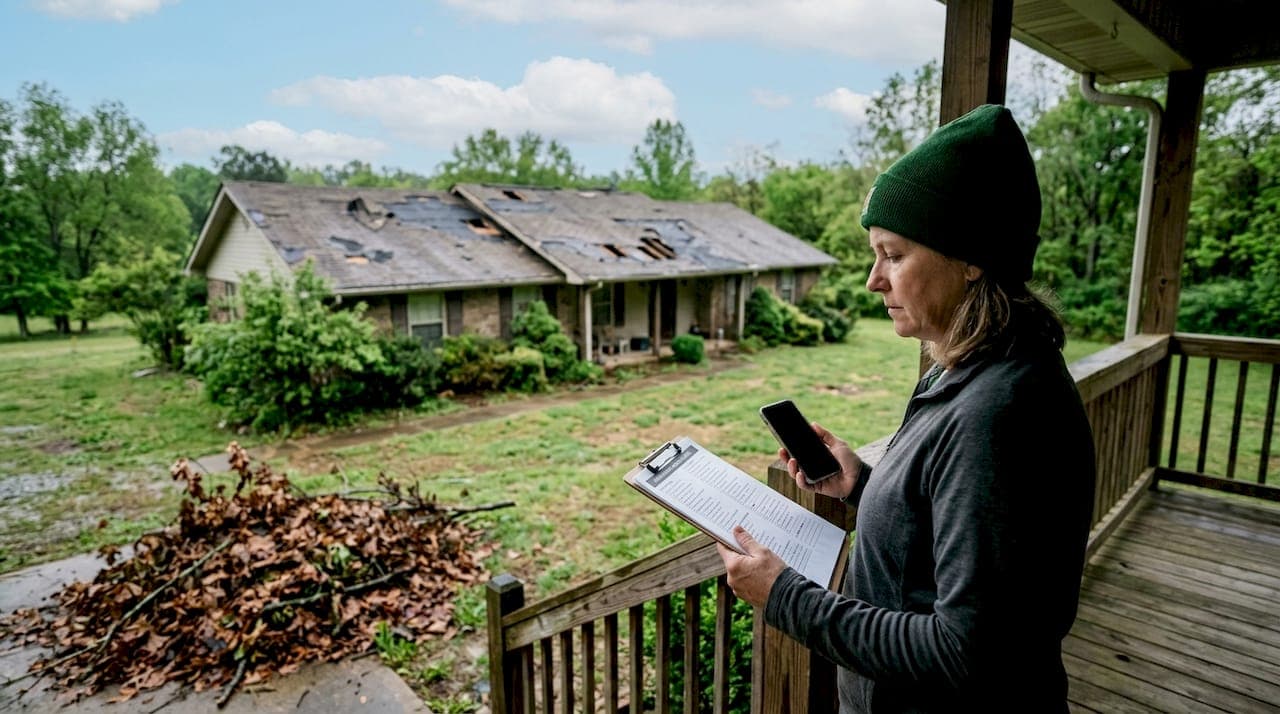
A roof damage insurance claim is a formal request to your insurer for financial compensation after storm-related roof damage. Following the correct roof damage insurance claim steps is the difference between a full payout and a denied claim. Insurers operate on strict timelines, require specific documentation, and expect homeowners to act fast. A professional roof damage assessment before you file gives your claim the technical foundation it needs to hold up under scrutiny.
1. Assess roof damage immediately after the storm
The first step in any successful insurance claim process is a fast, thorough damage assessment. Waiting even a few days can allow secondary damage to develop, which insurers may refuse to cover.
Walk the perimeter of your home and look for missing shingles, dented gutters, granule loss, and visible structural deformation. Check interior ceilings for water stains, which signal active leaks. Do not climb onto the roof yourself. A licensed inspector can safely identify damage you would miss from the ground.
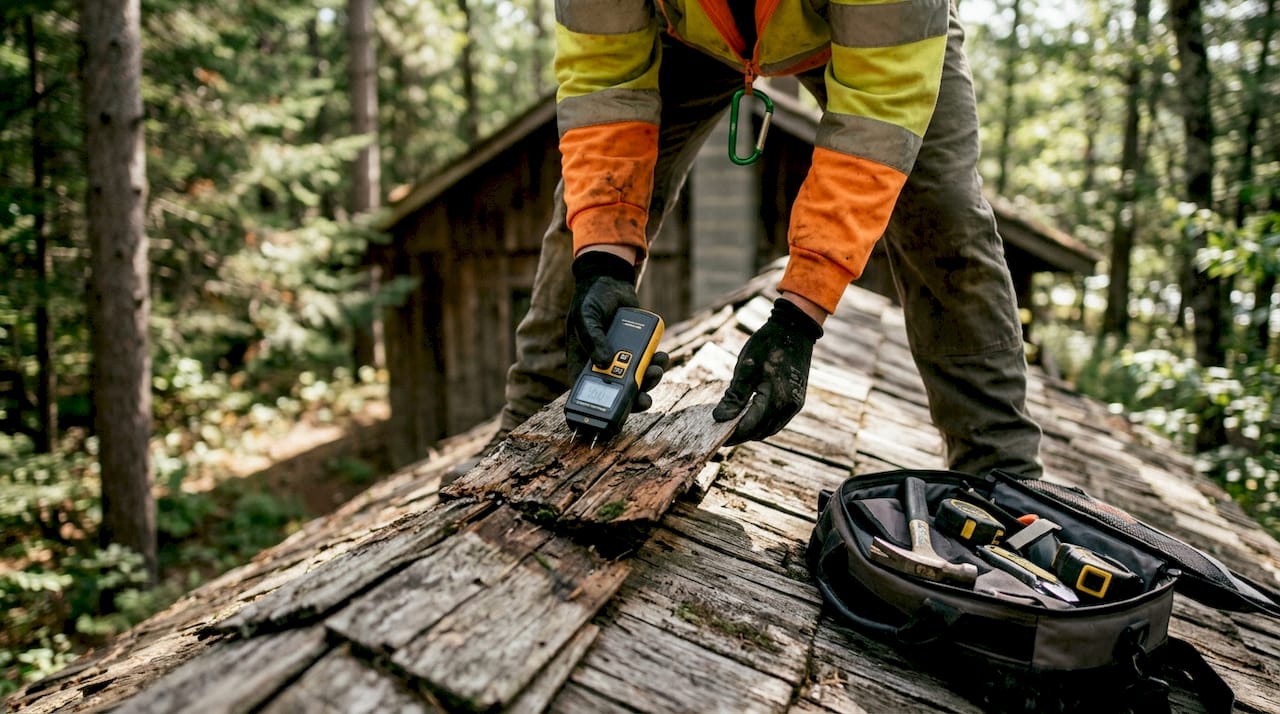
A professional inspection conducted before any repairs captures evidence of hidden structural damage governed by ASTM, ANSI, and UL standards. These standards define measurable thresholds, such as roof uplift beyond 5% deflection, that insurers require to substantiate structural claims.
2. Document everything before touching the roof
Thorough documentation is the single most important factor in claim outcomes. Insufficient documentation is the primary cause of claim delays and denials.
Photograph damage from multiple angles, including close-ups and wide shots. Capture the roof surface, gutters, downspouts, soffits, and any interior water damage. Record a video walkthrough to supplement still photos. Save all damaged materials, such as broken shingles or detached flashing, as physical evidence.
A detailed inspection report includes annotated photos, roof dimensions, damage descriptions, material specifications, and repair cost estimates. This level of detail meets insurer requirements and reduces the chance of a dispute.
- Photograph damage from at least four angles per affected area
- Record video of the full roof perimeter and interior water intrusion
- Save physical samples of damaged materials when safe to do so
- Note the date and time of each photo in your file
- Create a written inventory listing each damaged item, its age, and estimated value
Pro Tip: Timestamp your photos using your phone's native camera settings or a dedicated app. Insurers use photo metadata to verify that damage occurred during the storm event, not before.
3. Tarp and protect the roof right away
Homeowners carry a legal duty to mitigate further damage after a storm loss. Failing to act quickly to prevent additional damage gives insurers grounds to deny coverage for any secondary water intrusion or structural deterioration.
Install a tarp over exposed areas as soon as it is safe to do so. Document the tarping with photos and keep all receipts for materials and labor. Chattanoogaroofrepairs offers same-day tarping for storm-damaged homes, which satisfies the mitigation requirement and protects your property while the claim moves forward.
Learn more about your options for temporary storm repairs before committing to permanent work. Permanent repairs made before the adjuster visits can complicate your claim.
4. Notify your insurer within 24–72 hours
Filing a roof claim requires notifying your insurer promptly, ideally within 24–72 hours of the storm. Late notification is one of the most common reasons insurers reduce or deny claims.
Call your insurer's claims line and provide your policy number, the date of the storm, a brief description of the damage, and your contact information. Ask for a claim number immediately and write it down. Request written confirmation of your notification by email or certified mail.
Ask your insurer about emergency repair reimbursements at this stage. Many policies cover temporary repairs, and getting that confirmed early protects you financially.
5. Understand the legal deadlines that govern your claim
Insurers acknowledge roof damage claims within 10–15 business days and issue coverage decisions within 30–45 days under 2026 standards. These are not suggestions. They are regulated timelines under state insurance statutes and NAIC Model Ordinance frameworks.
Homeowners must submit a formal proof of loss within 60 days of the damage event. Missing this deadline voids the claim in most states. Track every communication with your insurer in a dedicated log that includes the date, the name of the representative, and a summary of what was discussed.
Missing any deadline, whether the proof of loss window or the mitigation requirement, gives the insurer a legal basis to reduce or deny your payout. Treat every deadline as firm.
6. Prepare your claim file before submitting
An organized claim file speeds up the insurance claim process and reduces the risk of denial due to documentation errors. Maintaining a dedicated file improves timelines and outcomes.
Your file should include:
- Your insurance policy and declarations page
- All photos and videos with timestamps
- The professional inspection report
- Receipts for emergency repairs and tarping
- A written damage inventory with item descriptions, ages, and values
- All correspondence with your insurer, including emails and call logs
- Contractor estimates for repair or replacement
Organize documents chronologically. Label each item clearly. A disorganized file forces adjusters to ask follow-up questions, which slows your claim.
Pro Tip: Scan every physical document and store copies in a cloud folder. If your home sustains further damage, your digital file stays safe and accessible from anywhere.
7. Schedule and prepare for the adjuster visit
Insurance adjusters work for the insurer, not for you. Having a professional roofer present during the adjuster's inspection is the most effective way to ensure full damage recognition.
Contact Chattanoogaroofrepairs to have a licensed contractor on-site during the adjuster visit. A trained roofer can point out damage the adjuster might overlook, such as hail impacts on flashing or granule loss patterns consistent with wind uplift. This advocacy directly affects the scope of loss the adjuster documents.
Do not clean up or make permanent repairs before the adjuster arrives. The adjuster needs to see the damage as it occurred. Keep the site as close to its post-storm condition as possible.
8. Review the scope of loss and negotiate if needed
Homeowners often accept the insurer's initial scope of loss as final. You have the right to dispute it, request a re-inspection, and submit independent contractor estimates.
Review the adjuster's report line by line. Compare it against your contractor's estimate. If items are missing or undervalued, submit a written dispute with supporting documentation. For large claims, a licensed public adjuster can negotiate on your behalf.
"Homeowners who submit independent contractor estimates alongside their dispute letters consistently recover more than those who accept the first offer. The insurer's initial scope is a starting point, not a final answer. Document everything, dispute in writing, and do not settle until the numbers match your actual repair costs."
9. Understand recoverable depreciation and final payment
Most insurance policies pay out in two stages. The first payment covers the actual cash value of the damage, which accounts for depreciation. The second payment, the recoverable depreciation, is released only after you complete and document repairs.
Insurers withhold recoverable depreciation and require documented proof of repair completion within a typical 180-day deadline. Missing that deadline forfeits the withheld funds permanently. Submit your final contractor invoices and completion photos as soon as repairs are done.
This two-stage structure catches many homeowners off guard. Budget for the full repair cost upfront, knowing the second payment will follow once you submit proof of completion.
10. Know when not to file a claim
Not every roof repair warrants an insurance claim. Filing for minor damages close to your deductible can trigger premium increases and make future coverage harder to obtain.
Have a licensed contractor assess the repair cost before you call your insurer. If the repair cost is close to or below your deductible, paying out of pocket protects your claim history. Reserve your insurance for significant storm damage that clearly exceeds your deductible by a meaningful margin.
This is a decision where professional guidance pays off. Chattanoogaroofrepairs offers no-pressure inspections that help you weigh repair costs against your deductible before you commit to filing.
Key Takeaways
Following every roof damage insurance claim step in the correct order, from same-day documentation through final depreciation recovery, is the most reliable way to secure a full payout.
| Point | Details |
|---|---|
| Document before anything else | Timestamped photos, videos, and a written inventory are the foundation of every successful claim. |
| Act within 24–72 hours | Notify your insurer promptly and tarp exposed areas to satisfy the legal duty to mitigate. |
| Know your deadlines | Proof of loss is due within 60 days; recoverable depreciation requires repair proof within 180 days. |
| Bring a roofer to the adjuster visit | An independent contractor on-site ensures the full scope of damage is captured in the adjuster's report. |
| Dispute low offers in writing | The insurer's first scope of loss is negotiable; submit contractor estimates and request a re-inspection if needed. |
What I've learned from watching homeowners navigate storm claims
The biggest mistake I see homeowners make is treating the adjuster like a neutral party. Adjusters are professionals doing their job for the insurer. That does not make them dishonest, but it does mean their incentive is to document the minimum defensible scope of loss. Homeowners who show up to that inspection alone, without a contractor, leave money on the table every time.
The second pattern I see constantly is waiting too long to get a professional inspection. Homeowners assume they should wait until the insurer sends someone out. By then, secondary damage has developed, materials have shifted, and the evidence that would have supported a stronger claim is gone. Get a licensed inspector out within 48 hours of the storm. Document everything before a single shingle is touched.
The 180-day recoverable depreciation deadline also surprises more people than it should. Homeowners complete repairs, feel relieved, and forget to submit the final invoices. That oversight costs real money. Put the deadline on your calendar the day you receive your initial payment letter.
The claim process rewards patience and preparation in equal measure. Know your policy, track every deadline, and do not hesitate to push back if the numbers do not add up.
— Steve
Chattanoogaroofrepairs is ready to help you through every step
Storm damage is stressful enough without having to figure out the insurance claim process alone. Chattanoogaroofrepairs provides licensed, insured roofing inspections that produce the detailed documentation your insurer requires, including annotated photos, damage descriptions, and repair estimates built to industry standards.
Our team can be on-site for the adjuster visit to advocate for a full and accurate scope of loss. We handle everything from same-day tarping to permanent roof leak repair and complete roofing services for storm-damaged homes across Chattanooga and the surrounding area. We also install metal roofing for homeowners who want a longer-lasting solution after a claim. Contact Chattanoogaroofrepairs for a no-pressure inspection and get your claim moving in the right direction.
FAQ
How soon should I notify my insurer after storm damage?
Notify your insurer within 24–72 hours of the storm. Late notification is a common reason insurers reduce or deny roof damage claims.
What is the proof of loss deadline for a roof insurance claim?
Homeowners must submit a formal proof of loss within 60 days of the damage event. Missing this deadline voids the claim in most states.
Can I make repairs before the adjuster visits?
Temporary repairs like tarping are required and should be documented with photos and receipts. Avoid permanent repairs until after the adjuster completes the inspection.
What is recoverable depreciation and how do I claim it?
Recoverable depreciation is the withheld portion of your payout that is released after you prove repairs are complete. Submit final invoices and completion photos within the 180-day deadline your policy specifies.
Should I always file a claim for roof damage?
Not always. If the repair cost is close to your deductible, filing may trigger a premium increase without a meaningful net benefit. Have a licensed contractor assess the damage first before contacting your insurer.