The storm damage roof claim process is a structured sequence of steps that homeowners must follow to document damage, communicate with insurers, and complete repairs for reimbursement. Getting this sequence right determines whether you receive full replacement cost or a fraction of what repairs actually cost. The Texas Department of Insurance, Liberty Mutual, and the National Roofing Contractors Insurance Association (NRCIA) all confirm that the biggest mistakes happen in the first 48 hours. This guide walks you through every stage, from the moment the storm passes to the final payment hitting your account.
What should you do immediately after storm roof damage?
The first priority after storm damage is evidence and controlled mitigation. That means documenting everything before touching anything, and making only temporary repairs to stop further damage.
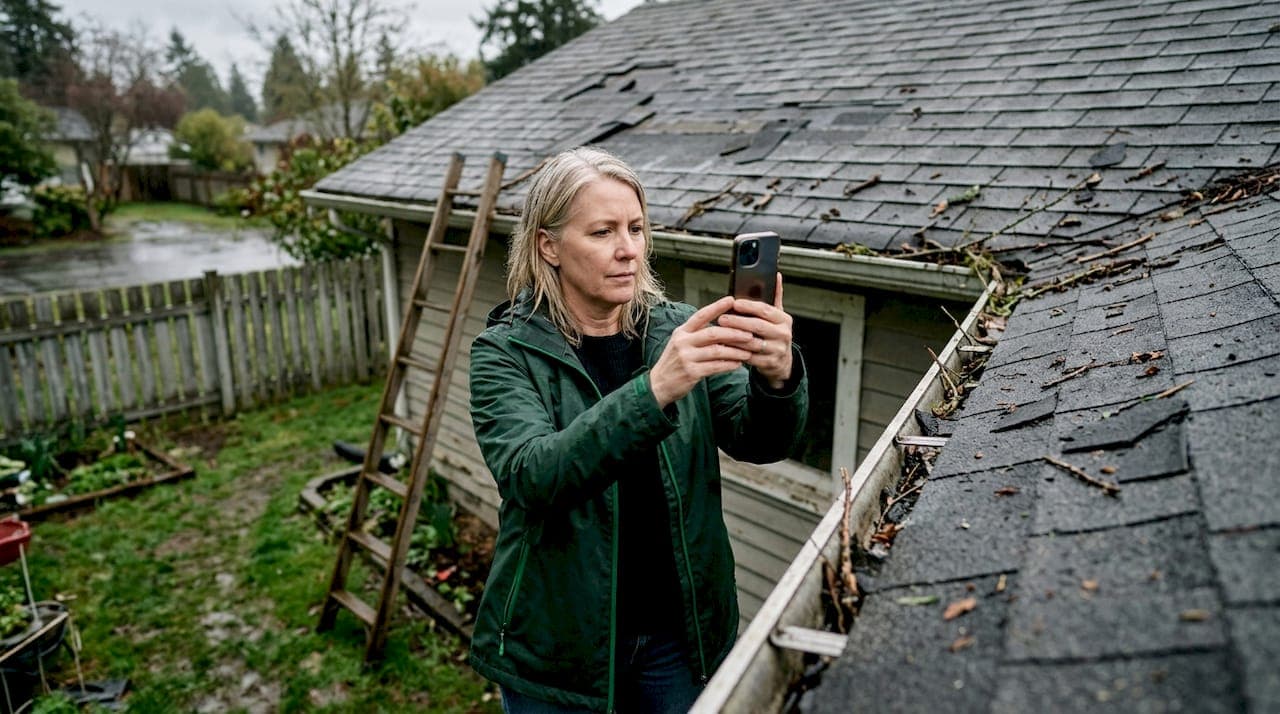
Start with documentation. Walk the perimeter of your home and photograph damage from multiple angles. Capture close-ups of missing shingles, dented gutters, cracked flashing, and any interior water stains. Video walkthroughs are especially useful because they show the full scope in one continuous take. Good roof damage documentation is the single strongest tool you have when an adjuster disputes the scope of loss.
Here is what to do in the first 24–48 hours:
- Photograph and video all visible damage from ground level and, if safe, from the roof edge
- Do not discard any damaged materials, including broken shingles or torn flashing, until the adjuster has inspected them
- Install tarps or other temporary covers over exposed areas to stop water intrusion
- Keep every receipt for tarps, labor, and any emergency materials you purchase
- Note the storm date, time, and any weather service reports confirming the event
Pro Tip: Save weather service alerts or local news reports from the storm date. Insurers sometimes question whether damage is storm-related or pre-existing. A dated weather record removes that argument entirely.
Temporary roof repairs like tarping are not just practical. They are a claim requirement. Delays in mitigation give insurers grounds to argue that additional damage resulted from your inaction, which can reduce your payout.
How to file the storm damage roof insurance claim
Filing the roof insurance claim correctly sets the tone for everything that follows. Contact your insurer as soon as possible after documenting damage. Have this information ready before you call:
- Your policy number
- The property address
- The date and approximate time of the storm
- A brief description of the damage you observed
- A summary of any mitigation steps taken, including tarping and temporary repairs
Once you report the loss, the insurer assigns a claim number. Write it down and use it on every piece of correspondence going forward. Keep a communication log with dates, names, and summaries of every call or email. This log protects you if a dispute arises later about what was said or promised.
What happens during the adjuster inspection?
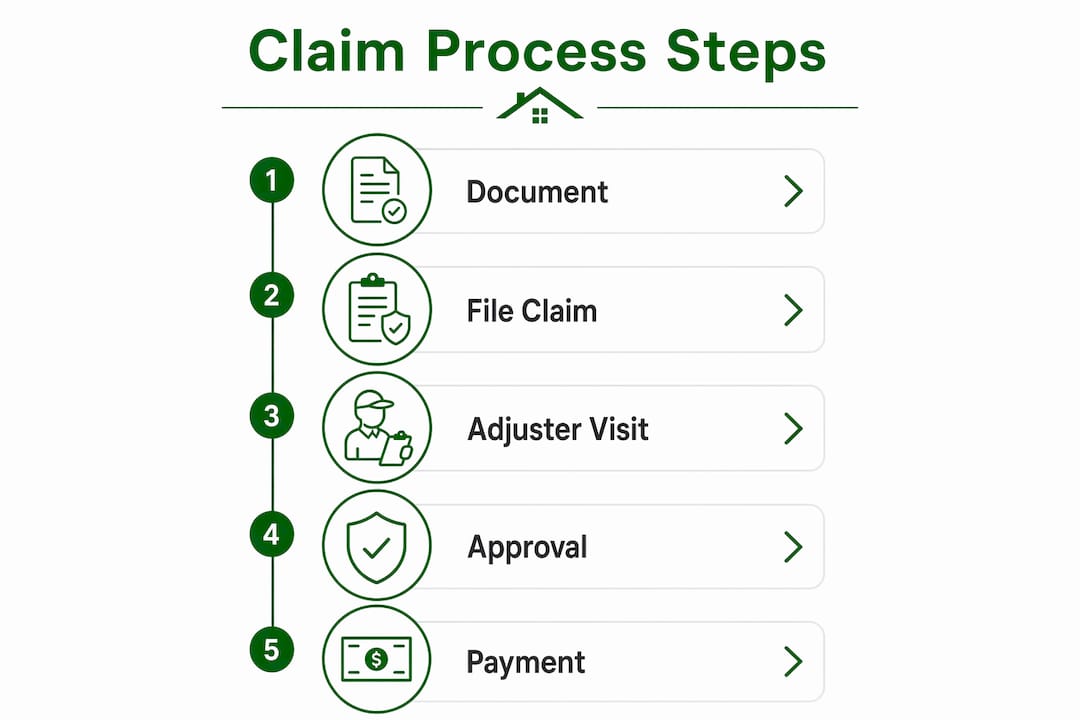
The insurer schedules an adjuster to inspect your property. Be present for this visit. The NRCIA outlines the typical claim flow as: report loss, adjuster inspection, scope review, repairs, and final payment. The adjuster examines roof zones, siding, gutters, and any interior areas affected by leaks. Their written scope of loss becomes the basis for your payout.
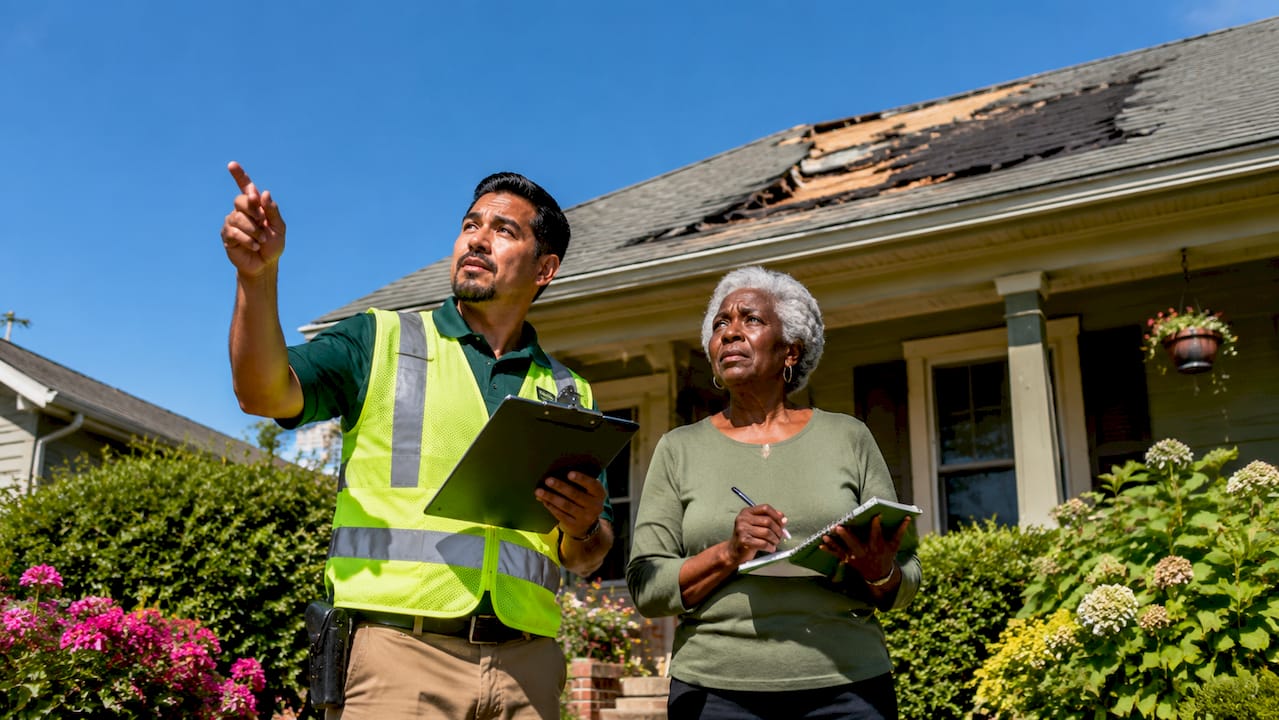
Treat the adjuster visit as the moment that defines your claim. Prepare a written list and photo package organized by roof zones before they arrive. Walk through each area with the adjuster and confirm that every item on your list is included in their notes. Overlooked damage at this stage is difficult to add later.
Pro Tip: Ask the adjuster to confirm in writing which items are included in the scope before they leave. A quick follow-up email summarizing the walkthrough creates a paper trail that is hard to dispute.
Understanding the two-payment structure
| Payment | Timing | Amount |
|---|---|---|
| First check | Issued after claim approval | Partial payment, often actual cash value |
| Second check | Issued after repairs begin | Remaining balance to reach replacement cost |
The Texas Department of Insurance confirms that replacement cost coverage pays in two installments. The first check covers the depreciated value of your roof. The second check, called the recoverable depreciation, arrives after you submit repair receipts. Never assume the first check is the full settlement.
How does insurance coverage affect your roof claim payout?
Standard homeowners insurance covers roof damage from wind, hail, fire, and certain water events. It does not cover damage from aging, neglect, or poor maintenance. Understanding this distinction before you file saves time and prevents surprises.
The most important coverage distinction is Replacement Cost Value (RCV) versus Actual Cash Value (ACV). RCV pays what it costs to replace your roof with new materials at today's prices. ACV pays that same amount minus depreciation based on your roof's age and condition. A 15-year-old roof with an RCV of $20,000 might carry an ACV of $10,000 or less. Choosing the right roofing insurance coverage type at policy purchase time directly determines how much you receive after a storm.
RCV vs. ACV: a direct comparison
| Coverage type | How it pays | Best for |
|---|---|---|
| Replacement Cost Value (RCV) | Full replacement cost, paid in two installments | Newer roofs or homeowners wanting full protection |
| Actual Cash Value (ACV) | Replacement cost minus depreciation | Lower premiums, older roofs |
Deductibles add another layer of financial impact. Many policies in storm-prone states carry a wind/hail deductible that is a percentage of your dwelling coverage rather than a flat dollar amount. A 2% deductible on a $400,000 home equals $8,000 out of pocket before insurance pays anything. That number surprises many homeowners who assumed their deductible was $1,000 or $2,000. Read your declarations page carefully and know your deductible before a storm hits.
Roof age and condition also affect eligibility. Some insurers limit coverage on roofs older than 20 years or require an inspection before renewing coverage. If your roof is aging, ask your insurer directly how age factors into your claim payout.
How do you handle disputes during the roof claim process?
Disagreements with adjusters are common. The adjuster's scope may miss damage, undervalue materials, or apply excessive depreciation. You have clear options when that happens.
- Request a written copy of the adjuster's estimate and compare it line by line against your contractor's estimate
- Hire a licensed public adjuster or roofing contractor to provide an independent assessment
- Submit a formal written dispute to your insurer with supporting photos and contractor documentation
- File a complaint with your state's insurance department if the insurer fails to respond appropriately
- Invoke the appraisal clause if the dispute is about the dollar amount of the loss
The appraisal clause is a formal process where each party selects an independent appraiser, and those two appraisers choose a neutral umpire. The umpire's decision on the amount of loss is binding. This process applies specifically to disagreements about how much damage is worth, not whether damage is covered. Coverage denials require a different resolution path, including a formal denial appeal or legal action.
Pro Tip: Keep every piece of correspondence with your insurer in writing. If you have a phone call, follow up with an email summarizing what was discussed. Written records are your strongest tool in any dispute.
Proof-of-loss forms are another common stumbling block. These forms, which officially document your claimed losses, often carry a strict submission deadline of 60 days from the insurer's request. Missing that deadline can result in claim denial. Set a calendar reminder the day you receive the form and confirm receipt after you submit it.
Avoid starting permanent repairs before the adjuster approves the scope. Insurers can deny coverage for work completed without authorization, and you lose the ability to document original damage once repairs are underway.
Key Takeaways
The storm damage roof claim process succeeds when homeowners document damage immediately, file promptly, and understand their policy's coverage type and deductible structure before disputes arise.
| Point | Details |
|---|---|
| Document before anything else | Photograph all damage within 24 hours and keep every receipt for temporary repairs. |
| Know your coverage type | RCV pays full replacement cost; ACV subtracts depreciation and pays significantly less. |
| Expect two payments with RCV | The first check covers depreciated value; the second arrives after you submit repair receipts. |
| Prepare for the adjuster visit | Organize photos by roof zone and walk through every damaged area with the adjuster present. |
| Use the appraisal clause for disputes | If you disagree on the dollar amount, invoke appraisal to get a binding third-party decision. |
What I have learned from watching homeowners navigate storm claims
After years of working alongside homeowners through the roof insurance claim process, the pattern is consistent. The homeowners who get full payouts are not the ones with the worst damage. They are the ones with the best documentation.
The single most underused tool is the organized photo package by roof zone. Most homeowners hand adjusters a phone with 200 random photos. The ones who show up with a printed or digital folder labeled by area, with notes on each section, get faster approvals and fewer disputes. Adjusters are processing dozens of claims after a major storm. Make their job easy and they will be more thorough with yours.
I have also seen homeowners lose thousands by starting permanent repairs before the adjuster arrives. They mean well. They want to protect their home. But once the damaged materials are gone, the evidence is gone. Temporary tarping is always the right call. Permanent repairs wait until the scope is signed off.
One more thing: do not accept the first check as the final word. Recoverable depreciation is real money that many homeowners leave uncollected because they do not know to submit repair receipts for the second payment. That follow-through step is where the full value of replacement cost coverage actually pays off.
— Steve
Chattanoogaroofrepairs is ready to help after the storm
When a storm hits Chattanooga, the clock starts immediately. Chattanoogaroofrepairs provides same-day tarping, comprehensive 21-point roof inspections, and full storm damage repair using materials from GAF and Owens Corning. The team works directly with homeowners through every stage of the claim, from initial documentation to final repair sign-off.
Chattanoogaroofrepairs handles storm and hail damage repair across Chattanooga and surrounding areas, with transparent pricing and no-pressure assessments. Whether you need emergency tarping, a full roof replacement, or help organizing your claim documentation, the team is ready to respond. Contact Chattanoogaroofrepairs for a free inspection and get your home protected before the next storm season arrives.
FAQ
How soon should I file a storm damage roof claim?
File your claim as soon as possible after documenting damage, ideally within 24–48 hours of the storm. Delays give insurers grounds to argue that additional damage resulted from inaction rather than the storm itself.
What is the difference between RCV and ACV in a roof claim?
Replacement Cost Value (RCV) pays the full cost to replace your roof with new materials. Actual Cash Value (ACV) subtracts depreciation based on your roof's age, which can significantly reduce your payout.
Can I start roof repairs before the adjuster inspects?
Temporary repairs like tarping are required and should be done immediately. Permanent repairs should wait until the adjuster has inspected and approved the scope of loss, or you risk losing coverage for that work.
What happens if I disagree with the adjuster's estimate?
You can submit a written dispute with supporting documentation, hire a public adjuster for an independent review, or invoke the appraisal clause. The appraisal process uses two independent appraisers and a neutral umpire to reach a binding resolution on the amount of loss.
What is a wind/hail deductible and how does it affect my claim?
A wind/hail deductible is often a percentage of your dwelling coverage rather than a flat dollar amount. On a $400,000 home with a 2% deductible, you pay $8,000 out of pocket before insurance covers any repair costs.