
A workmanship warranty is a formal guarantee that covers defects caused by a contractor's labor and installation errors, not by the materials themselves. Understanding what does workmanship warranty cover is the most direct way to protect your home investment and know exactly who is responsible when something goes wrong. Workmanship coverage typically lasts 1–5 years, while manufacturer warranties on materials can run 20 years or longer. That gap matters because the two warranties cover completely different problems, and confusing them is one of the most common and costly mistakes homeowners make. Chattanoogaroofrepairs sees this confusion regularly, and this guide cuts through it clearly.
What does workmanship warranty cover in roofing and construction?
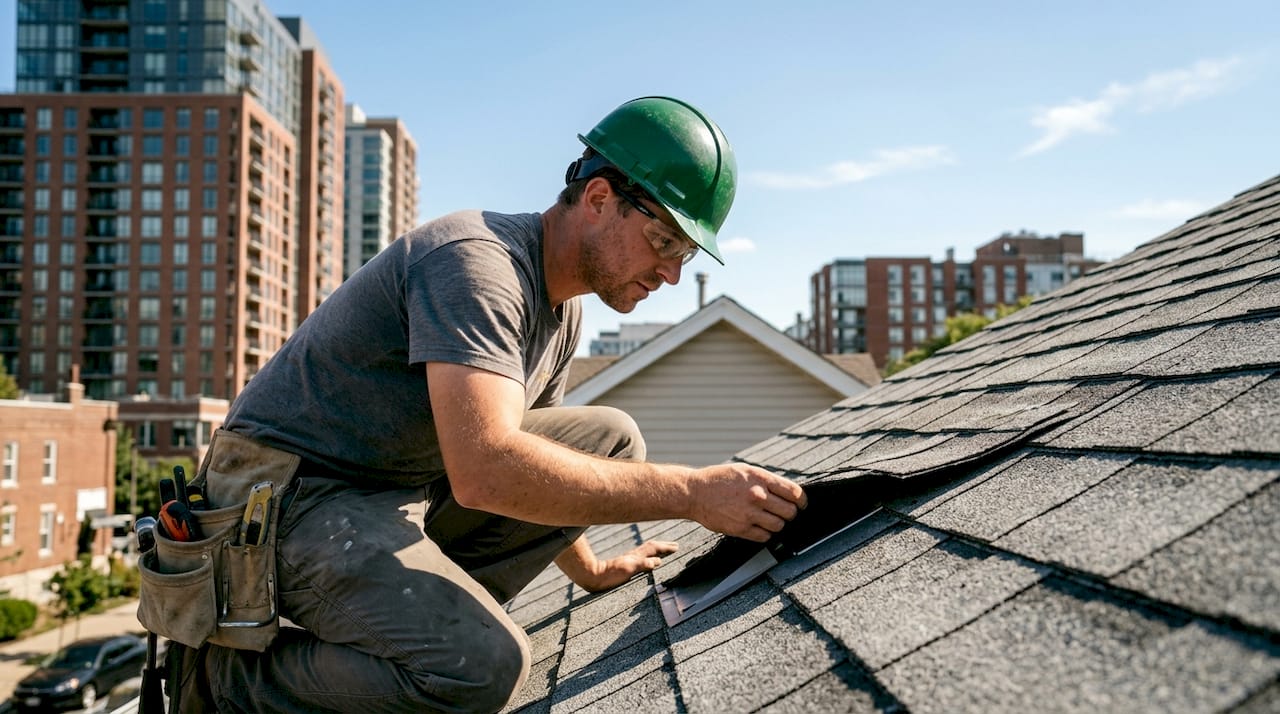
A workmanship warranty covers defects that result directly from how a contractor performed the work. If a roofer nails shingles incorrectly, installs flashing at the wrong angle, or fails to seal penetrations properly, those errors fall under workmanship coverage. Workmanship warranties cover installation errors and labor-related defects exclusively. They do not cover product failures, material degradation, or anything that happened before or after the contractor's work.
The coverage scope is specific. Common items covered include:
- Improper nailing patterns that cause shingles to lift or blow off
- Flashing defects around chimneys, skylights, and vents that allow water intrusion
- Poor sealing at roof penetrations leading to interior leaks
- Incorrect underlayment installation that fails to protect the deck
- Misaligned or improperly fastened gutters installed as part of a roofing project
Standard exclusions are equally clear. Damage from storms, floods, earthquakes, homeowner modifications, and lack of maintenance fall outside workmanship coverage. Natural disaster damage belongs to your homeowner's insurance policy, not your contractor's warranty. Normal wear and tear over time is also excluded, as is any damage caused by a third party working on the property after the original contractor finished.
Pro Tip: Read the exclusions section of your workmanship warranty before signing the contract. Exclusions define the warranty's real value just as much as what it covers.
How does a workmanship warranty differ from a manufacturer warranty?
These two warranties protect different things, and knowing the difference tells you exactly who to call when a problem appears. A workmanship warranty guarantees how the work was done; a manufacturer warranty guarantees the product itself. A shingle that cracks due to a manufacturing defect is a manufacturer warranty claim. A shingle that lifts because it was nailed too high is a workmanship claim.
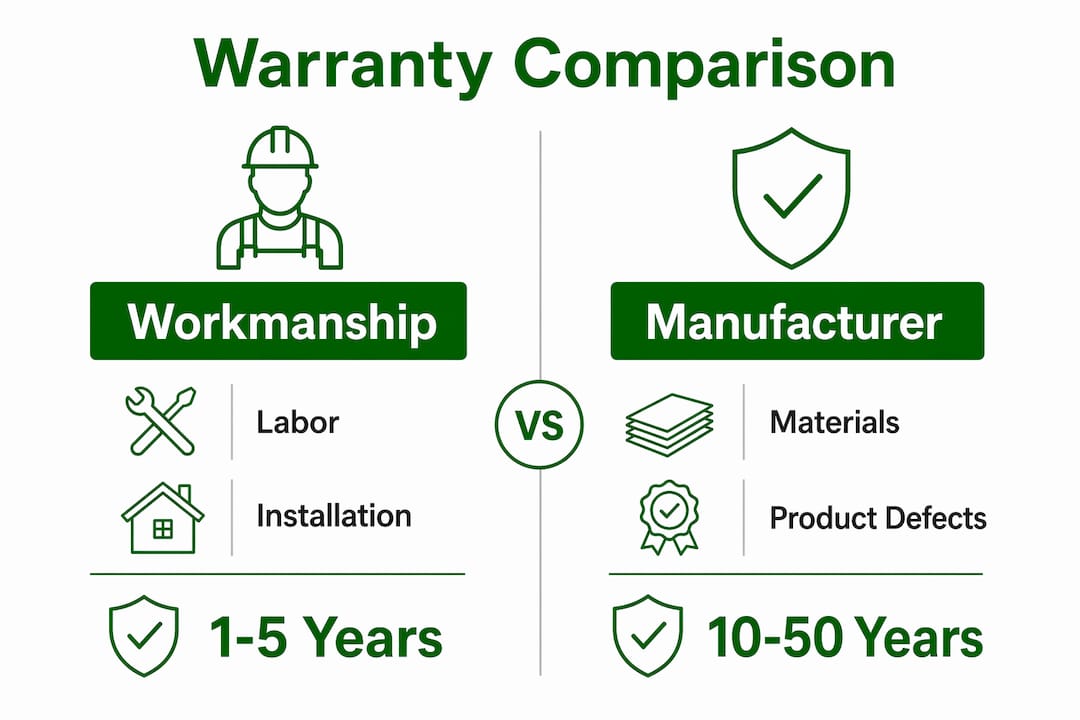
The duration difference is significant. Workmanship warranties typically run 1–5 years. Manufacturer warranties on roofing materials from brands like GAF and Owens Corning can cover 20 years, 50 years, or even a lifetime. That longer coverage sounds reassuring, but it only applies to the material itself.
Here is how the two warranties compare across key factors:
| Factor | Workmanship warranty | Manufacturer warranty |
|---|---|---|
| What it covers | Labor and installation errors | Material and product defects |
| Typical duration | 1–5 years | 20 years to lifetime |
| Who is responsible | The contractor | The material manufacturer |
| Written requirement | Express warranty recommended | Always provided in writing |
| Common example | Leak from bad flashing install | Shingle delamination from factory defect |
One critical overlap: installation errors can void a manufacturer warranty. If a contractor installs GAF shingles outside the manufacturer's specified guidelines, GAF may deny a material defect claim. A workmanship warranty is often more critical than the manufacturer warranty in roofing because installation errors cause the majority of roof failures and can void manufacturer coverage entirely.
Pro Tip: Ask your contractor for a copy of the manufacturer's installation guidelines. Confirm in writing that the installation will follow those specs. This protects both your workmanship and manufacturer warranties simultaneously.
How do you file a claim under a workmanship warranty?
Filing a claim correctly is just as important as having the warranty. A valid defect can still result in a denied claim if you skip the required steps. Homeowners must provide written notice describing the defect in detail to trigger the claim process. A phone call or text message is not sufficient in most cases.
Follow these steps to protect your claim:
- Document the defect. Photograph the problem from multiple angles. Note the date you first observed it and any related interior damage such as water stains or mold.
- Review your contract. Locate the warranty clause and identify the exact notice requirements. Some contracts require certified mail delivery.
- Send written notice. Describe the defect clearly in a letter or email. Include your name, address, contract date, and a description of the problem. Written notice often must be delivered by certified mail per contract terms.
- Schedule a professional inspection. A licensed inspector's report strengthens your claim and provides an objective assessment of the defect's cause.
- Track the response deadline. Contractors typically have 30–60 days to inspect and respond to a workmanship warranty claim. Note that deadline and follow up in writing if it passes.
Failing to follow the contract's notice protocol can forfeit a valid claim, even when the defect is clearly covered. This is the most common reason homeowners lose warranty protection they legitimately earned. The storm damage claim process follows a similar documentation logic, so the habits you build for one type of claim transfer directly to the other.
Pro Tip: Keep a dedicated folder, physical or digital, for every document related to your roof: the contract, warranty, inspection reports, and all written communications with your contractor.
Real-world examples of workmanship warranty coverage
Concrete examples make the coverage scope much easier to recognize in your own home. Improper flashing, poor nailing, and sealing mistakes that cause roof leaks are the most common workmanship warranty claims in residential roofing. These are not rare edge cases. They are the leading cause of roofing failures.
Covered scenarios you might encounter include:
- A roof leak that appears six months after installation, traced to a flashing gap around a chimney the contractor installed
- Water intrusion at a skylight because the installer used the wrong sealant or skipped a step in the flashing sequence
- Shingles that lift or blow off in moderate wind because the nailing pattern did not meet the manufacturer's specified fastener placement
- Interior ceiling stains caused by an improperly installed drip edge that allows water to wick back under the shingles
- Gutter sections that pull away from the fascia because the installer used undersized fasteners
Contrast those with scenarios that fall under manufacturer coverage instead. A shingle that granulates excessively within two years due to a production defect is a manufacturer claim. A membrane that cracks due to a material formulation issue is also a manufacturer claim. The contractor's work was correct in both cases. The product itself failed.
Longer workmanship warranty periods signal higher contractor confidence and are a meaningful quality indicator when you are comparing contractors. A contractor who offers a five-year workmanship warranty is making a stronger commitment to their installation quality than one who offers only one year. For more context on how roofing warranties interact with insurance, the roofing insurance coverage guide from Chattanoogaroofrepairs explains the boundary clearly. You can also find additional perspectives on warranty coverage for roofing projects at Coastal Roofing's blog.
Key Takeaways
A workmanship warranty covers labor and installation defects only, making it the most direct protection a homeowner has against contractor errors that cause roof failures.
| Point | Details |
|---|---|
| Coverage scope | Workmanship warranties cover installation errors like bad flashing, poor nailing, and sealing failures. |
| Duration difference | Workmanship warranties last 1–5 years; manufacturer warranties cover materials for 20 years or longer. |
| Claim procedure | Submit written notice describing the defect, then track the contractor's 30–60 day response window. |
| Exclusions matter | Storms, owner modifications, and normal wear are excluded and belong to insurance, not the warranty. |
| Written warranty is critical | An implied warranty is harder to enforce; always secure an express workmanship warranty in writing. |
Why I think most homeowners underestimate their workmanship warranty
After years of working in roofing, the pattern I see most often is not homeowners ignoring their warranty. It is homeowners who assume the manufacturer warranty is the one that matters. They see "lifetime shingles" on the product label and feel protected. Then a leak shows up two years later, they call the manufacturer, and they learn the installation did not meet the required specs. The manufacturer denies the claim. The contractor's workmanship warranty has expired. They are left paying out of pocket.
The workmanship warranty is your first line of defense, not a secondary backup. The implied warranty of workmanship exists automatically in most jurisdictions, but it is far harder to enforce than a written express warranty. I have seen homeowners try to pursue implied warranty claims without a written agreement, and the legal process is slow, expensive, and uncertain. A clear written warranty with defined scope and duration removes all of that uncertainty.
My strongest advice is this: before any contractor starts work, get the workmanship warranty in writing with a specific duration, a clear list of what is covered, and the exact claim procedure spelled out. Experts recommend relying only on formal, written warranty agreements because informal guarantees are not legally binding contracts. A contractor who hesitates to put their warranty in writing is telling you something important about how confident they are in their own work.
Keep every document. Report defects the moment you notice them. Do not wait to see if a small leak gets worse. The notice deadline in your contract may be shorter than you expect.
— Steve
Chattanoogaroofrepairs backs its work with real warranty protection
Choosing a contractor who stands behind their installation is the most practical step you can take after reading this guide. Chattanoogaroofrepairs provides licensed, insured roofing services in Chattanooga and the surrounding areas, using materials from GAF and Owens Corning installed to manufacturer specifications. That matters because correct installation protects both your workmanship warranty and your manufacturer warranty at the same time.
Whether you need metal roofing in Chattanooga with long-term durability or a roof leak repair traced to a prior installation error, Chattanoogaroofrepairs delivers transparent pricing and honest assessments. Contact the team for a no-pressure consultation and ask directly about workmanship warranty terms before any work begins.
FAQ
What does a workmanship warranty cover on a roof?
A workmanship warranty covers defects caused by the contractor's installation errors, including improper flashing, bad nailing patterns, and poor sealing. It does not cover material failures or storm damage.
How long does a workmanship warranty typically last?
Workmanship warranties typically last 1–5 years, which is significantly shorter than manufacturer material warranties that can run 20 years or longer.
What is the difference between a workmanship warranty and a manufacturer warranty?
A workmanship warranty covers how the work was done; a manufacturer warranty covers the product itself. Installation errors are a workmanship claim, while material defects are a manufacturer claim.
Is a workmanship warranty necessary if I have a manufacturer warranty?
A workmanship warranty is necessary because installation errors are the leading cause of roofing failures and can void a manufacturer warranty if the installation does not follow required guidelines.
How do I make a workmanship warranty claim?
Submit written notice describing the defect in detail, following the exact notice procedure in your contract. Contractors typically have 30–60 days to inspect and respond, and failing to follow the correct notice process can forfeit your claim.