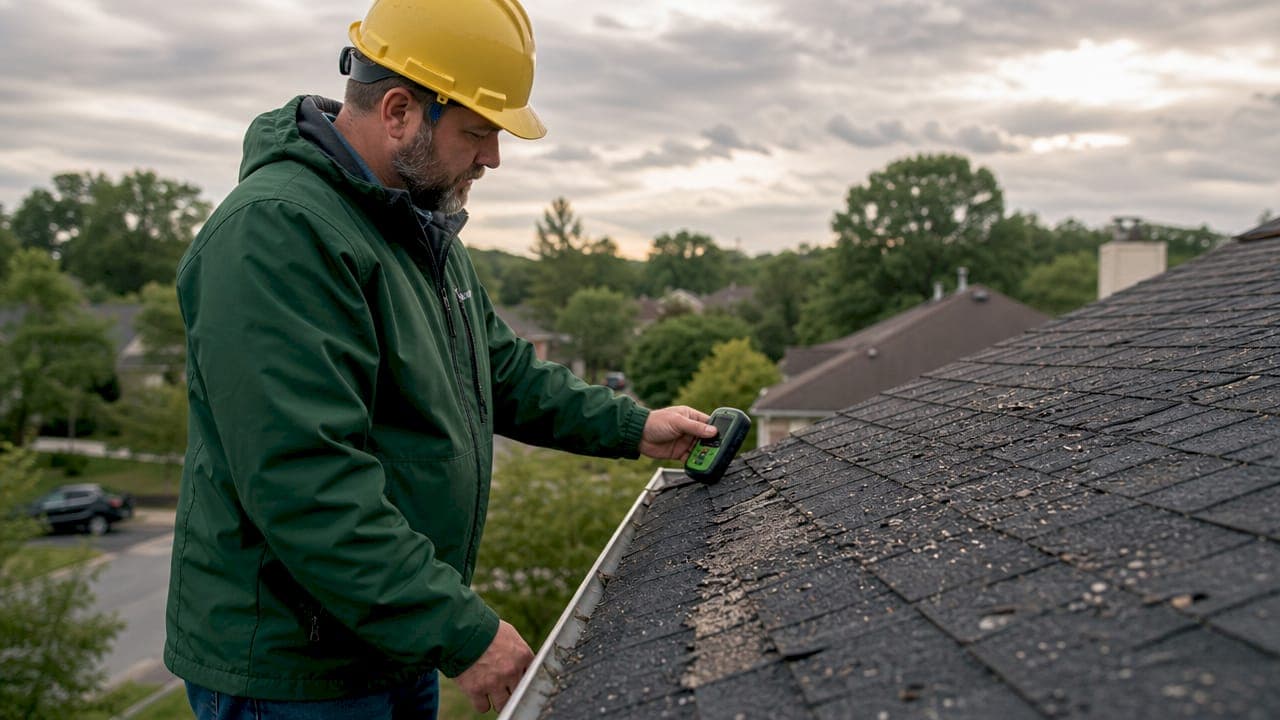
Roof leaks after hail are caused by damage to shingles, flashing, adhesive seals, and roof penetrations that create hidden water entry points. Hail rarely punches visible holes through a roof. Instead, it bruises shingles, cracks rubber pipe boots, dents flashing, and breaks the adhesive seal strips that hold shingles flat. These failures let water work its way in gradually. Hail damage repair costs range from $150 for minor spot repairs to over $15,000 for full replacements, which makes early inspection the most cost-effective move a homeowner can make. A professional inspection typically runs $125 to $600 and can prevent far more expensive repairs down the road.
Why do roofs leak after hail?
Hail damages roofing systems at the material level, not just the surface. A hailstone striking a shingle at speed does several things at once: it knocks off the protective granule layer, compresses the asphalt mat underneath, and can break the adhesive seal strip along the shingle's lower edge. Each of these failures creates a separate path for water to enter.
The granule layer on an asphalt shingle is not decorative. It shields the asphalt mat from UV radiation and deflects water. Once granules are knocked loose, the exposed mat degrades quickly under sunlight and rain. Adhesive seal integrity is equally critical. When hail breaks those seals, shingles can lift in wind, allowing water to blow underneath and reach the decking.
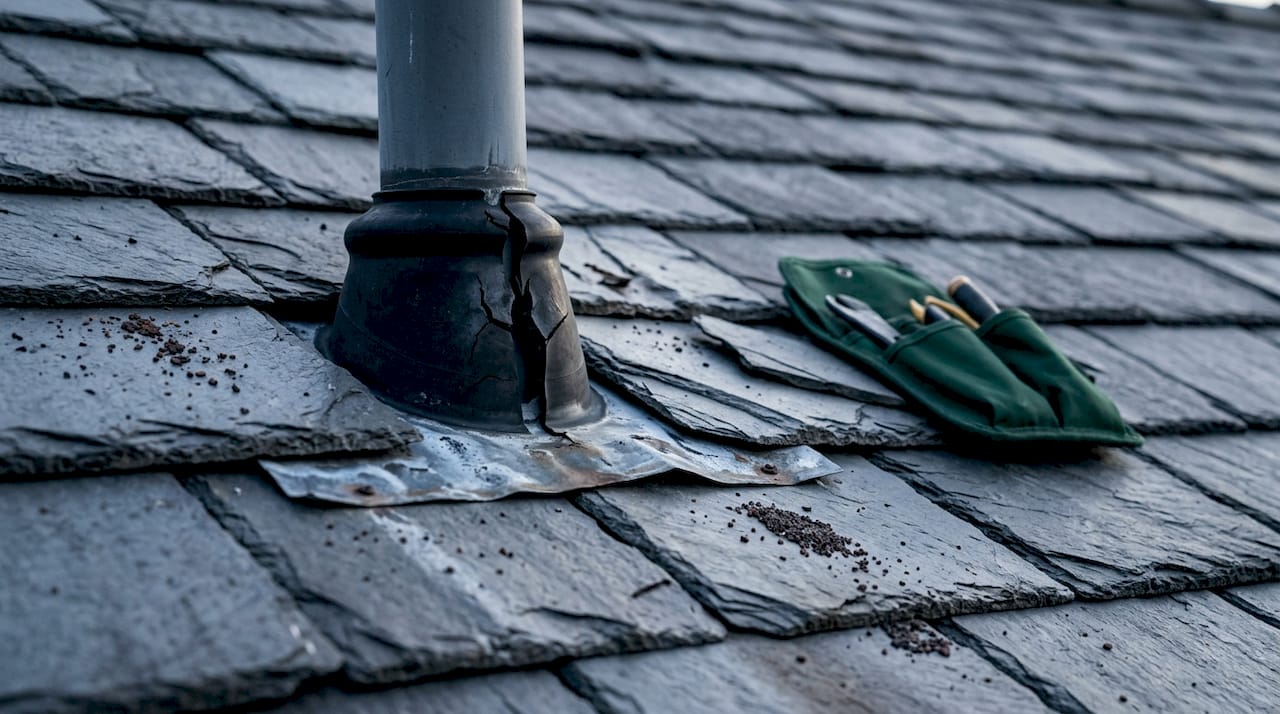
Flashing is another common failure point. The thin metal strips around chimneys, skylights, and roof valleys concentrate water flow by design. Hail can dent or bend this flashing, breaking its watertight contact with the surrounding roofing material. Even a small gap in flashing allows water to channel directly onto the roof deck.
Pipe boots, the rubber or metal collars around plumbing vents, crack under hail impact. The rubber gasket inside a pipe boot is already under stress from years of thermal expansion and contraction. A direct hail hit can split it, creating a leak point that is nearly invisible from the ground.
Pro Tip: After a hailstorm, check your gutters and downspouts for an unusual buildup of granules. Heavy granule loss in the gutters is one of the clearest ground-level signs of significant shingle damage.
Here are the primary damage types that cause water intrusion:
- Granule loss: Exposes the asphalt mat to UV and moisture, accelerating deterioration.
- Broken adhesive seals: Allows shingles to lift and water to enter beneath them.
- Cracked pipe boots: Creates open gaps around plumbing penetrations.
- Dented or bent flashing: Breaks the watertight seal at chimneys, skylights, and valleys.
- Micro-perforations in underlayment: Small punctures in the synthetic layer beneath shingles that widen over time.
Why do leaks appear weeks or months after a hailstorm?
A roof can look completely intact the day after a hailstorm and still develop a serious leak two months later. Delayed leaks develop as successive weather cycles push hail damage further. This is one of the most misunderstood aspects of hail damage, and it catches many homeowners off guard.
The mechanism works like this. Hail creates micro-perforations in the synthetic underlayment beneath the shingles. These holes are too small to leak immediately. Thermal cycling widens micro-perforations as the roof heats up during the day and cools at night, expanding and contracting repeatedly. Within weeks or months, those tiny holes become significant leak paths.
UV exposure compounds the problem. Once granules are stripped from a shingle, the asphalt mat underneath absorbs sunlight directly. It becomes brittle, cracks, and loses its ability to shed water. A shingle that looked functional in october may be failing by december after two months of direct UV exposure.
Water also travels before it appears inside your home. Water travels along rafters and decking before dripping through the ceiling. A stain on your living room ceiling may originate from a breach near the chimney, ten feet away. Repairing only the visible wet spot almost always misses the actual entry point.
The four most common reasons leaks appear late:
- Thermal cycling widens small underlayment perforations over weeks of temperature swings.
- UV degradation breaks down exposed asphalt mats after granule loss.
- Secondary weather events such as heavy rain, wind, or a freeze-thaw cycle push water through weakened areas.
- Debris buildup in gutters and valleys obstructs drainage, forcing water to back up under shingles.
Pro Tip: Do not wait for a visible drip before calling a roofer. Schedule an inspection within two weeks of any significant hailstorm, even if your roof looks fine from the street.
What roof areas are most vulnerable to leaks after hail?
Flashing failures around chimneys, skylights, and vents are the most common leak points following hail damage, more so than damage to field shingles. This surprises most homeowners, who expect the flat open sections of the roof to be the problem. Transition zones concentrate water flow and absorb more impact energy than flat surfaces.
The following areas deserve the closest attention after a hailstorm:
- Pipe boots and plumbing vents: Rubber gaskets crack under impact and are a top source of hidden leaks.
- Chimney and skylight flashing: Dented metal loses its seal and lets water channel directly onto the deck.
- Valley flashing: Valleys carry the highest volume of water runoff and are hit hard by hail.
- Ridge caps: These elevated shingles take direct hits and lose granules faster than field shingles.
- Fascia, soffits, and drip edges: Damaged drip edges allow water to wick behind the roofline and rot the fascia board.
| Roof area | Why it is vulnerable | Common damage sign |
|---|---|---|
| Pipe boots | Rubber cracks under impact | Water stain around ceiling vent |
| Chimney flashing | Metal bends and loses seal | Stain on interior chimney wall |
| Valley flashing | High water volume, direct hits | Rust streaks or lifted metal |
| Ridge caps | Elevated, exposed to full impact | Heavy granule loss in gutters |
| Drip edges | Edge metal bends, water wicks in | Rotting fascia or soffit staining |
Knowing what hail damage looks like on each of these components helps you communicate clearly with your insurance adjuster and your roofer.
How should homeowners assess and respond to roof damage after hail?
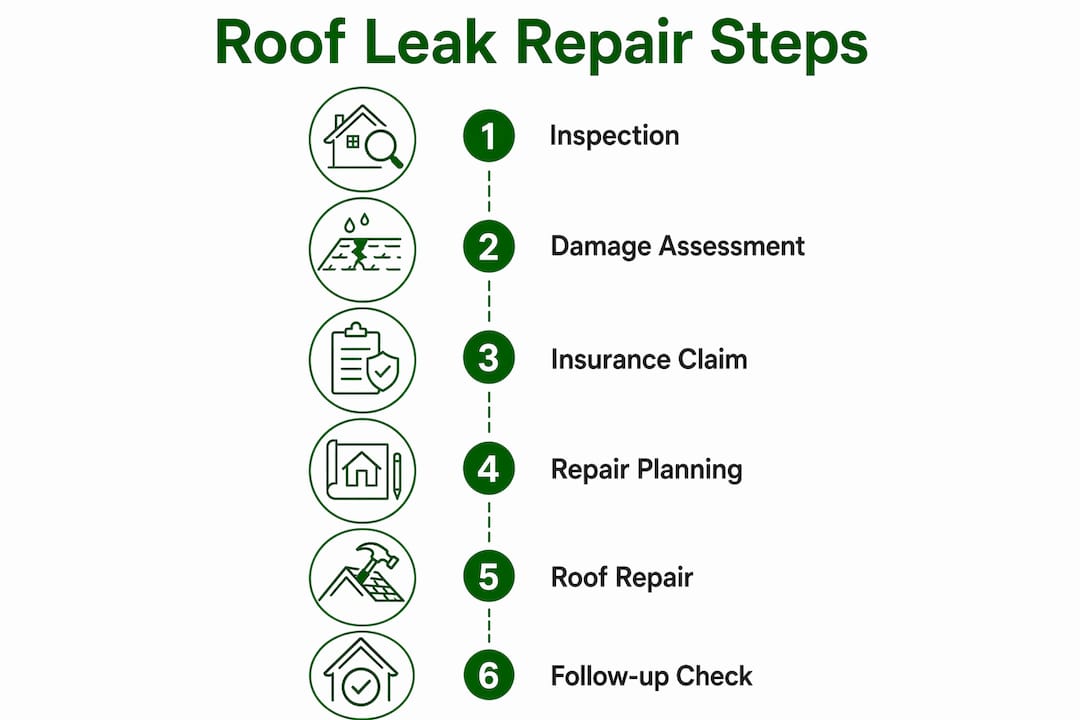
A systematic response after a hailstorm protects both your home and your insurance claim. Typical storm and hail repair estimates range between $2,600 and $23,000, with average project costs around $12,000. Acting quickly and documenting thoroughly keeps your options open.
Follow these steps in order:
- Conduct a ground-level inspection. Walk the perimeter of your home and look for dented gutters, cracked pipe boots visible from below, and granule deposits in downspout splash areas. Do not climb onto the roof yourself.
- Document everything immediately. Take dated photos of your gutters, downspouts, window screens, and any visible shingle damage. Insurance adjusters use this documentation to validate your claim.
- Apply temporary protection. If you see obvious damage or missing shingles, temporary tarping options can prevent water intrusion until a professional inspection is completed.
- Schedule a professional inspection within two weeks. A certified roofer can identify bruised mats, cracked seals, and damaged underlayment that a homeowner cannot see. Most professional inspections cost between $125 and $600.
- File your insurance claim with documentation in hand. Bring your photos, inspection report, and contractor estimate to the adjuster meeting.
When it comes to deciding between repair and replacement, the extent of damage to the fiberglass mat is the deciding factor. Widespread mat damage affecting multiple slopes usually requires full roof replacement. Patching a roof with compromised mat leads to repeated failures and denied future claims.
Ignoring hail damage without visible leaks is a costly mistake. Hidden damage worsens over time and can result in denied insurance claims once the damage is attributed to neglect rather than the storm event. The window for a valid claim is limited, and documentation dated close to the storm date carries the most weight.
You can review the full storm damage claim process to understand each step before your adjuster arrives.
Key Takeaways
Roofs leak after hail because hail breaks adhesive seals, cracks pipe boots, dents flashing, and creates underlayment perforations that worsen through thermal cycling and UV exposure over weeks or months.
| Point | Details |
|---|---|
| Hidden damage causes most leaks | Hail breaks seals and cracks boots without punching visible holes through shingles. |
| Leaks are often delayed | Thermal cycling and UV exposure widen micro-damage into active leaks weeks after impact. |
| Flashing is the top leak point | Transition zones around chimneys, skylights, and vents fail more often than open field shingles. |
| Document damage immediately | Dated photos and a professional inspection report strengthen insurance claims significantly. |
| Act before leaks appear | Inspecting within two weeks of a hailstorm prevents minor damage from becoming a costly replacement. |
What I have learned from years of hail damage inspections
Most homeowners call us after the ceiling stain appears. By that point, the damage has been active for weeks, the underlayment has cycled through dozens of temperature swings, and what started as a $400 pipe boot repair has turned into a $4,000 deck replacement. That pattern repeats itself every storm season, and it is entirely preventable.
The biggest misconception I see is that a roof has to look damaged to be damaged. Hail does not work that way. A one-inch hailstone hits a shingle at roughly the same force as a hammer blow. It does not leave a hole. It leaves a bruise you cannot see from the street, a broken seal you cannot feel from the attic, and a cracked rubber gasket you would only find if you knew where to look.
The second mistake is assuming the insurance company will find everything. Adjusters work quickly and cover a lot of ground. They are not always on the roof long enough to find every cracked pipe boot or every section of lifted flashing. A contractor who does a thorough inspection before the adjuster arrives gives you a complete picture and a stronger claim.
My honest advice: treat a hailstorm the same way you treat a car accident. You would not drive a car for two months after a collision and hope nothing was wrong. Get the inspection done, get the documentation in order, and make the repair decision from a position of full information. The cost of an inspection is a fraction of what delayed action ends up costing.
— Steve
Roof repair after hail in Chattanooga
Chattanoogaroofrepairs serves homeowners across Chattanooga and the surrounding area with fast, honest roof repair after hail damage. Our team performs comprehensive 21-point inspections that cover every vulnerable area, from pipe boots and flashing to underlayment and ridge caps. We identify both visible and hidden damage before it turns into a costly leak.

We handle storm and hail damage repair from initial inspection through insurance documentation and final repair or replacement. Our crews use materials from GAF and Owens Corning, and we offer same-day tarping for active storm damage. If your roof needs shingle replacement or a full restoration, we provide transparent pricing with no pressure. Call Chattanoogaroofrepairs for a no-obligation inspection and protect your home before the next storm arrives.
FAQ
Why does my roof leak if it looks undamaged after hail?
Hail breaks adhesive seals and cracks pipe boots without creating visible holes. Water enters through these hidden failures and travels along rafters before appearing as a ceiling stain.
How long after a hailstorm can a roof leak start?
Leaks commonly develop weeks or months after impact as thermal cycling widens micro-perforations in the underlayment and UV exposure degrades exposed asphalt mats.
What are the first signs of a roof leak after hail?
Look for granules in gutters and downspouts, dented metal flashing, cracked rubber around plumbing vents, and water stains on attic sheathing or interior ceilings.
Should I repair or replace my roof after hail damage?
Widespread damage to the fiberglass mat beneath shingles typically requires full replacement. Localized damage to flashing or a few shingles can often be repaired. A professional inspection determines which applies to your roof. You can also review the repair vs. replacement criteria to understand the decision factors.
How quickly should I file an insurance claim after hail damage?
File as soon as possible after the storm. Document damage with dated photos before any repairs are made, and schedule a professional inspection to support your claim with a written report.