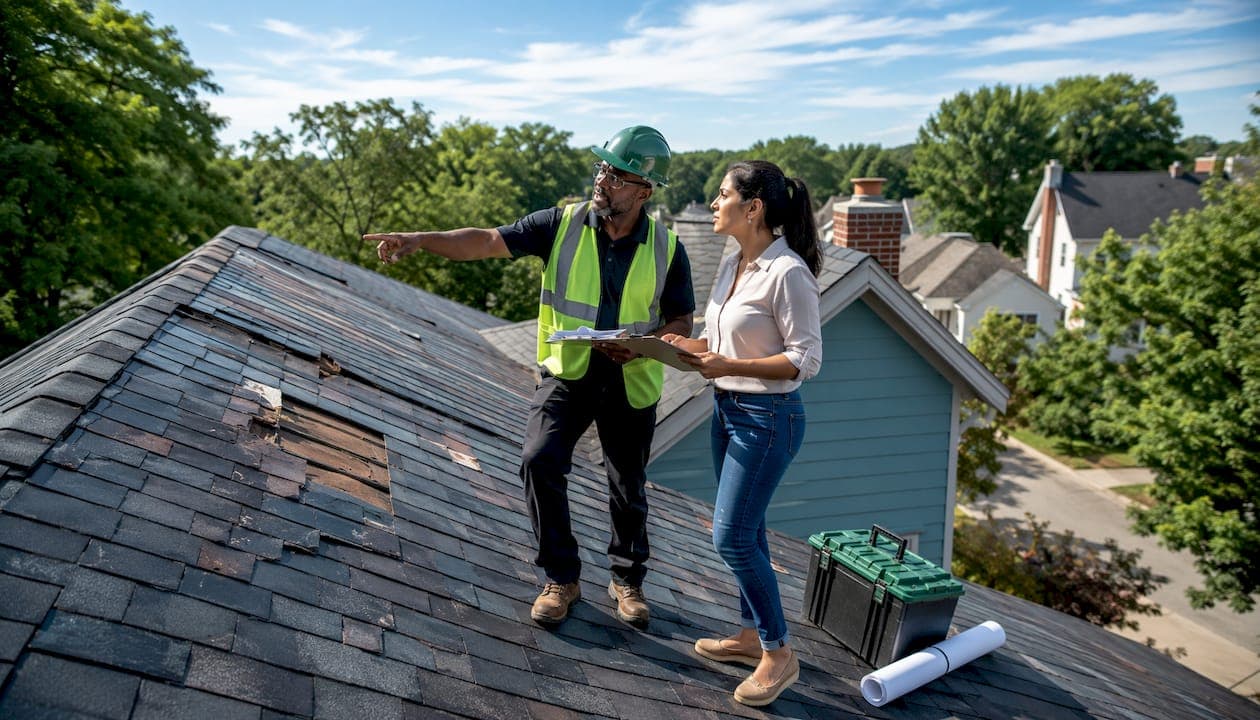
The most damaging common storm roof repair mistakes are not the dramatic ones. They are the quiet errors: calling your insurer before a roofer sets foot on your property, waiting three weeks to act, or hiring the contractor who knocked on your door the morning after the storm. Each of these decisions can turn a manageable repair into a five-figure problem.
Here are the key mistakes to avoid:
- Contacting your insurance company before getting a professional inspection
- Delaying repairs after storm damage
- Choosing the cheapest contractor or hiring out-of-state storm chasers
- Using inferior materials or ignoring attic ventilation
- Missing hidden structural damage by skipping a thorough inspection
- Mishandling insurance coordination and misreading warranty terms
- Relying on temporary fixes without scheduling permanent repairs
- Skipping required permits before work begins
- Ignoring safety rules during DIY or professional repairs
- Scheduling repairs during weather conditions that compromise quality
1. Calling your insurer before consulting a licensed roofer
Most homeowners reach for the phone to call their insurance company the moment they spot missing shingles. That instinct is understandable, but it often backfires. Insurance adjusters are trained to assess visible, surface-level damage. They are not roofing specialists, and they can miss the subtler signs that a licensed contractor catches immediately.
Getting a professional inspection first gives you documented evidence of every damaged area before an adjuster ever arrives. That documentation becomes your strongest tool during the claims process. Adjusters who arrive without a roofer present tend to undervalue claims because hidden damage goes unrecognized.
- Schedule a licensed roofer's inspection before filing your claim
- Collect photos, written assessments, and repair estimates from your contractor
- Request that your roofer be present during the adjuster's site visit
- Keep copies of all documentation in a dedicated folder for the claim
Pro Tip: Ask your roofing contractor to walk the roof alongside the insurance adjuster. Roofers who attend adjuster inspections consistently help homeowners recover more complete settlements because they can point out damage the adjuster might otherwise overlook.
2. Delaying repairs after storm damage
Acting within two weeks after storm damage is essential; waiting beyond that significantly increases the risk of water intrusion, interior rot, and mold growth, especially in humid or flood-prone regions. What starts as a few missing shingles can become saturated insulation, damaged drywall, and compromised structural framing within days of heavy rain.
Prompt action does not always mean a full repair immediately. A licensed contractor can apply professional tarping to protect your home while materials are ordered and permits are secured. That temporary protection, done correctly, buys you time without letting the damage spread. The risks of delaying compound quickly once water finds a path inside.
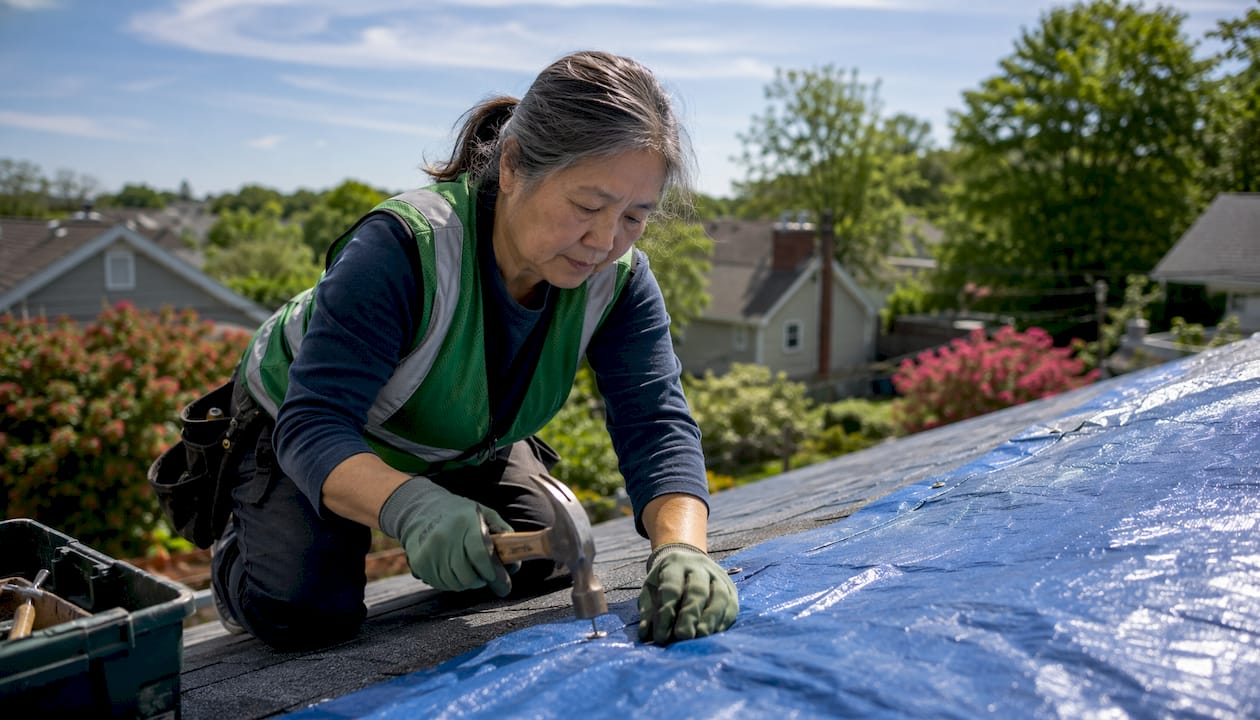
The EPA notes that mold can begin growing on wet building materials within 24 to 48 hours. Addressing even minor storm damage quickly is the most cost-effective decision you can make.
3. Choosing the cheapest contractor or hiring out-of-state storm chasers
After a major storm, contractors appear from everywhere. Some travel from state to state following severe weather events, offering fast turnarounds at low prices. These "storm chasers" are one of the most well-documented roof repair blunders a homeowner can make. They often lack local licenses, carry inadequate insurance, and have no familiarity with your area's building codes.
Hiring a contractor based solely on price carries its own risks. Poor workmanship voids manufacturer warranties and frequently requires a second, more expensive repair within a few years. Licensed local contractors carry accountability that out-of-state crews simply cannot offer. They are rooted in the community, follow regional codes, and are available if problems arise after the job is done.
Watch for these red flags:
- No local business address or verifiable license number
- Pressure to sign a contract before an inspection is complete
- Requests for large cash deposits upfront
- No written warranty on labor or materials
- Inability to provide proof of liability insurance and workers' compensation
Pro Tip: Verify any contractor's license through your state's contractor licensing board before signing anything. In Tennessee, the Department of Commerce and Insurance maintains a searchable online database. A two-minute check can save you months of headaches.
4. Using inferior materials and ignoring proper attic ventilation
Material quality directly determines how long your repaired roof holds up. Homeowners who choose cheaper shingles to reduce upfront costs often pay far more within a few years when those materials fail under hail or high winds. In hail-prone regions, Class 4 impact-rated shingles tested to the UL 2218 standard offer measurably better durability and can even qualify you for insurance discounts.
Attic ventilation is the factor most homeowners overlook entirely. Poor ventilation traps heat and moisture inside the attic, which degrades shingles from the underside, warps roof decking, and creates conditions for mold growth. A ventilation audit should be part of every professional repair, not an optional add-on.
Ask your contractor to confirm these during any repair:
- Shingles rated for your region's wind and impact exposure
- Intake and exhaust vents balanced for your attic's square footage
- Underlayment appropriate for your climate's moisture levels
- Flashing material that matches the roof system's expected lifespan
5. Ignoring hidden structural damage beneath the surface
Surface inspections miss a lot. Roughly 50% of storm roof damage involves compromised decking, damaged sheathing, or problems concentrated around roof penetrations like chimneys, vents, and skylights. None of that is visible from the ground, and much of it is invisible even from a casual shingle-level look.
Infrared moisture scanning and manual decking checks are the tools professionals use to find what a visual inspection cannot. These methods reveal saturated insulation and soft spots in the decking that will cause premature roof failure if left unaddressed. Skipping a thorough storm inspection is one of the most expensive decisions a homeowner can make, because the damage does not stop growing just because it is out of sight.
- Insist on a full inspection that includes decking and sheathing checks
- Ask whether infrared scanning is available for moisture detection
- Have all roof penetrations inspected for compromised flashing or seals
- Request a written report of every damaged component found
6. Mishandling insurance coordination and misreading warranty terms
Insurance coordination mistakes are among the most common roofing contractor coordination mistakes homeowners encounter. Filing too early without documentation, filing too late and missing your policy's reporting window, or failing to photograph damage before any work begins can all result in a denied or reduced claim.
Warranty terms add another layer of complexity. Manufacturer warranties on shingles like those from GAF or Owens Corning often require installation by a certified contractor and specific underlayment products. If your contractor cuts corners on materials or installation methods, the warranty is void before the job is even finished. Proper documentation protects both your claim and your warranty.
Keep this checklist in hand during the process:
- Photograph all damage before any repairs or tarping begin
- Confirm your policy's storm damage reporting deadline
- Verify that your contractor's installation method meets manufacturer warranty requirements
- Get all repair estimates and material specs in writing
- Save every receipt, report, and correspondence related to the claim
7. Over-relying on temporary fixes and neglecting ongoing maintenance
Tarping is a legitimate first response to storm damage. It protects your home while you arrange a full repair. The problem arises when temporary fixes become permanent ones. Tarps and patchwork are stop-gaps, not substitutes for proper repair. Over time, they shift, tear, and allow water to find new entry points.
Post-repair maintenance is just as important as the repair itself. Gutters clogged with storm debris redirect water back under shingles. Unchecked flashing around chimneys and vents develops small gaps that grow into leaks. A simple maintenance routine after repairs are complete protects your investment and extends the roof's life.
Consequences of skipping permanent repairs or ongoing upkeep:
- Repeated interior water damage and mold cycles
- Accelerated shingle and decking deterioration
- Voided warranties due to unaddressed underlying issues
- Higher repair costs at the next storm event
Professional safety practices and inspection tips for storm-damaged roofs
Never climb onto a storm-damaged roof without professional training and proper safety equipment. Working on a roof in winds over 20 mph without harnesses and training is highly risky, and wet or damaged shingles dramatically increase fall hazards. If the decking beneath has been weakened by water, a single misstep can send you through the roof entirely.
Professional inspectors use tools and techniques that go well beyond what any homeowner can replicate from a ladder. Infrared cameras detect moisture trapped in insulation and decking. Ventilation audits measure airflow against the attic's square footage. Manual checks of every penetration, valley, and ridge line catch the damage that causes leaks months after the storm has passed.
Pro Tip: Before your inspector arrives, clear your attic access and note any water stains, soft spots, or musty odors you have noticed inside the home. That information helps the inspector prioritize where to look first and often speeds up the assessment significantly.
Chattanoogaroofrepairs conducts comprehensive 21-point inspections designed to surface both visible and hidden damage. That level of detail gives homeowners a complete picture before any repair decisions are made.
How to avoid common storm roof repair mistakes effectively
Avoiding frequent roof repair pitfalls comes down to a clear sequence of actions taken in the right order. Hire a licensed local contractor before contacting your insurer. Document everything before any work begins. Act within days, not weeks. Insist on quality materials and a ventilation audit as part of the repair scope.
Coordinating with your insurance company works best when you arrive prepared. A written inspection report, dated photographs, and a contractor's itemized estimate give the adjuster everything needed to process your claim accurately. That preparation also protects you if the claim is disputed later.
Pro Tip: Before the inspector leaves, ask for a written maintenance plan specific to your roof's age and material type. A simple schedule of gutter cleanings, flashing checks, and annual inspections prevents the small issues that become expensive ones.
Dos and don'ts for homeowners after storm damage:
- Do hire a licensed, insured local contractor for the inspection
- Do photograph all damage from the ground before anyone touches the roof
- Do act within two weeks to prevent water intrusion and mold
- Do confirm your contractor meets manufacturer warranty requirements
- Don't sign contracts with out-of-state contractors who cannot provide local references
- Don't file your insurance claim before you have a professional inspection report
- Don't accept a repair that skips the attic ventilation check
- Don't treat tarping as a long-term solution
Why skipping permits before repairs is a costly mistake
Pulling permits before roof repairs begin is a legal requirement in most jurisdictions, not a suggestion. Work done without permits can result in fines, forced removal of completed repairs, and serious complications when you sell your home. A buyer's inspector will flag unpermitted work, and your insurer may deny future claims tied to repairs that were never officially approved.
Licensed contractors handle permit applications as a standard part of the job. If a contractor tells you permits are unnecessary or suggests skipping them to save time, that is a clear signal to find someone else. Permitted work is inspected by a local building official, which adds an independent layer of quality verification that protects you long after the contractor has moved on.
Ignoring safety precautions during DIY or professional repairs
DIY roof repairs after a storm carry risks that go beyond the obvious. Wet shingles, steep slopes, and hidden structural damage create fall hazards that even experienced homeowners underestimate. Many insurance policies also exclude coverage for damage caused by an untrained homeowner attempting their own inspection or repair, which means a DIY mistake can cost you both the repair and your claim.
Even during professional repairs, homeowners should confirm that crews use fall protection equipment and follow OSHA safety standards. A contractor who sends workers onto a damaged roof without harnesses is cutting corners on safety, and that liability can fall on you as the property owner if a worker is injured. Ask directly about safety protocols before work begins.
How weather conditions affect repair timing and quality
Roofing materials need specific conditions to seal and bond correctly. Asphalt shingles, for example, require temperatures above 40°F for the adhesive strips to activate properly. Repairs done in freezing temperatures or during active rain often fail within months because the materials never bonded as intended.
Scheduling repairs during a stable weather window is not just a convenience. It is a quality requirement. A reputable contractor will check the forecast before scheduling installation and will not rush a crew onto a wet or frozen roof to meet an arbitrary deadline. If a contractor pushes to start immediately during poor conditions, ask why and get the answer in writing. Rushed roofing crews produce more errors and rework, which ultimately costs homeowners more time and money.
Chattanoogaroofrepairs: local expertise when your roof needs it most
When your roof takes a hit, the difference between a lasting repair and a recurring problem often comes down to who you call first.
Chattanoogaroofrepairs brings certified local expertise to every storm-damaged roof in Chattanooga and the surrounding area. The team uses materials from GAF and Owens Corning, conducts comprehensive 21-point inspections, and offers same-day tarping so your home is protected while the full repair is planned. Transparent pricing and no-pressure assessments mean you know exactly what the repair involves before any work begins. For homeowners who want a licensed, fully insured team that handles everything from the initial inspection through insurance coordination, Chattanoogaroofrepairs is the straightforward choice. Schedule your roof leak repair or request a free inspection through the full services page today.
Key Takeaways
Avoiding common storm roof repair mistakes starts with the right sequence: inspection before insurance, licensed local contractors, quality materials, and prompt action within two weeks of the storm.
| Point | Details |
|---|---|
| Inspect before you file | Get a licensed roofer's written report before contacting your insurer to avoid undervalued claims. |
| Act promptly after storm damage | Act within two weeks after storm damage to reduce the risk of water intrusion, rot, and mold. |
| Verify contractor credentials | Confirm licensing, insurance, and local references before signing any contract. |
| Require quality materials | Specify impact-rated shingles suitable for hail-prone areas and confirm a ventilation audit is included. |
| Chattanoogaroofrepairs | Offers 21-point inspections, same-day tarping, GAF and Owens Corning materials, and full insurance coordination support. |